
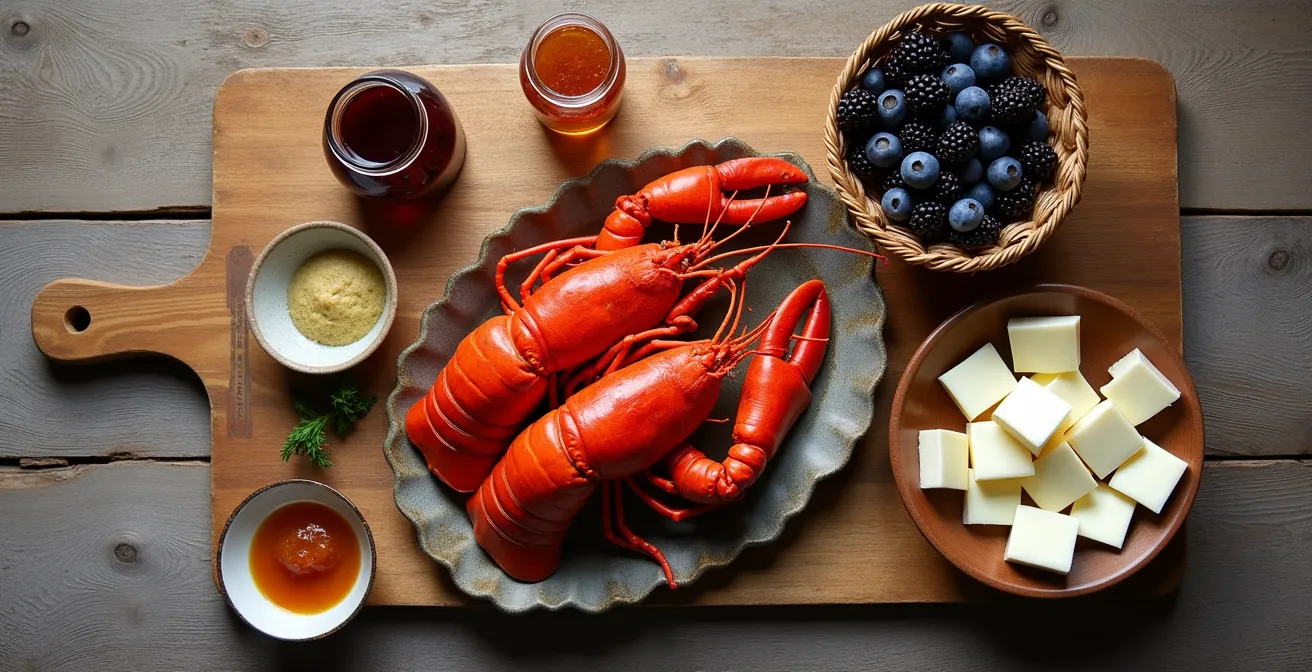
Many believe Canadian cuisine is simply poutine and maple syrup. This guide proves otherwise by deconstructing the country’s true regional delicacies. We’ll move beyond the menu to explore the sensory blueprint of each dish—from the audible squeak of fresh poutine curds to the almond-like notes of a Saskatoon berry. You’ll learn the authenticity tests that separate the tourist traps from the genuine article, transforming your culinary journey into an anthropological exploration of Canada’s diverse terroir.
For many international foodies, Canadian cuisine begins and ends with two things: poutine and maple syrup. While undeniably delicious, these icons represent only a fraction of the nation’s vast and deeply regional culinary landscape. To truly understand Canadian food is to move beyond the checklist of famous dishes and embark on a sensory exploration, a journey to uncover the stories, textures, and tastes that define a place.
The common approach is to follow a listicle, ticking off dishes province by province. But this often leads to tourist-grade experiences that lack the soul of the original. The real challenge isn’t finding a Nanaimo bar; it’s finding one with three perfectly distinct layers that don’t meld into a sugary mass. It’s not just tasting a Donair; it’s understanding why its uniquely sweet sauce is the heart of Halifax’s street food culture.
But what if the key wasn’t just *what* to eat, but *how* to experience it? This guide adopts the lens of a culinary anthropologist. We will deconstruct Canada’s iconic regional dishes, providing you with a sensory blueprint for each. We’ll explore the history embedded in a recipe, the specific texture that signals freshness, and the local rituals of consumption. By learning these authenticity tests, you will be equipped to navigate Canada’s culinary scene not as a tourist, but as a connoisseur, ready to discover the authentic flavors that lie just beneath the surface.
This article provides a deep dive into the specific sensory and cultural markers of Canada’s most authentic regional dishes. The following table of contents outlines our journey from the West Coast’s legendary desserts to the Maritimes’ seafood traditions.
Table of Contents: A Culinary Deconstruction of Canadian Regional Food
- Why is this no-bake dessert a staple of British Columbia culture?
- How does the taste of a Saskatoon berry differ from a standard blueberry?
- Why is the sweet condensed milk sauce essential to the authentic experience?
- The purchasing mistake of buying “table syrup” instead of 100% pure maple
- When to visit a “Cabane à Sucre” for the fresh taffy on snow?
- How to test the freshness of poutine cheese curds by the sound they make?
- How to extract meat from the legs using only your hands?
- How to shop at Granville Island Public Market like a local chef?
Why is this no-bake dessert a staple of British Columbia culture?
The Nanaimo bar is more than a dessert; it’s a piece of British Columbian identity named after the city of Nanaimo on Vancouver Island. Its status as a cultural staple comes from its humble, democratic origins in the 1950s and its unique textural composition, a feat of engineering that requires no baking. Understanding this dessert means appreciating its distinct three-layer structure: a firm, crunchy base of wafer, nut, and coconut crumb; a soft, creamy center of custard icing; and a crisp, snappy top layer of chocolate ganache. The authenticity test for a great Nanaimo bar lies in this textural separation. When you bite into it, you should feel three distinct sensations, not a homogenous sweetness.
This dessert’s rise from a local bake sale contender to a national icon is a story of community pride. The city of Nanaimo has fully embraced its namesake, creating the “Nanaimo Bar Trail,” a self-guided tour of cafes and bakeries. This trail is the ultimate ritual of consumption, allowing you to trace the bar’s evolution. You can start at the Nanaimo Museum to learn its origin story, then taste everything from classic versions to modern interpretations like a gluten-free almond flour variation or even a deep-fried Nanaimo bar.
The bar’s no-bake nature made it an accessible, reliable treat for home cooks and a perfect, portable item for community gatherings and holiday parties. This ease of preparation helped embed it deeply into the province’s domestic culture. It represents a kind of practical, unpretentious ingenuity—a sophisticated dessert that doesn’t require an oven, making it a true reflection of BC’s resourceful spirit.
How does the taste of a Saskatoon berry differ from a standard blueberry?
While they may look similar to a blueberry at first glance, the Saskatoon berry offers a far more complex flavor profile. This is the heart of its culinary terroir, a taste deeply rooted in the Canadian Prairies. The most significant difference is a distinct nutty, almond-like undertone, a flavor note entirely absent in blueberries. This unique characteristic comes from its seeds, which are soft and add to the overall taste experience rather than detracting from it. A true Saskatoon berry is less acidic than a blueberry, with a richer, darker, and wilder sweetness.
This berry’s cultural importance is so profound that the city of Saskatoon in Saskatchewan was named after it, not the other way around. It has been a vital food source for Indigenous peoples of the Prairies for centuries, long before European settlement. This deep historical root is what makes the Saskatoon berry more than just a fruit; it’s a symbol of the region’s natural heritage. Its sensory blueprint includes a deep purple-blue skin with a waxy “bloom” and a distinctive crown-like structure at its base.
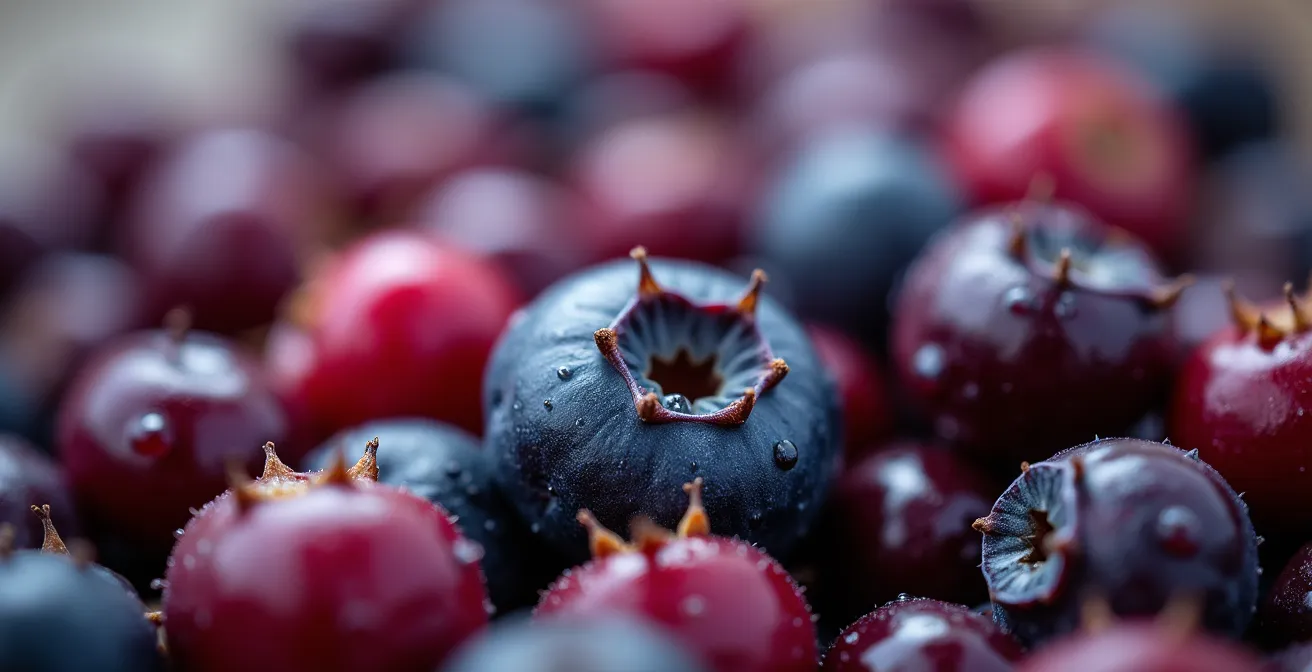
As the image reveals, the berry’s structure is unique. When you eat them, especially in a classic Saskatoon berry pie, the experience is different from a blueberry pie. The filling is jammier, the nutty notes are amplified by the baking process, and the overall flavor is more robust and less generically sweet. To truly understand Canadian prairie cuisine, one must move beyond the simple comparison to blueberries and appreciate the Saskatoon berry’s unique profile: a wild, sweet fruit with a surprising hint of marzipan.
Why is the sweet condensed milk sauce essential to the authentic experience?
The Halifax Donair is a perfect case study in culinary adaptation, and its signature sweet sauce is the element that transforms it from a mere variation of a Greek gyro or a Turkish döner into a uniquely Canadian, and specifically Maritime, creation. The sauce is essential because it is the dish’s soul and its origin story. It represents a specific moment of cross-cultural innovation. The authentic experience of a Halifax Donair is entirely defined by the unlikely but delicious collision of savory spiced meat and this sweet, garlicky cream sauce.
The sensory blueprint is unmistakable: a rich, sticky, and intensely sweet sauce with a sharp garlic kick and a tangy finish from vinegar. Its base of evaporated milk, condensed milk, and sugar creates a flavor profile completely alien to traditional Mediterranean garlic sauces like tzatziki. This was no accident. The sauce was invented in the 1970s by Greek immigrant Peter Gamoulakos, who found that the local Haligonian palate was not receptive to the traditional lamb and yogurt sauce of his homeland. He adapted, swapping lamb for spiced beef and creating the sweet sauce to appeal to local tastes.
This sweet sauce is the authenticity test. If it’s not made with a base of condensed or evaporated milk and sugar, it is not a Halifax Donair. This singular invention was so successful that it became a cornerstone of Halifax’s fast-food identity, now appearing on everything from donair pizza and donair subs to even donair egg rolls. To eat a Donair is to taste a piece of immigrant history and the story of how a dish evolved to capture the heart of a city, one sweet, messy bite at a time.
The purchasing mistake of buying “table syrup” instead of 100% pure maple
One of the most common mistakes for anyone seeking an authentic Canadian culinary experience is confusing “table syrup” with “pure maple syrup.” The difference is not a matter of branding but of fundamental composition, flavor, and cultural significance. Table syrup, often found in diner-style squeeze bottles, is an industrial product—typically a blend of corn syrup, water, artificial flavors, and caramel color. It is thick, cloyingly sweet, and one-dimensional. Buying it with the expectation of a true maple experience is the culinary equivalent of choosing a plastic souvenir over a handcrafted artifact.
Pure maple syrup, on the other hand, is a natural agricultural product. It is made by boiling the sap of maple trees, with nothing added. Its consistency is much thinner and more fluid than table syrup, and its flavor is incredibly complex, with notes of vanilla, caramel, and even subtle woody or smoky undertones depending on the grade and region. This complexity is its sensory blueprint. The authenticity test involves checking the label and the price: pure maple syrup will list only one ingredient (“pure maple syrup”) and will be significantly more expensive due to the labor-intensive process of its production (it takes about 40 litres of sap to make 1 litre of syrup).
To ensure you are buying the real thing, especially when outside of Canada, you must become a label detective. Look for official designations and be wary of misleading packaging that uses maple leaves as a decorative motif on non-maple products.
Checklist: How to Identify Authentic Canadian Maple Syrup
- Check the Label: Look for the “Product of Canada” designation and the official maple leaf grade mark from the Canadian Food Inspection Agency.
- Verify Ingredients: The ingredients list must contain only “pure maple syrup” or “maple syrup.” Any mention of corn syrup, glucose, or artificial flavors means it’s table syrup.
- Examine Consistency: As confirmed by guides on regional Canadian cuisine, real maple syrup is relatively thin and watery, not thick and viscous like corn syrup-based alternatives.
- Note the Price: Authentic maple syrup is a premium product. A suspiciously low price is a major red flag.
- Look for Producer Information: Many bottles of high-quality syrup will proudly list the specific “sugar bush” (maple farm) or region of production.
When to visit a “Cabane à Sucre” for the fresh taffy on snow?
The “cabane à sucre,” or sugar shack, is one of Québec’s most cherished culinary rituals. The key to experiencing its most magical offering—la tire d’érable sur la neige (maple taffy on snow)—is timing. This experience is inextricably linked to the maple sap harvest, a brief window dictated by nature. The prime time to visit is during the “sugaring-off” season, which, according to Quebec tourism officials, runs from late February to April. It is during this period of freezing nights and thawing days that the maple sap flows, allowing for the production of fresh syrup.
The ritual of consumption for maple taffy is pure theatre. Hot, boiled maple syrup is poured in strips onto a trough of clean, fresh snow. As it rapidly cools, you are given a wooden popsicle stick to roll up the hardening, sticky taffy. The sensory blueprint is a combination of the crisp, cold snow and the warm, intensely sweet, and chewy taffy. This is a fleeting delicacy that cannot be replicated out of season or outside this specific context. It is a taste of the Québécois spring.
A visit to a traditional cabane à sucre is a full-body immersion in Québécois culinary heritage. Beyond the taffy, these establishments offer a feast of traditional, hearty fare designed to be drenched in maple syrup. A typical menu includes soupe aux pois (pea soup), oreilles de crisse (crispy fried pork rinds), fluffy omelettes, baked beans, and tourtière (meat pie). The atmosphere is communal, rustic, and celebratory. Due to their immense popularity, especially on weekends, it’s crucial to make reservations, sometimes months in advance, to secure a spot during the short but vibrant season.
How to test the freshness of poutine cheese curds by the sound they make?
While the fries and gravy are crucial, the true soul of an authentic poutine lies in its cheese curds. For a poutine to be considered exceptional, the curds must be unquestionably fresh, and there is only one reliable authenticity test: the sound. Fresh cheese curds, when bitten into or squeezed, produce a distinct audible “squeak.” This sound is the hallmark of freshness and the secret handshake among poutine connoisseurs. If the curds are silent, they are old, and the poutine is, by definition, substandard.
This squeak is not a myth; it’s a scientific phenomenon. The sound is produced by the elastic protein strands in the fresh cheese rubbing against the enamel of your teeth. As cheese ages, even by a day or two, these protein networks begin to break down, causing the curd to lose its firm, rubbery texture and, consequently, its squeak. This is why true poutine can only be made with cheese curds that are, ideally, less than a day old. They should be kept at room temperature, as refrigeration also diminishes the squeak.
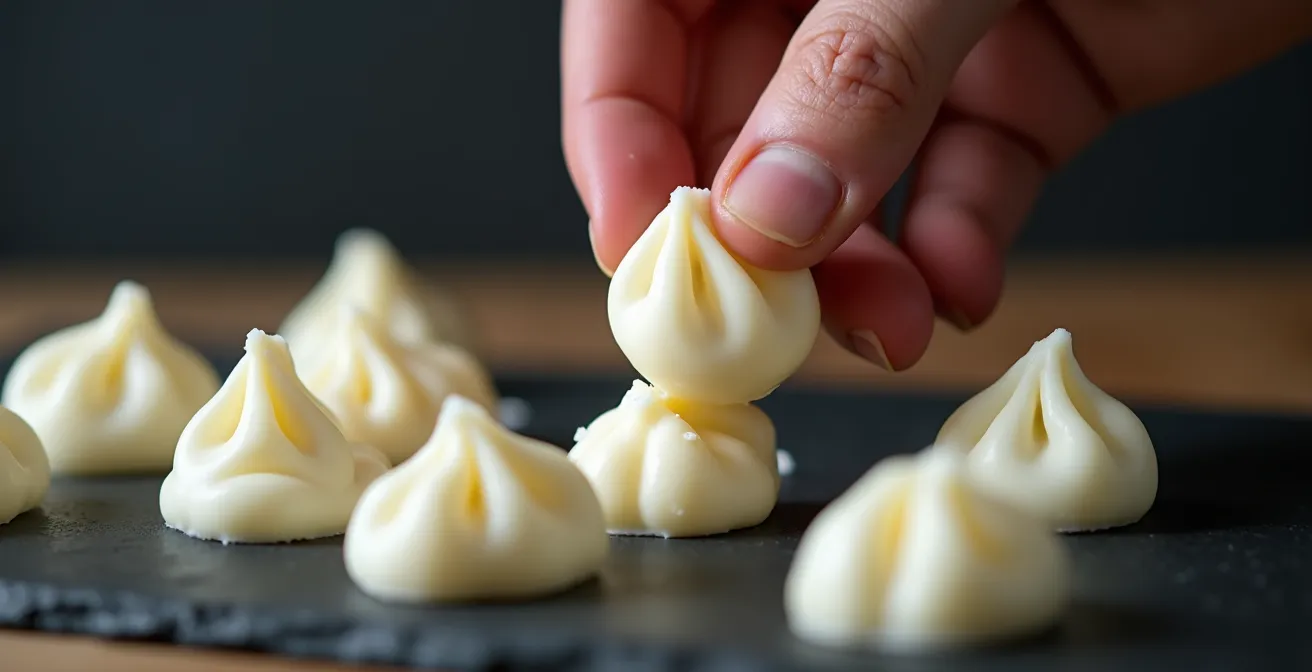
The sensory blueprint of perfect poutine curds goes beyond sound. They should be irregular in shape and have a mild, milky flavor. When the hot gravy is poured over them, they should soften and melt slightly on the outside but retain their firm, squeaky integrity on the inside. They should not dissolve into a greasy, homogenous stringy mass like mozzarella. The experience is a textural contrast: crispy fries, smooth gravy, and firm, springy, squeaky curds. Before you even taste your poutine, give a curd a gentle squeeze. If you hear that signature sound, you know you’re in for an authentic experience.
How to extract meat from the legs using only your hands?
Eating a whole lobster is a hands-on ritual, a delightful challenge that rewards effort with sweet, succulent meat. While the claws and tail contain the largest portions, the legs hold surprisingly flavorful morsels that are often overlooked. Connoisseurs in Canada’s Maritime provinces—like Nova Scotia and New Brunswick, which are famed for their seafood—have mastered a simple, tool-free technique to extract this hidden treasure. This method transforms the meal from simple consumption into a display of practical skill, using an everyday object as a tool.
The technique requires nothing more than a hard surface and a sturdy, cylindrical object like a wine bottle or a rolling pin. It’s a clean and surprisingly efficient method that extracts the leg meat in a single, intact piece. This is part of the ritual of consumption that defines an authentic Maritime lobster feast, demonstrating a no-fuss, resourceful approach to enjoying every part of the catch.
To perform this technique, follow these steps:
- First, twist and pull the legs from the lobster’s body.
- Place one leg flat on a hard surface, such as a cutting board.
- Position a wine bottle or rolling pin at the “foot” end of the leg (the pointy tip).
- Apply firm, steady downward pressure while rolling the bottle toward the open joint where the leg connected to the body.
- Like squeezing the last bit of toothpaste from a tube, the pressure will force the slender piece of meat to emerge whole from the opening.
This method is not just practical; it’s a small performance of culinary knowledge. It shows respect for the animal by ensuring nothing goes to waste and connects you more deeply to the food you are eating. Mastering this technique is a rite of passage for any serious seafood lover visiting Canada’s East Coast.
Key Takeaways
- Authentic Canadian food is defined by regional history, texture, and specific preparation methods, not just a list of dishes.
- Sensory “authenticity tests,” like the squeak of cheese curds or the three distinct layers of a Nanaimo bar, are crucial for identifying quality.
- Many iconic Canadian foods, like the Donair, are the result of immigrant cultures adapting traditional recipes to local Canadian tastes.
How to shop at Granville Island Public Market like a local chef?
Shopping at Vancouver’s Granville Island Public Market can be overwhelming for a first-timer. It’s a bustling labyrinth of sights, smells, and sounds. To navigate it like a local chef, you must have a plan and know the unwritten rules of engagement. It’s not just about what you buy, but when you go and where you go first. This is the ultimate application of all our lessons: applying the principles of sensory analysis and understanding culinary terroir to become an expert consumer.
First, timing is everything. The professionals and serious foodies arrive on Tuesday to Thursday mornings, ideally before 10 a.m. This allows them to get the freshest selection with the smallest crowds. The weekend is for tourists; the weekday is for business. Second, a chef has a route. They don’t wander aimlessly. They follow a path optimized for quality and freshness. A typical route might start at Oyama Sausage Co. for artisanal charcuterie and then move to Benton Brothers Fine Cheese for local BC selections before they sell out of the best items.
A key part of the Granville Island ritual is engaging with the vendors. Ask them what’s best today, what just came in, or how they recommend preparing an item. This is how you uncover the hidden gems. For example, a local chef knows to start the tour at Finest at Sea to sample incredible local seafood like candied salmon or smoked sablefish, which has been a staple since 1977. This vendor is not just a shop; it’s a direct connection to BC’s fishing fleet. Finally, a chef’s visit often ends with a small, well-deserved reward, like a legendary honey-glazed donut from Lee’s Donuts, which often sells out by noon. Shopping like a chef means being strategic, curious, and always prioritizing quality and seasonality.
To truly master Canada’s culinary landscape, go beyond the menu. By applying these sensory tests and understanding the stories behind the food, you transform from a tourist into a true culinary explorer, ready to discover and appreciate the authentic taste of the nation.