
Authentic experiences represent the difference between observing a culture from behind glass and genuinely connecting with the people, traditions, and stories that define a place. In Canada, where Indigenous Nations, historic communities, and regional traditions span three oceans and reach into the Arctic, the opportunity for meaningful cultural exchange has never been more accessible—yet the responsibility to approach these experiences respectfully has never been more critical.
This shift toward authentic travel reflects a growing recognition that culture is not a performance staged for tourists, but a living, evolving expression of identity that visitors are privileged to witness and, when invited, participate in. From the drumbeat at a traditional powwow to the salt-worn wharves of Atlantic fishing villages, from the monumental carvings of the Pacific Northwest to the ingenuity of Inuit communities above the tree line, Canada’s authentic experiences demand more than passive observation—they require understanding, respect, and a willingness to learn on the culture’s own terms.
Whether you’re planning to attend a sacred ceremony, visit a remote Northern community, or explore heritage sites that preserve ancient ways of life, navigating these experiences thoughtfully ensures they remain meaningful for both visitors and the communities that generously share their heritage.
The distinction lies not in location or price point, but in intention and context. An authentic experience prioritizes the cultural integrity and self-determination of the community sharing their traditions, rather than packaging culture into easily digestible entertainment for outsiders.
Consider the difference between viewing totem poles in a museum collection versus encountering them in situ, where they continue to serve their original purpose within a community. The museum offers controlled lighting and interpretive plaques; the living site offers weather-worn cedar, the relationship between pole and landscape, and often the opportunity to learn directly from knowledge keepers who understand not just what the carvings represent, but why they matter.
Similarly, attending a Competition Powwow differs fundamentally from a Traditional Powwow. While both hold cultural significance, competition events have been adapted to include spectators and often welcome respectful visitors, whereas traditional ceremonies remain deeply spiritual gatherings where observation may be inappropriate or restricted. Understanding these distinctions prevents the harmful reduction of sacred practices into spectacle.
Authenticity also means recognizing that Indigenous cultures are not frozen in time. The Inuit hunter using GPS alongside traditional navigation knowledge, the fisherman operating modern equipment while maintaining generational expertise, the Indigenous entrepreneur running a tourism business that centers their own narrative—these represent living cultures adapting and thriving, not contradictions to be reconciled.
Meaningful engagement with Indigenous cultures begins long before you arrive at a destination. It starts with understanding the historical context that shapes contemporary relationships between Indigenous peoples and Canadian society, including the ongoing impacts of colonization, residential schools, and systemic marginalization.
Learning whose traditional territory you’re visiting represents a fundamental first step. A land acknowledgment is not a checkbox to complete, but an act of recognition that the land has been cared for by specific peoples since time immemorial. Before visiting any Indigenous community or cultural site, research the Nation’s history, treaty status, and contemporary realities. Organizations like Indigenous Tourism Canada provide valuable resources for educating yourself on these foundations.
This historical grounding helps visitors understand why certain protocols matter, why some communities maintain restrictions on alcohol, and why economic support through Indigenous-owned businesses represents more than consumer choice—it’s a concrete action toward economic reconciliation.
Different Nations maintain different protocols around greetings, gift-giving, photography, and participation. Some communities welcome questions and engagement; others prefer observation and reflection. Rather than assuming universal practices, research specific customs for the community you’re visiting, or when in doubt, ask respectfully.
The critical error many well-intentioned travelers make is treating cultural engagement as a performance staged for their benefit. When communities share ceremonies, stories, or traditions, they’re offering a privilege, not providing a service. This means:
Ceremonial traditions represent some of the most profound authentic experiences available to respectful visitors, yet they also demand the highest level of cultural sensitivity and adherence to protocol.
Powwows range from intimate community gatherings to large competition events that welcome thousands of spectators. If you’re invited or attending a public powwow, timing your arrival for the Grand Entry shows respect—this opening ceremony honors veterans, flags, and dancers, and missing it means missing the context for everything that follows.
The drum holds spiritual significance as the heartbeat of the people. When the drum sounds, understanding its sacred role transforms passive listening into reverent witness. Many powwows request that visitors stand during certain songs, remove hats during honor songs, and remain attentive rather than treating the event as background atmosphere for socializing.
The elaborate outfits worn by dancers are called regalia, not costumes—each piece often carries spiritual significance, family history, and months or years of careful creation. The error of touching someone’s regalia without permission represents a serious breach of respect, comparable to grabbing a stranger’s sacred religious item.
Photography etiquette varies by event. Some powwows prohibit photography entirely during sacred moments; others allow it with restrictions. Always ask permission before photographing individuals, understand that a “no” requires no justification, and never post images publicly without explicit consent. The impulse to capture and share every moment must yield to the community’s right to control their own image and sacred practices.
Canada’s vast geography means authentic experiences vary dramatically by region, each offering distinct opportunities to engage with living culture and heritage.
The totem poles of British Columbia and coastal communities represent one of the world’s great artistic traditions, but understanding their function transforms sightseeing into cultural learning. Different pole types serve different purposes: memorial poles honor deceased family members, house posts support physical structures while displaying family crests, and welcome figures greet visitors to traditional territories.
The misconception that “low man on the totem pole” means least important actually inverts the truth—the bottom position is often most prominent and may feature the most important crest. The process of raising a pole involves ceremony, feasting, and community participation, events that some visitors may be privileged to witness if they’ve built relationships with the community.
Visiting poles in situ rather than museum collections allows you to understand their relationship to landscape, community, and ongoing cultural practice. Timing visits for optimal natural lighting—often early morning or late afternoon—reveals the depth and detail of the carving work.
The living history of Atlantic fishing communities offers authentic experiences rooted not in Indigenous culture but in the resilience and adaptation of maritime peoples facing economic transformation. The decline and gradual resilience of the fishery have reshaped entire communities, making contemporary fishing villages living museums of adaptation.
Learning to identify different fishing boat types—longliners, draggers, crab boats—provides insight into the diverse fisheries that sustain these communities. Distinguishing between commercial wharves where working fishermen land their catch and tourist boardwalks reveals which experiences center authentic work versus visitor entertainment.
Timing your arrival for when boats return with the catch offers genuine glimpses of this working heritage, though visitors must remember that slippery wharves pose real dangers and that working areas aren’t playgrounds. Respecting the labor happening around you ensures continued access to these authentic spaces.
Visiting remote Nunavut communities represents perhaps Canada’s most logistically challenging authentic experience, yet offers unparalleled opportunities to learn from Inuit resilience and innovation in the modern Arctic. The reality of food costs in the North—where a jug of milk may cost three times southern prices—contextualizes both historical subsistence practices and contemporary food security challenges.
Understanding alcohol restrictions in dry communities means respecting local governance decisions made to address specific community needs. Accommodation options may range from limited hotel space to homestay opportunities that offer deeper cultural exchange. The engineering of the igloo, traditional clothing materials adapted for synthetic alternatives, and navigation techniques that predate GPS all demonstrate how Inuit knowledge systems continue to inform contemporary Arctic life.
The challenge of weather delays—where flights may be postponed for days due to conditions—requires flexibility and perspective. Timing visits for land-based activities like hunting, fishing, or gathering depends on seasonal rhythms that have governed Inuit life for millennia. Optimizing packing for above the tree line means preparing for extreme conditions while respecting guidance from local experts.
Dawson City offers immersive experiences that reconstruct Klondike history while serving as a living community. The Sourtoe Cocktail tradition at the Downtown Hotel—drinking liquor containing a preserved human toe—represents the kind of quirky authentic experience that defies typical tourism categories. Panning for gold allows visitors to understand both the myth of instant riches and the reality of backbreaking labor that defined the 1890s rush.
Distinguishing between Diamond Tooth Gertie’s (a themed gambling hall and show) and local pubs reveals different layers of authenticity—one recreates historical entertainment, the other serves contemporary community needs. The permafrost building challenges that require structures to be elevated on posts aren’t historical curiosities but ongoing engineering requirements. Optimizing the Dempster Highway drive to Inuvik requires understanding that this is North America’s northernmost public highway, offering authentic wilderness experiences alongside significant risks if undertaken without preparation.
Heritage sites that reconstruct and preserve ancient village life occupy an important but complex position in authentic experiences. Sites recreating longhouse architecture or traditional village layouts offer educational value, particularly when staffed by cultural practitioners who can explain the function of these structures and the social organization they housed.
The distinction between a living museum and an archeological site matters. Living museums employ interpretation, reconstruction, and sometimes reenactment to make the past accessible. Archeological sites preserve in situ remains, prioritizing conservation over accessibility. Both serve valuable purposes, but neither replaces engagement with contemporary Indigenous communities.
The role of the oral storyteller in many Indigenous traditions means that some knowledge cannot be adequately conveyed through written interpretation alone. When heritage sites employ knowledge keepers from the relevant communities, when they center Indigenous voices in interpretation, and when they acknowledge ongoing cultural practice rather than presenting culture as extinct, they serve as valuable educational resources rather than colonial appropriations.
The mistake of expecting “Hollywood Indians”—stereotyped representations that flatten diverse Nations into a single romanticized or historical image—undermines authentic engagement. Real cultures are complex, contemporary, and defy simplistic categorization.
Authentic experiences often require more planning, flexibility, and investment than conventional tourism. Remote communities may have limited accommodation, requiring booking months in advance. Weather dependencies mean rigid itineraries may fail—building in buffer days prevents disappointment and reduces pressure on communities to operate in unsafe conditions to meet tourist expectations.
Supporting Indigenous economies means prioritizing Indigenous-owned tour operators, accommodations, restaurants, and retail businesses. This isn’t charity—these businesses often provide superior authentic experiences because they’re designed and operated by community members controlling their own narratives.
Optimizing your approach includes:
The reward for this additional effort is connection over consumption—returning home with understanding rather than just photographs, with relationships rather than just receipts, and with responsibility to share what you’ve learned respectfully rather than simply checking destinations off a list.
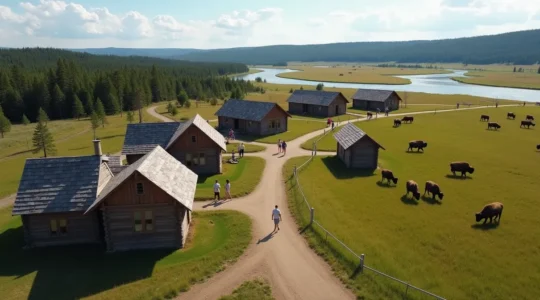
True understanding of Indigenous heritage sites comes from active participation in living culture, not just passive observation of historical artifacts. Oral histories are not myths; they are legally recognized records of a Nation’s relationship with their land. Traditional architecture, like…
Read more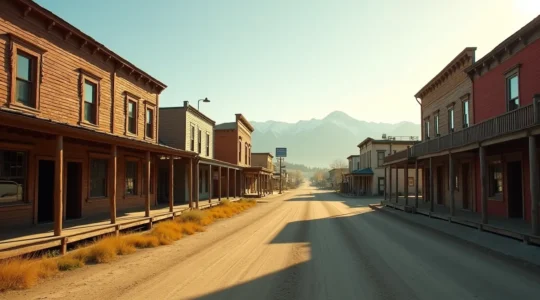
The true spirit of the Klondike isn’t found in a whiskey glass with a severed toe; it’s hiding in the town’s complicated history, the twisted foundations of its buildings, and the heavy black sand of its creeks. Most iconic experiences,…
Read more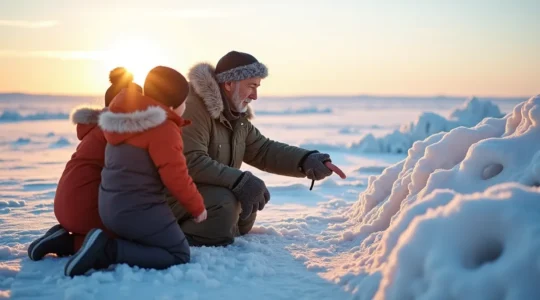
True Arctic survival isn’t a list of hacks; it’s a deep understanding of ecological principles known as Inuit Qaujimajatuqangit (IQ). Ingenious engineering, like the spiraled igloo, often outperforms modern gear by working with physics, not against it. Sensory skills, such…
Read more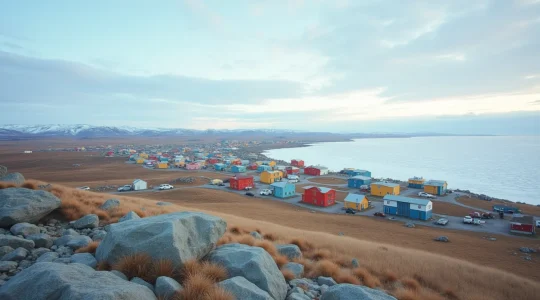
Planning a trip to Iqaluit is not about booking sights; it’s about mastering a system of isolation where logistics become a core part of the adventure. High costs are a direct result of an air-only supply chain, making every item…
Read more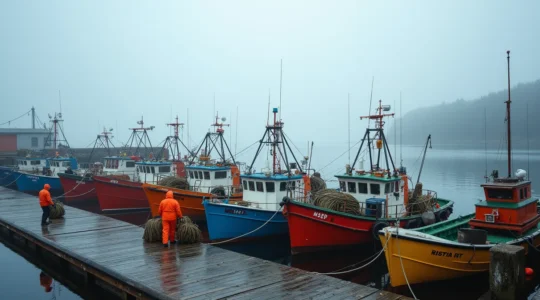
The secret to seeing an authentic Nova Scotia wharf isn’t knowing where to go, but how to act once you’re there. A working wharf is an active, dangerous worksite, not a tourist attraction; its rhythm is dictated by tides and…
Read more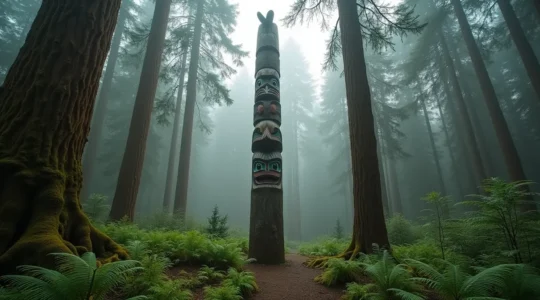
The most common mistake tourists make is believing the “low man on the totem pole” is the least important; in reality, the bottom figure is the foundation of the story and the most significant. Totem poles are not just art;…
Read more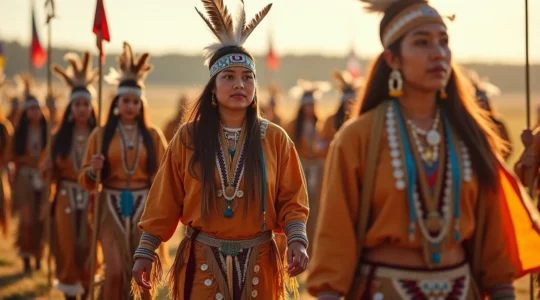
In summary: Respect goes beyond a checklist; it’s about understanding the “why” behind the protocols you observe. Always ask for permission before photographing a dancer or their regalia, and know when it’s inappropriate to even ask. Identify the type of…
Read more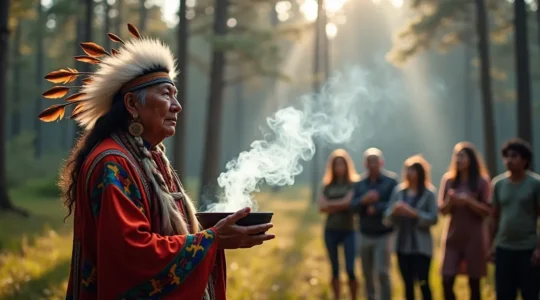
True engagement with Indigenous tourism isn’t a checklist of ‘dos and don’ts’; it’s about understanding the deep-rooted ‘why’ behind each protocol. Respectful interaction is based on reciprocity and recognizing living, sovereign cultures, not just historical artifacts. Economic support through certified…
Read more