
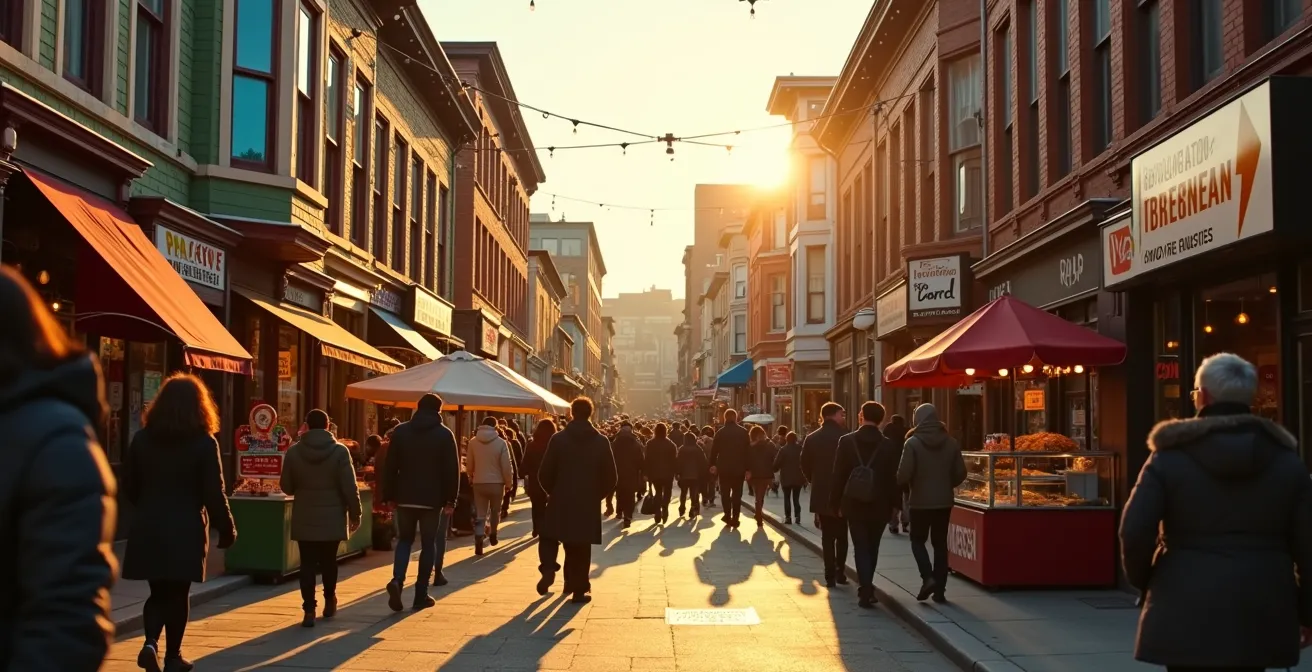
The true value of a $100 food tour isn’t just the food; it’s the hidden “Return on Experience” (ROE) it provides for budget-conscious travellers.
- It grants “access arbitrage” by letting you skip long lines at famous vendors, a quantifiable time-saving benefit.
- It delivers significant “narrative value,” where historical context and immigrant stories genuinely enhance the taste and meaning of each dish.
- It offers superior “culinary efficiency,” often combining breakfast and lunch into one 3-hour, cost-effective experience.
Recommendation: For travellers who prioritize curated stories and time-saving over spontaneous discovery, a food tour is a high-value investment. For those with severe dietary restrictions or a desire for pure exploration, a DIY approach may offer better value.
Imagine the scene: you’re in a new city, standing in a 45-minute line for a bagel that a blog post promised was “life-changing.” You can’t help but wonder—is this the best use of your limited vacation time? Is there a more efficient way to tap into a city’s culinary heart? This is the classic dilemma for the budget-conscious traveller: the fear of missing out versus the fear of overpaying. The common advice is to simply wander, to get lost in the streets and create your own adventure. Many will tell you to read a few articles and piece together your own tasting trail.
But what if that $100 fee for a guided food tour isn’t just for the food, but for a meticulously engineered experience? What if it’s an investment in culinary efficiency and narrative context? The debate over a tour’s worth often misses the point by focusing solely on the cost of the samples. The real calculation lies in the intangible—but valuable—assets it provides: privileged access, expert storytelling, and optimized logistics. For a travel budget analyst, the question isn’t “is it expensive?” but rather “what is the quantifiable return on this investment?”
This article moves beyond the surface-level debate. We will dissect the $100 price tag into its core value components. By analyzing the mechanics of skip-the-line access, the economic benefit of a well-timed tour, and the profound impact of story on taste, we will provide a clear framework to help you decide if a guided food tour in a place like Toronto’s Kensington Market is a smart financial decision for your travel style.
This guide breaks down the essential factors to consider, from the historical context of a neighbourhood to the practicalities of navigating a bustling market like a pro. Explore the analysis below to make an informed decision.
Summary: Decoding the Value of a Canadian Culinary Tour
- Why does knowing the immigrant history of Spadina Avenue make the dumplings taste better?
- Gritty multiculturalism or historic structure: which tour vibe do you prefer?
- How do tours get you skip-the-line access to famous bagel shops in Montreal?
- The communication mistake that ruins a food tour for someone with Celiac disease
- Why booking a 3-hour food tour at 10 AM serves as both breakfast and lunch?
- Why is Montreal’s nightlife radically different from Toronto’s after 11 PM?
- How has traditional frybread been adapted into a modern street food staple?
- How to shop at Granville Island Public Market like a local chef?
Why does knowing the immigrant history of Spadina Avenue make the dumplings taste better?
From a purely analytical perspective, a dumpling is a mix of flour, filling, and labour. Eaten without context, it’s a satisfying snack. However, when a guide on a Toronto food tour explains that Spadina Avenue was a landing strip for successive waves of Jewish, Portuguese, Chinese, and Vietnamese immigrants, that same dumpling transforms. It’s no longer just food; it becomes a symbol of perseverance, a tangible link to generations of families who built a new life in the crowded lanes of Kensington Market. This is the concept of narrative value, where story directly enhances sensory experience.
A great tour doesn’t just point you to good food; it weaves a story through the city’s history. Learning about the market’s origins as a Jewish market in the early 20th century, its evolution into a hub for global cultures, and its resilience through modern challenges provides a framework that gives each bite more meaning. The flavour is amplified by the knowledge of its cultural journey. This context is something a self-guided tourist, focused on a checklist of “must-eat” spots, will almost certainly miss.
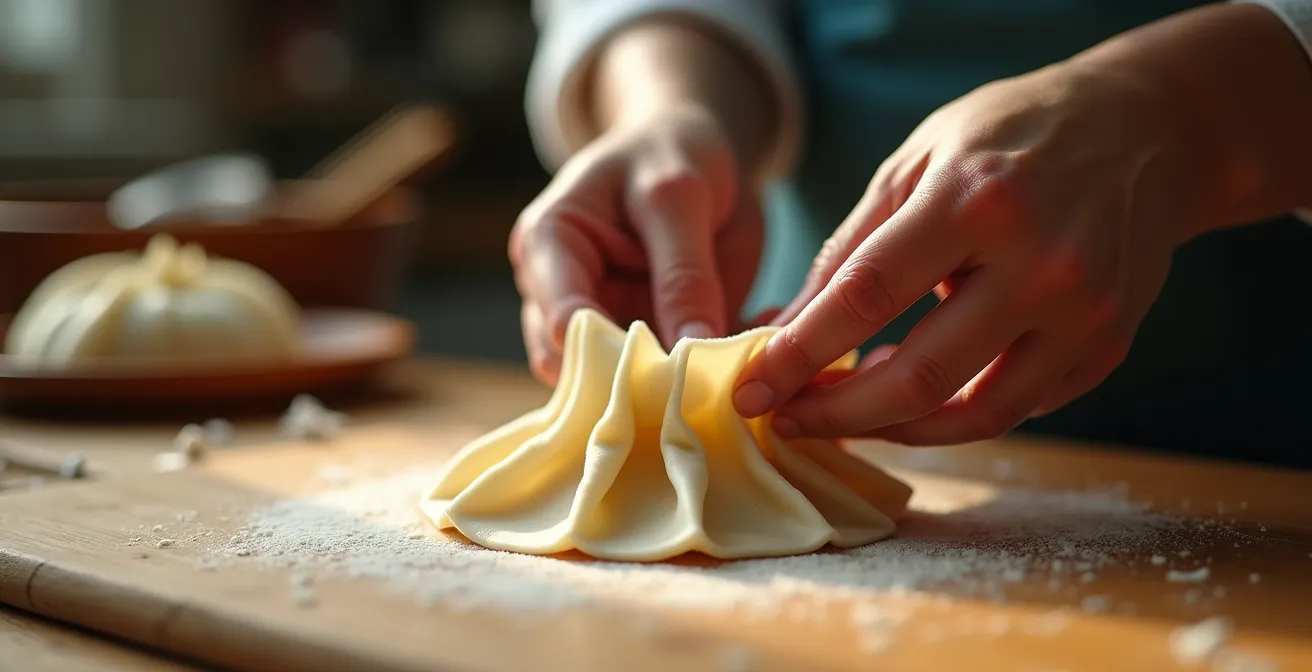
As you can see, the craft of dumpling-making is an art form passed down through generations. The tour provides the story behind the hands that make the food. This emotional and historical connection is a significant part of the “product” you are buying. It’s the difference between consuming a commodity and participating in a cultural experience. For many travellers, this narrative depth is a substantial part of the tour’s return on investment.
Gritty multiculturalism or historic structure: which tour vibe do you prefer?
Not all Canadian food tours deliver the same type of value. The “worth” of a tour depends heavily on aligning the experience with your personal travel preferences. A budget analyst would call this “matching the product to the consumer need.” The vibe of Kensington Market in Toronto is one of a living, breathing, and sometimes chaotic multiculturalism. It’s a place of organic evolution, where Victorian homes are now vintage clothing shops and immigrant-led food stalls operate next to each other. In contrast, a food tour in Old Quebec City offers a highly curated experience set against a backdrop of preserved 17th and 18th-century heritage.
One is not inherently better than the other; they simply offer a different return on your investment. The Toronto tour’s value lies in its dynamism and the feeling of discovering authentic, ever-changing street food. The Quebec City tour’s value is in its connection to French-Canadian history and a more traditional, structured culinary narrative. Understanding this distinction is crucial before you book.
As Forbes Magazine noted when it rated one Kensington Market tour among the best in the world, the quality is undeniable. The key is choosing the right kind of quality for you.
Forbes Magazine rates this as one of the best nine food tours in the world.
– Forbes Magazine, as cited in Country Guide
Before spending your money, analyze what kind of “vibe” you’re seeking. The following comparison helps clarify the different value propositions:
| Tour Style | Kensington Market | Old Quebec City |
|---|---|---|
| Character | Gritty, organic multiculturalism | Historic, preserved heritage |
| Food Focus | Immigrant-led street food | French-Canadian cuisine |
| Setting | Victorian homes, diverse food shops, vintage clothing shops | 17th-18th century buildings |
| Experience | Ever-changing, dynamic | Curated, traditional |
How do tours get you skip-the-line access to famous bagel shops in Montreal?
One of the most quantifiable benefits of a guided food tour is what a budget analyst would call “access arbitrage.” This is the value gained from privileged access that an ordinary individual doesn’t have. In cities like Montreal, where bagel shops like St-Viateur and Fairmount can have formidable lines, a tour group often walks right past the queue. This isn’t magic; it’s a pre-arranged business relationship.
Tour companies establish partnerships with popular vendors. They guarantee a certain number of customers at a specific time, and in return, the shop prepares the order in advance. This creates a win-win situation: the vendor gets a guaranteed, predictable revenue stream, and the tour participants save a significant amount of time. If your vacation time is limited, an hour saved from a queue is an hour you can spend on another activity. You can assign a real monetary value to that saved hour, making the tour fee a direct investment in efficiency.
This “access arbitrage” is becoming increasingly valuable. As culinary tourism grows, so do the crowds. An analysis of the sector shows the Canadian culinary tourism market is experiencing a projected compound annual growth rate of over 21% from 2024 to 2030. More interest means longer lines, and the ability to bypass them becomes a more significant component of the tour’s price. The tour fee effectively buys you time and removes the friction of waiting, a key value proposition for any time-crunched traveller.
The communication mistake that ruins a food tour for someone with Celiac disease
While food tours offer significant value, they also carry risks that can render them worthless for certain individuals. For a traveller with Celiac disease or severe food allergies, the biggest financial mistake isn’t booking an expensive tour—it’s booking one that can’t safely accommodate their needs. The most common error is a failure in communication, both from the tour company and the participant.
Many tours, especially those focused on street food in dense, multicultural markets like Kensington, cannot guarantee a gluten-free experience. The risk of cross-contamination from airborne flour at dumpling or empanada stands is simply too high. Some operators are explicit about this, stating that intolerances to gluten, dairy, or nuts cannot be accommodated. A traveller who fails to check this fine print or asks a vague question like “Is this gluten-free?” instead of a precise one about preparation methods is setting themselves up for disappointment and a wasted $100.
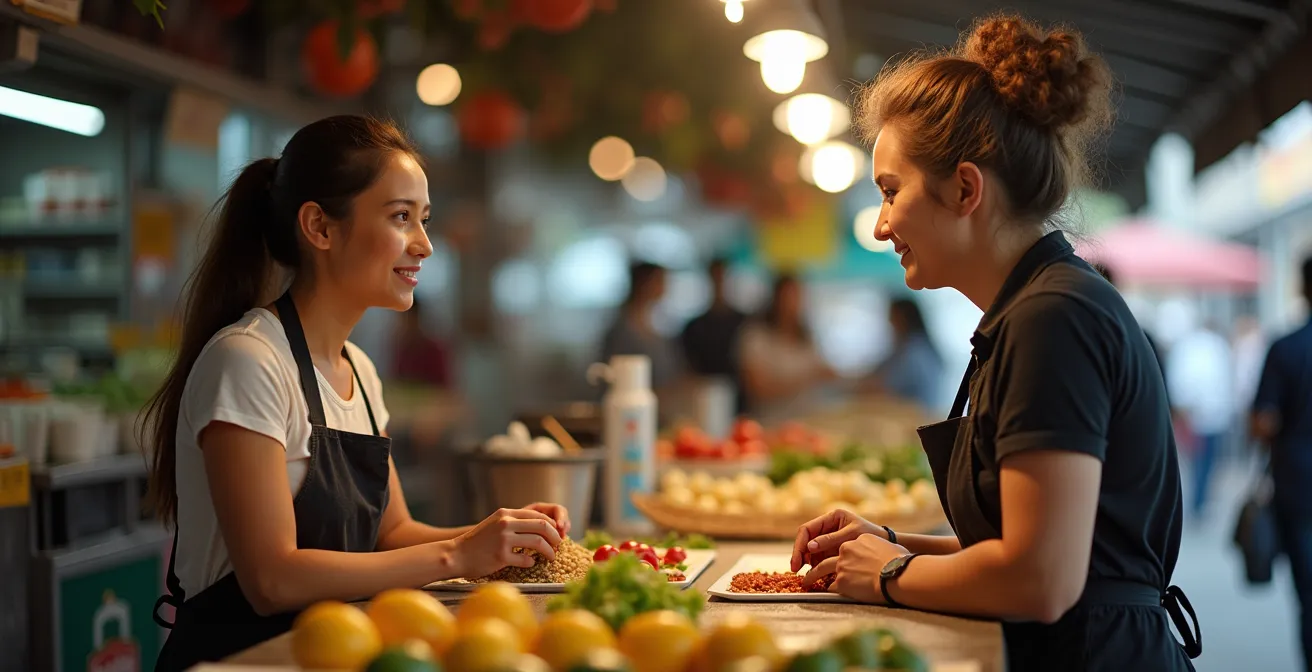
The solution is precise and proactive communication. Instead of general queries, ask specific questions: “Is the grill used for the meat also used for bread?” or “Are separate utensils used for the gluten-free items?” This level of detail allows the vendor and guide to give you an accurate assessment of the risk. For a person with Celiac disease, the “value” of a tour is not in the food they taste, but in the confidence that they can eat safely. If that confidence is absent, the tour has a negative value.
Why booking a 3-hour food tour at 10 AM serves as both breakfast and lunch?
A key aspect of analyzing a tour’s value is looking at its culinary efficiency and cost displacement. Booking a three-hour food tour that starts at 10:00 AM is a strategic move for a budget-conscious traveller. This timing effectively allows the tour to serve as both a late breakfast and a hearty lunch, consolidating two meal expenses into one activity cost. It’s not just a tour; it’s a tactical meal plan.
For example, a typical Kensington Market tour might include six tasting locations. The progression of dishes—from bagels to empanadas, and from traditional Indigenous food to a Caribbean specialty—is designed to be substantial. Tour operators often state that you’ll have enough to eat for a “hearty and satisfying lunch.” From a budget perspective, this is a crucial detail. If a tour costs $100 but replaces two meals that might have cost you $25-$35 each, the net cost of the “tour” part of the experience is effectively reduced to just $30-$50.
This calculation transforms the value proposition. You are no longer paying $100 for a few samples; you are paying for a guided activity and two of your day’s meals. The pricing for these tours often reflects this. For instance, pricing data from Tasty Tours shows a similar tour priced at $89 per person, explicitly stating the samples are “enough for lunch.” When you break it down on a per-hour basis, a three-hour tour becomes an activity costing less than $30 per hour, which includes food, a guide, and privileged access. This often compares favourably to other tourist activities that don’t include a full meal.
Why is Montreal’s nightlife radically different from Toronto’s after 11 PM?
The value of a guided experience often lies in understanding the subtle but powerful local regulations and cultural norms that shape a city. A prime example is the stark contrast between nightlife in Montreal and Toronto. While both cities have vibrant food scenes, their after-dark dynamics are governed by fundamentally different philosophies, a factor that a good guide can illuminate.
The core difference stems from provincial liquor laws. As one local nightlife expert explains, “Quebec’s later 3 AM last call versus Ontario’s typical 2 AM closing time creates fundamentally different nightlife dynamics.” This one-hour difference has a cascading effect. Montreal’s nightlife is more fluid and continuous, with late-night “boîte à chanson” establishments in the Plateau neighbourhood thriving well into the morning. This permissive zoning encourages a culture of extended culinary and social experiences.
In contrast, Toronto’s earlier last call, a remnant of its more conservative “Hogtown” Protestant work ethic roots, fosters a different scene. The nightlife often transitions from restaurants to more sophisticated, reservation-based cocktail bars in neighbourhoods like Ossington. The experience is more structured and segmented. A food tour guide who can explain these historical and legal underpinnings provides value beyond just pointing out a good bar. They equip you with the context to navigate the city like a local, ensuring your post-tour plans align with the city’s actual rhythm.
How has traditional frybread been adapted into a modern street food staple?
Sometimes, the “narrative value” of a food tour goes beyond immigrant history and touches on deeper themes of cultural identity and reclamation. In Canada, the story of frybread (or bannock) is a powerful example. What might appear to be a simple piece of fried dough is, in fact, a food with a complex and often painful history, now being re-embraced as a symbol of resilience and Indigenous food sovereignty.
Originally a survival food born from government rations, frybread’s adaptation into a celebrated modern street food staple at places like Toronto’s Pow Wow Café is a profound story. It represents a conscious act of taking a symbol of hardship and transforming it into one of pride and culinary creativity. A food tour that includes a stop for traditional Indigenous food and explains this context provides an experience that is impossible to replicate on your own. It elevates a simple meal into a lesson on history, culture, and social change.
This is where a tour’s value becomes almost immeasurable. It connects the traveller to a vital, ongoing conversation within the country.
The modern popularity of frybread/bannock represents not just a food trend, but an act of cultural reclamation and food sovereignty for Indigenous communities in post-TRC Canada.
– Indigenous food sovereignty advocate, as quoted in Nina Out and About
Eating frybread from a vendor who shares this story is a fundamentally different—and more valuable—experience than buying it without understanding its significance in the context of the Truth and Reconciliation Commission (TRC). This is the pinnacle of narrative value, where food becomes a medium for deeper understanding.
Key takeaways
- The true value of a food tour lies in intangible assets like curated stories (“narrative value”) and skip-the-line privileges (“access arbitrage”), not just the cost of the food.
- Strategic timing is crucial for budget-conscious travellers; a 10 AM tour can efficiently replace both breakfast and lunch, dramatically reducing the tour’s net cost.
- For individuals with severe dietary restrictions like Celiac disease, a tour’s value can be negative if cross-contamination risks are high. Precise communication is essential before booking.
How to shop at Granville Island Public Market like a local chef?
After analyzing the costs and benefits, you might decide that a self-guided DIY food adventure is the better investment for your travel style. If so, the goal is to replicate the “insider knowledge” of a tour guide. To shop at a bustling place like Vancouver’s Granville Island Public Market like a local chef, you need a strategy that goes beyond aimless wandering.
Chefs don’t just show up and buy what looks good; they have a method for discovering the best and freshest products. It starts with observation and targeted communication. Before diving into the crowded interior, they do a quick “perimeter walk” to spot daily specials on chalkboards. They build relationships with vendors and ask smart questions, not just “what’s good?” but “What’s new, experimental, or particularly good today that you only brought a small amount of?” This is how you find the hidden gems.
This strategic approach allows you to tap into the market’s seasonal rhythm. A local knows to visit The Lobster Man for the first spot prawns in May, to find Fraser Valley farmer’s stalls for blueberries in July, and to check Finest at Sea for Coho salmon in October. While the culinary tourism sector continues to expand, with Canada’s culinary tourism market projected to reach USD 1,837.9 million by 2030, mastering these local skills is the key to creating your own high-value experience.
Your Action Plan: The Chef’s Market Shopping Strategy
- Perimeter Reconnaissance: Before entering the main aisles, walk the entire outer perimeter of the market. Look for daily special boards or temporary stalls that others might miss.
- Targeted Questions: Approach vendors with specific queries. Instead of “What’s fresh?”, ask “What came in this morning that you’re most excited about?” or “What’s at its absolute peak right now?”
- Follow the Seasons: Know the local seasonal calendar. Ask vendors what’s just starting or about to end its season to get the best flavour and value. For example, look for Fraser Valley blueberries in July.
- Observe Local Behaviour: Pay attention to where the locals with reusable bags are shopping. They often frequent the vendors with the best quality and fairest prices, not necessarily the most prominent displays.
- Commit to a Small Sample: If unsure, buy a small amount of something new. This low-cost “test” can lead to a great discovery without a large financial commitment.
Now that you have the analytical framework, evaluate your personal travel priorities, budget, and appetite for adventure to decide whether a curated tour or a self-guided exploration of Canada’s markets is the right investment for you.
Frequently Asked Questions about Toronto Food Tours
Can food tours accommodate Celiac disease?
Unfortunately, for many street-food-focused tours like those in Kensington Market, intolerances to gluten, eggs, nuts, or dairy products often cannot be accommodated due to the high risk of cross-contamination in busy, open-air kitchens.
What should I communicate about my dietary needs?
Be extremely specific. Instead of asking “Is this gluten-free?”, use precise questions about preparation methods, such as “Are separate fryers or grills used?” and inquire about cross-contamination risks with your guide before the tour begins.
Which tour stops pose the highest cross-contamination risk?
Generally, vendors specializing in baked goods, dumplings, or empanadas where airborne flour is present pose a higher risk than stops that feature grilled meats, fresh juices, or whole fruits.