

In summary:
- Leverage Vancouver’s SkyTrain system, specifically the Millennium Line, to access dense clusters of breweries like Port Moody’s “Brewers Row.”
- Understand that British Columbia’s unique hop-growing history (terroir) is what gives its IPAs a distinct, world-renowned flavour profile.
- Plan your tasting flights strategically, moving from light to heavy beers to avoid ruining your palate early.
- Embrace the full local experience by pairing your brews with regional specialties like the iconic Nanaimo Bar.
The allure of British Columbia’s craft beer scene is undeniable. With hundreds of breweries dotting the landscape, the famous “BC Ale Trail” beckons with promises of hazy IPAs and rich stouts. Yet, for many visitors, a significant logistical hurdle stands in the way: the car. How do you fully immerse yourself in a multi-stop brewery tour when someone always has to be the designated driver? The typical advice is to “take transit” or “drink responsibly,” but these platitudes fail to capture the real opportunity. They treat public transport as a mere backup, not as the powerful tool it truly is.
What if the key wasn’t just avoiding a DUI, but unlocking a more authentic and strategic tasting experience? The secret to conquering the BC Ale Trail lies in shifting your perspective. This isn’t about compromise; it’s about optimization. By mastering the local transit network, you transform it into your personal cicerone, guiding you through a journey of “Transit-Powered Terroir.” You gain the freedom to sample generously, the flexibility to linger where the vibe is right, and the local insight to understand *why* the beer here tastes the way it does.
This guide provides the playbook for that journey. We will delve into the agricultural soul of the Pacific Northwest IPA and then provide a tactical, step-by-step plan for exploring Port Moody’s legendary Brewers Row via the SkyTrain. We’ll compare the taproom cultures of different cities, teach you how to taste like a professional, and even explore the other local flavours that make this region a culinary destination. Prepare to leave the car keys behind and embark on the ultimate zero-car flight.
This article provides a complete strategic guide to exploring the region’s craft alcohol scene responsibly and efficiently. Below is a summary of the key topics we’ll cover to help you plan your perfect car-free brewery adventure.
Summary: Your Guide to a Car-Free Canadian Craft Beer Tour
- Why is the Pacific Northwest style of IPA so distinctively hoppy and cloudy?
- How to use the SkyTrain to hit 5 breweries in Port Moody’s “Brewers Row”?
- Cowboy culture suds or West Coast hipsters: which city has the better taprooms?
- The consumption mistake of drinking Imperial Stouts like light lagers
- In what order should you drink a tasting flight to not ruin your palate?
- Why is Montreal’s nightlife radically different from Toronto’s after 11 PM?
- Why is this no-bake dessert a staple of British Columbia culture?
- Why is authentic Icewine so expensive compared to table wine?
Why is the Pacific Northwest style of IPA so distinctively hoppy and cloudy?
The answer to why Pacific Northwest (PNW) IPAs burst with such unique, resinous flavour isn’t just in the brewing technique; it’s in the soil and the air. This concept, known as terroir, is most often associated with wine, but it is the absolute heart of BC’s craft beer identity. The region’s signature “dank,” piney, and citrus-forward hop character is a direct result of its agricultural heritage, particularly in the Fraser Valley. For a time, this area was a North American hop-growing epicentre. While production waned for decades, the resurgence of craft brewing has revitalized local cultivation.
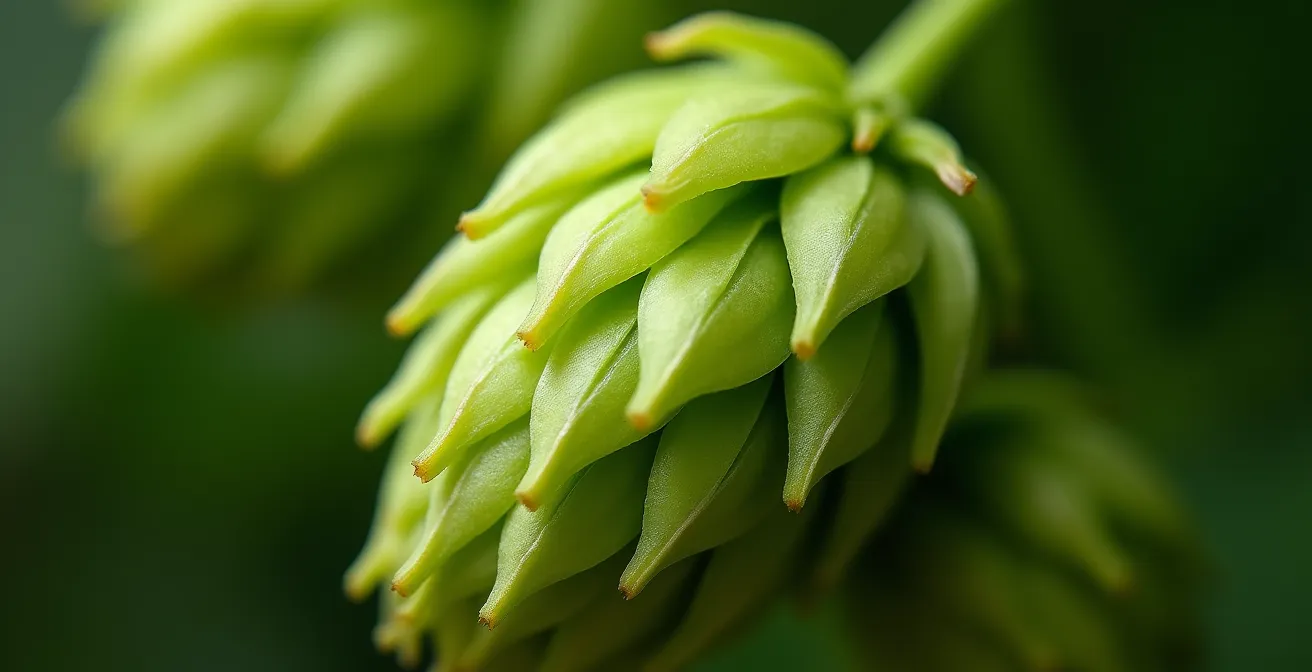
Historically, the Fraser Valley was a powerhouse of hop production, where the BC Hop Co. operated over 300 acres of hop fields a century ago. This legacy means the climate and soil are perfectly suited for growing varietals that produce intense aromatics. Modern brewers leverage this by using massive quantities of these local hops, often adding them late in the brewing process (“dry-hopping”) to maximize aroma without adding excessive bitterness. The “cloudiness” of the popular Hazy or New England style IPA comes from suspended hop particles, proteins from grains like oats and wheat, and yeast, all of which contribute to a softer, juicier mouthfeel and an explosive aromatic profile. As local brewer Josh Vanderheide of Field House Brewing notes about using local ingredients in an interview with The Growler B.C.:
It tastes like the Fraser Valley, and you won’t be able to find beer that tastes like that anywhere but the Fraser Valley.
– Josh Vanderheide, The Growler B.C.
This connection between the land and the glass is not an accident; it’s a deliberate celebration of place. The intense hop character of a BC IPA is a direct taste of the region’s rich agricultural history and ideal growing conditions. When you drink a true PNW IPA, you are tasting the specific terroir of the Pacific Northwest.
How to use the SkyTrain to hit 5 breweries in Port Moody’s “Brewers Row”?
Port Moody’s “Brewers Row” is the perfect case study for a “Zero-Car Flight.” This dense, one-kilometre stretch on Murray Street hosts a cluster of acclaimed craft breweries, making it an ideal destination for a walking tour. The key to unlocking it responsibly is Vancouver’s SkyTrain system. The Millennium Line delivers you within a short walk of the first taproom, eliminating the need for a designated driver and allowing everyone in your group to partake fully. It’s a seamless and efficient way to dive into one of the region’s premier craft beer hubs.
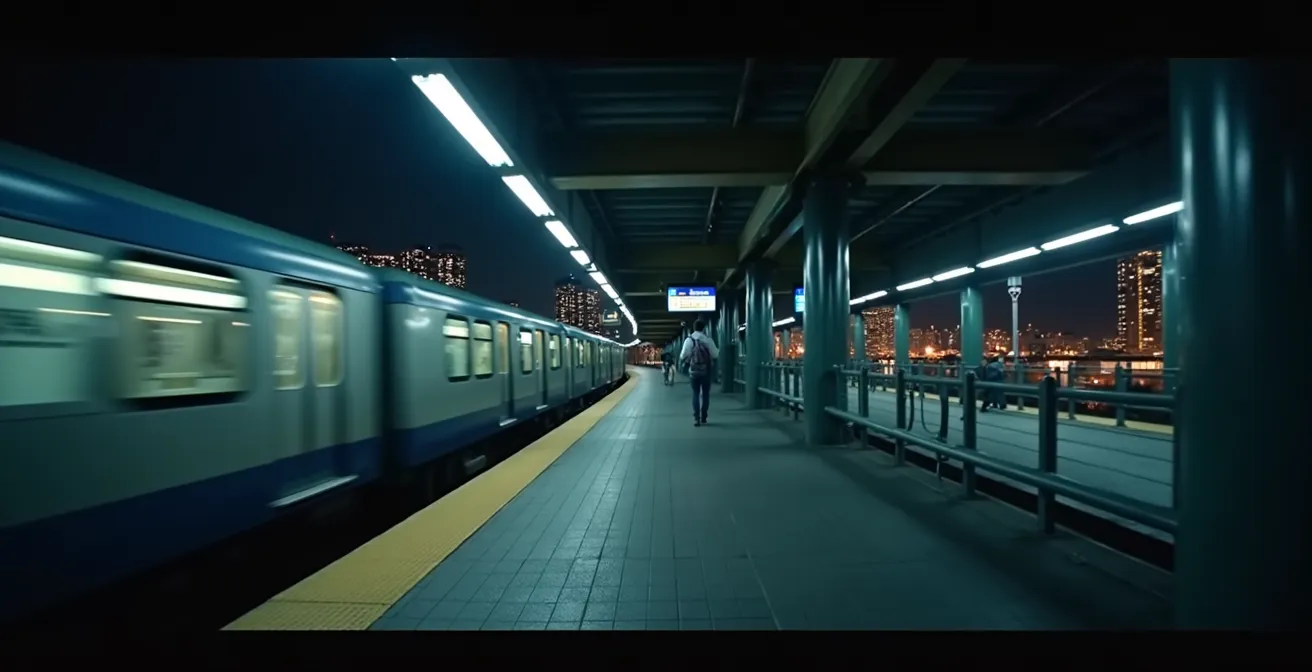
Executing this plan requires a bit of logistical know-how but is incredibly straightforward. The journey begins at any station on the SkyTrain network and ends at Moody Centre Station. From there, it’s a simple walk to the heart of the action. The concentration of breweries means you can easily visit several spots—like Yellow Dog, Parkside, Moody Ales, and Brave Brewing—in a single afternoon or evening without ever needing to hail a cab or check a bus schedule between stops. This is the essence of Transit-Powered Terroir: using smart, simple logistics to maximize your tasting experience.
Your Tactical Guide for a Brewers Row SkyTrain Tour
- Arrive at Moody Centre Station (Millennium Line). Be sure to check daily schedules, but as a guideline, the last train back to VCC-Clark typically departs around 1:20 AM.
- Walk 10 minutes south-west from the station to the start of Murray Street, which is the official “Brewers Row.”
- If taprooms are at capacity, leverage Port Moody’s “Alcohol in Parks” program. You can grab a takeaway can and enjoy it in the nearby and scenic Rocky Point Park between 11 am and dusk.
- Skip long restaurant queues by grabbing a bite from the local food trucks often parked outside major breweries like The Parkside Brewery or Yellow Dog Brewing.
This strategic approach turns a potential transportation headache into a core part of the adventure. You can focus on debating the merits of a Hazy Pale Ale versus a West Coast IPA, not on who has to sit out the next round. A little planning transforms the SkyTrain from simple transportation into your ticket to a carefree and comprehensive brewery crawl.
Cowboy culture suds or West Coast hipsters: which city has the better taprooms?
The question of whether Vancouver or Calgary has “better” taprooms is less about quality and more about culture, a difference shaped profoundly by provincial regulations. On the surface, Vancouver’s scene feels experience-driven—think aesthetically designed spaces, food truck collaborations, and a strong connection to outdoor lifestyle. Calgary’s scene often feels more like a community hub—larger, more bustling spaces that are deeply integrated into their neighbourhoods. These aren’t just stereotypes; they are the direct results of two very different liquor retail models.
British Columbia operates under a hybrid public/private model where the Liquor Distribution Branch (LDB) controls wholesale, leading to generally higher prices and a focus on the “taproom experience” as a primary revenue driver and brand-builder. Alberta, by contrast, has a fully privatized system. This fosters intense price competition at the retail level but also allows breweries to function more as high-volume community gathering spots. As one local brewer from Port Moody mentioned, the BC model fosters a tight-knit business community where “the business owners know each other.” This collaborative, almost artisanal environment is a hallmark of the BC scene.
The following table, based on an analysis of BC and Alberta liquor licensing, breaks down the core differences that shape each city’s taproom identity.
| Feature | British Columbia (Vancouver) | Alberta (Calgary) |
|---|---|---|
| Retail Model | Hybrid Public/Private (LDB controls wholesale) | Fully Privatized (AGLC wholesaler) |
| Market Density | ~897 Retailers (Provincial) | ~2,300 Retailers (Provincial) |
| Pricing Trend | Generally Higher (Fixed Markups) | Generally Lower (Competitive Pricing) |
| Taproom Focus | Experience-driven & Tourism | Volume-driven & Community Hubs |
Ultimately, neither is objectively “better.” It’s a matter of preference. Do you seek a curated, aesthetic experience deeply tied to a sense of place (Vancouver)? Or do you prefer a lively, accessible, and community-focused pint (Calgary)? The “taproom tectonics” created by these provincial regulations are what give each city its distinct and authentic flavour.
The consumption mistake of drinking Imperial Stouts like light lagers
One of the most common mistakes a newcomer to the craft beer world makes is treating every beer the same. This is especially dangerous and wasteful when it comes to an Imperial Stout. Drinking this rich, complex style as if it were a light, refreshing lager is a recipe for overwhelming your palate and ending your night prematurely. The fundamental difference lies in two things: alcohol content (ABV) and flavour intensity. Your average light lager sits around 4-5% ABV, designed for easy drinking. An Imperial Stout, however, frequently clocks in between 9% and 14% ABV, sometimes even higher.
Chugging an Imperial Stout is like sprinting through an art museum. You’ll get through it, but you will have missed the entire point. These beers are brewed with a massive amount of roasted malt, creating deep, layered flavours of dark chocolate, espresso, molasses, and dried fruit. They are meant to be sipped and savoured slowly, allowing the beer to warm up slightly in your glass. As it warms, its complex aromatics will open up, revealing new notes and nuances that are completely lost when it’s ice-cold.
Beyond ruining the sensory experience, treating an Imperial Stout like a session beer is irresponsible. Consuming a 12oz glass of a 12% ABV stout is equivalent to drinking nearly three standard beers. Doing so quickly can lead to rapid intoxication and a thoroughly unpleasant experience. The proper vessel is often a “snifter” or “tulip” glass, which helps concentrate the aromas. The pace is leisurely. Think of it less like a thirst-quencher and more like a fine port or a complex whisky—a drink to be contemplated, not just consumed.
In what order should you drink a tasting flight to not ruin your palate?
Ordering a tasting flight is the best way to explore a brewery’s range, but without a strategy, you can inadvertently sabotage your own experience. The goal is to prevent “palate fatigue,” where a single intensely flavoured beer overwhelms your taste buds, making it impossible to appreciate the subtleties of the beers that follow. The golden rule is simple and unwavering: progress from the lightest and least intense to the darkest and most intense. Violating this order is like listening to the quietest part of a symphony after a blast of heavy metal—you simply won’t hear it.
Your “logistical palate” should guide your choices. Always start with the beers that are crisp, clean, and delicate. This allows your palate to warm up and perceive the subtle notes in these styles. Then, you can progressively move towards more aggressive flavours. A well-constructed flight is a journey, not a random assortment. By following a logical sequence, you ensure that each beer gets a fair tasting and that your palate remains sharp enough to appreciate the full spectrum of what the brewer has to offer.
Here is the universally accepted order for structuring a tasting flight to maximize your sensory experience:
- Crisp and Clean: Start with styles like Pilsners, Light Lagers, Kölsch, or Blonde Ales. These are low in alcohol and have a delicate flavour profile that cleanses the palate.
- Fruity and Yeasty: Move on to wheat beers (Hefeweizen), Saisons, or Belgian-style ales. These introduce more complex yeast-driven flavours like banana, clove, and spice.
- Hoppy and Bitter: This is the realm of Pale Ales and, most notably, IPAs. The significant hop character and bitterness would wreck your ability to taste lighter beers, so they must come after.
- Dark and Roasty: Now introduce the malt-forward beers. Start with Brown Ales, then move to Porters and Stouts, which have notes of coffee and chocolate.
- The Extremes: Finish with the most intensely flavoured beers. This includes high-alcohol Imperial Stouts and Barleywines, or sharply acidic Sours and barrel-aged creations. They are the grand finale for your palate.
Why is Montreal’s nightlife radically different from Toronto’s after 11 PM?
While both are world-class Canadian cities, the nightlife experiences in Montreal and Toronto diverge dramatically after 11 PM, a difference rooted in deep cultural and regulatory foundations. Toronto’s scene, largely influenced by Anglo-Saxon norms and Ontario’s strict liquor laws (governed by the AGCO and LCBO), is more structured. Nightlife is concentrated in designated entertainment districts, and a standard 2 AM last call acts as a hard deadline, creating a predictable, synchronized exodus from bars and clubs.
Montreal, in contrast, operates with a spirit of “joie de vivre” that is reflected in its more permissive regulations and social fabric. Historically, Quebec’s liquor laws have allowed for a 3 AM last call, an extra hour that completely changes the rhythm of the night. This, combined with a culture that embraces street life, vibrant terraces, and the unique ability to bring your own wine (BYOW or AVV) to many restaurants, fosters a more fluid and spontaneous nightlife. The evening doesn’t have a single, abrupt end; it gracefully winds down.
Furthermore, the physical layout of the cities contributes to the difference. Toronto’s nightlife can feel more centralized, whereas Montreal’s is woven into the fabric of diverse neighbourhoods like the Plateau, Mile End, and the Latin Quarter, each with its own distinct character. After 11 PM in Toronto, the energy is often focused on getting that last drink before closing. In Montreal, the night still feels full of possibilities—whether it’s moving to a different bar, grabbing a late-night poutine, or simply enjoying the lively street atmosphere. It’s a contrast between a structured event and an organic, flowing experience.
Key Takeaways
- The distinct flavour of Pacific Northwest IPAs is a direct result of the region’s unique hop-growing terroir.
- Strategic use of public transit, like the SkyTrain to Port Moody’s Brewers Row, enables a safe and comprehensive brewery touring experience.
- Proper tasting etiquette, especially for flights and high-ABV beers, is crucial for appreciating the full spectrum of craft beer flavours.
Why is this no-bake dessert a staple of British Columbia culture?
The Nanaimo Bar is more than just a dessert; it’s a piece of British Columbian identity, a sweet icon as representative of the province as the Rocky Mountains or the Pacific Ocean. Its status as a cultural staple comes down to three key factors: its undeniable deliciousness, its accessible no-bake recipe, and its deep, authentic roots in the city of Nanaimo on Vancouver Island. The bar is a perfect trifecta of textures and flavours that has become a point of local pride.
The magic of the Nanaimo Bar lies in its distinct three-layer construction. The bottom layer is a dense, chewy base of chocolate, graham cracker crumbs, coconut, and walnuts. The middle layer provides a sweet, creamy contrast with a vibrant yellow custard-flavoured buttercream icing. The entire bar is crowned with a thin, crisp layer of semi-sweet chocolate ganache that snaps when you bite into it. This combination of crunchy, creamy, and chewy is utterly addictive and instantly recognizable.
Its “no-bake” nature is the secret to its ubiquity. Because it requires no oven, it became an incredibly popular recipe for home cooks, church bake sales, and community gatherings in the mid-20th century. It was an easy, reliable, and impressive treat that anyone could make. This grassroots popularity cemented its place in BC’s culinary canon long before it gained international fame. Today, you can find it in nearly every café, bakery, and grocery store in the province, from rustic, homemade versions to gourmet interpretations. To eat a Nanaimo Bar is to take a bite out of British Columbia’s cultural history.
Why is authentic Icewine so expensive compared to table wine?
The high price of authentic Canadian Icewine is not a matter of marketing; it’s a direct reflection of the immense risk, intensive labour, and incredibly low yield involved in its production. Unlike table wine, which is made from grapes harvested in the fall, Icewine requires a very specific and perilous act of nature. To be certified by VQA (Vintners Quality Alliance) in Canada, the grapes must be left on the vine to freeze naturally at a temperature of at least -8°C (17°F). This is a massive gamble for any vineyard.
The production process is a trifecta of difficulty. First, there’s the agricultural risk. Grapes can be lost to rot, birds, or weather events while waiting for the perfect freeze. If the winter is too mild, the freeze may never come; if it’s too harsh, the grapes can be destroyed. Second, the labour is brutal. Harvesting often takes place in the middle of the night, by hand, in freezing temperatures to ensure the grapes are picked and pressed while still frozen solid. It is demanding, uncomfortable work.
Finally, and most importantly, the yield is minuscule. When a frozen grape is pressed, only a few drops of highly concentrated, syrupy nectar are extracted; the water content remains behind as ice. A single vine might produce enough juice for a full bottle of table wine, but that same vine might only yield enough juice for a single glass of Icewine. This extreme concentration of sugars, acids, and flavours is what gives Icewine its legendary sweetness and complexity, but it’s also what makes it so rare and, consequently, so expensive. You are not just paying for wine; you are paying for the risk, the labour, and the precious, concentrated essence of the grape.
By embracing these strategies, you can transform your visit into an unforgettable exploration of Canadian craft culture. The next logical step is to start putting this knowledge into practice by planning your very own “Zero-Car Flight” and discovering the rich flavours the region has to offer.