
In summary:
- The Discovery Pass covers park entry but not “stacked” fees like backcountry permits, camping reservations, or shuttle services.
- Maximizing value requires strategic planning for reservations, which open on specific launch dates and sell out in minutes.
- Understanding the logistical maze of driving routes and jurisdictional differences between federal and provincial parks is key to saving time and money.
- Avoiding common traps like car rental one-way fees and being unaware of strict pet policies will protect your budget.
For any road tripper planning to explore the majestic Canadian Rockies, the question inevitably arises: is the Parks Canada Discovery Pass worth the investment? The standard advice is to calculate your daily entry fees against the annual pass cost, a simple arithmetic exercise. Most conclude that for trips longer than a week, the pass pays for itself. This, however, is a dangerously incomplete picture. The true value of a Discovery Pass isn’t unlocked by simply entering the parks; it’s realized by successfully navigating the complex administrative ecosystem that governs your entire experience.
The pass is your key, but it doesn’t open every door. Beyond the gate lies a world of mandatory secondary fees, hyper-competitive reservation systems, and logistical puzzles that can make or break your trip budget and itinerary. Issues like backcountry permits, sold-out shuttles to iconic lakes, and the surprising differences between national and provincial park rules are where the real challenges—and opportunities for savings—lie. The focus shouldn’t be on the entry fee, but on mastering the system itself.
This guide moves beyond the basic math. We will deconstruct the hidden costs and administrative hurdles that most visitors overlook. By understanding the nuances of backcountry fee stacking, mastering the reservation “battle plan,” choosing the most efficient driving routes, and avoiding costly logistical errors like car rental one-way fees, you can transform your Discovery Pass from a simple admission ticket into a tool for strategic travel, ensuring your two-week adventure is both breathtaking and budget-conscious.
To help you plan the most efficient and cost-effective journey, this article breaks down the essential strategies you need to master. The following sections will provide an in-depth look at everything from managing fees and securing reservations to optimizing your travel route through the mountains.
Summary: A Strategic Guide to Your Parks Canada Discovery Pass
- Why do your entry fees increase if you stay overnight in the backcountry?
- How to navigate the new reservation launch dates to get a spot in Jasper?
- Parks Canada or SEPAQ/BC Parks: understanding the difference in regulations?
- The leash law fine that surprises dog owners in National Parks
- In what order should you visit the Mountain Parks to save driving time?
- How to secure a Parks Canada shuttle seat when they sell out in minutes?
- Why spending $500 on a helicopter drop offers better value than a crowded bus tour?
- How to avoid the exorbitant “one-way fee” when renting a car in Canada?
Why do your entry fees increase if you stay overnight in the backcountry?
One of the first points of confusion for many Discovery Pass holders is the concept of “fee stacking.” You’ve paid for entry, yet when you book a multi-day hike, additional charges appear. It’s crucial to understand that the Discovery Pass covers park access only. It is not an all-inclusive pass for activities within the park. Backcountry usage involves a separate fee structure designed to manage and preserve these fragile wilderness areas.
These fees directly fund wilderness-specific infrastructure and services that front-country visitors don’t use. This includes the maintenance of remote trails, the upkeep of backcountry campgrounds (tent pads, waste facilities), and, most importantly, the provision of emergency rescue services in areas far from roads. For the 2025 season, the standard national park backcountry camping permit costs an additional $13.50 per person per night. On top of this, Parks Canada charges an $11.50 non-refundable online reservation fee per booking.
While it may seem like an extra cost, it represents immense value. A three-day backcountry trip on a trail like Mount Revelstoke’s might cost around $40.50 in permit fees, offering unparalleled solitude and a deep wilderness experience. In contrast, securing three nights at a crowded front-country campsite in Banff can easily cost $300-$400. The backcountry fee is your contribution to preserving the very wilderness you’ve come to enjoy, ensuring it remains pristine and safe for future adventurers. This distinction is the first step in mastering the Parks Canada system.
How to navigate the new reservation launch dates to get a spot in Jasper?
Securing a campsite in a popular park like Jasper during peak season is less like booking a hotel and more like competing for concert tickets. The most coveted spots are often fully booked within minutes of the reservation system opening. The key to success is not luck, but a well-executed “pre-launch battle plan.” Parks Canada uses a staggered launch system, announcing specific dates and times for each park months in advance. For example, Parks Canada confirmed the official launch date for 2026 Jasper camping reservations is January 27, 2026, at 8:00 AM MT.
Simply showing up on the website at the launch time is a recipe for disappointment. You will be placed in a virtual queue with thousands of other hopeful campers. To gain an edge, you must prepare. This means having your account ready, your top choices shortlisted, and backup plans in place. The intensity of this process is real; many seasoned campers use multiple devices to increase their chances of getting through the queue faster.
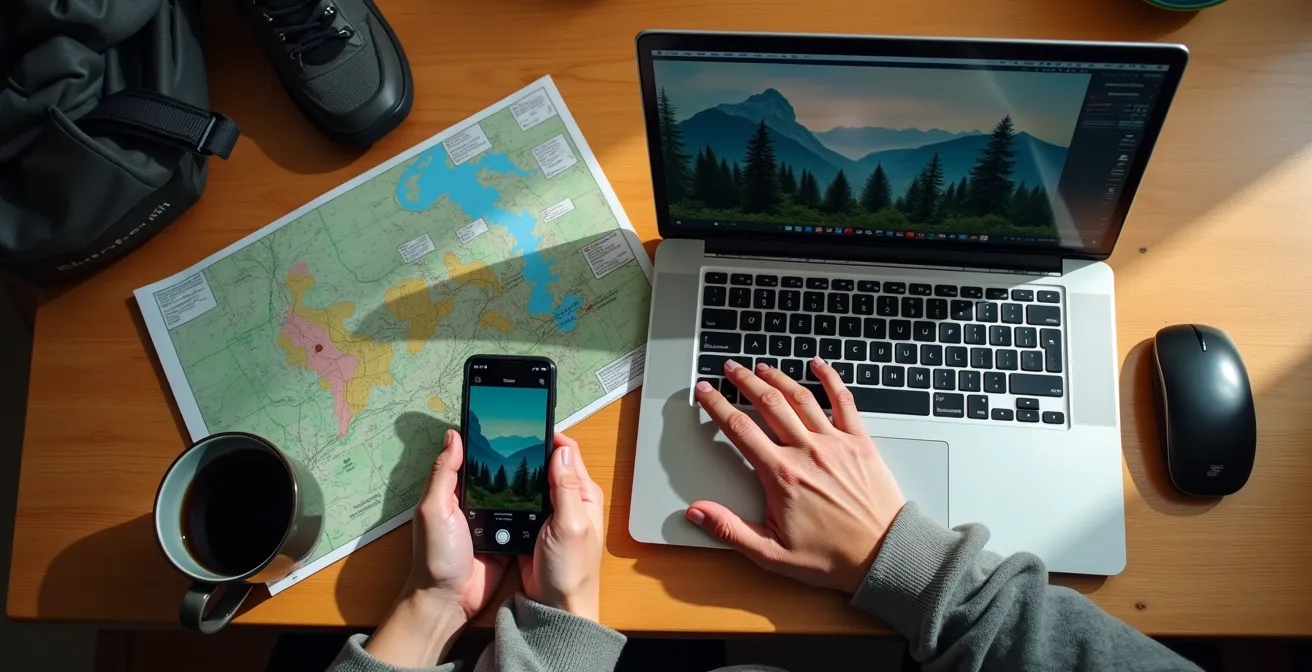
As the image above illustrates, a multi-pronged approach is often necessary. Having your primary and backup choices ready on different devices or browser tabs allows you to pivot instantly if your first choice is gone. This level of preparation, or “system arbitrage,” is what separates those who get their dream spot from those who are left with none.
Your battle plan for securing Jasper reservations
- Create and test your Parks Canada GCKey login well before launch day; set up your account at reservation.pc.gc.ca.
- Calculate the exact launch time in your home timezone—Jasper launches at 8:00 AM Mountain Time—and set multiple alarms.
- Pre-browse the reservation site to familiarize yourself with the layout and shortlist your top 3 campgrounds (e.g., Whistlers, Wapiti, Miette).
- Have backup dates and alternative campgrounds ready; be prepared to be flexible if your first choice is unavailable.
- Use multiple devices or browsers to enter the virtual queue simultaneously when the system opens to increase your odds.
Parks Canada or SEPAQ/BC Parks: understanding the difference in regulations?
A common and costly mistake for road trippers is assuming the Parks Canada Discovery Pass and its associated rules apply to all parks across Canada. This is far from the truth. Canada operates on a federal and provincial park system, creating a jurisdictional maze for unaware travelers. Your Discovery Pass is valid for national parks (like Banff, Jasper, Yoho), but it is completely useless in provincial parks, which are managed by individual provinces and have their own fee structures and regulations.
For a cross-country or even an inter-provincial trip, this has significant budget implications. A two-week trip from Quebec to British Columbia might require a family Discovery Pass for $151.25, plus separate daily entry or camping fees for Quebec’s SEPAQ parks ($9-15 per day) and BC Parks ($10-35 per night). These systems also have vastly different rules regarding booking windows, alcohol consumption, and pet policies. For example, BC Parks often has a total alcohol ban on long weekends, a surprise that can put a damper on holiday plans. Navigating this requires planning beyond just your national park itinerary.
This table highlights the critical differences a traveler must be aware of when crossing provincial borders. Failing to understand this distinction can lead to unexpected expenses and logistical headaches.
| Regulation | Parks Canada | BC Parks | Alberta Parks | SEPAQ (Quebec) |
|---|---|---|---|---|
| Booking Window | Fixed launch dates in January | 4-month rolling window | 3-month rolling window | Varies by park |
| Dog Policies | On-leash required everywhere | Varies by park | Generally allowed on-leash | Often restricted on trails |
| Discovery Pass Valid | Yes – all locations | No – separate fees | No – separate fees | No – separate system |
| Alcohol Rules | Allowed at campsites | Total ban on long weekends in many parks | Allowed at campsites | Varies by location |
The leash law fine that surprises dog owners in National Parks
For many, a road trip isn’t complete without their four-legged companion. However, Canadian National Parks have a zero-tolerance policy for off-leash dogs, and the fines—which can be substantial—often surprise unprepared pet owners. This rule is not arbitrary; it is a critical measure for wildlife protection and public safety. An off-leash dog, no matter how well-behaved, can have devastating consequences in a wild environment.
The reasoning behind the strict leash law is multi-faceted and rooted in ecological preservation. As explained in the official guidelines, the potential for negative interactions is high. A curious dog can easily disturb sensitive habitats or provoke a defensive attack from a protective animal like a mother bear. The presence of a domestic animal can also cause wildlife, such as caribou or elk, to expend precious energy reserves by fleeing, which can be particularly harmful during critical seasons. The official Parks Canada position clarifies the risk:
An off-leash dog can provoke a defensive attack from a mother bear, cause a herd of caribou to expend precious energy, or trample sensitive ground-nesting bird habitats.
– Parks Canada Wildlife Safety Guidelines, Official Parks Canada regulations
To ensure a safe and enjoyable trip with your pet, it’s best to embrace the on-leash rule and plan accordingly. This includes identifying designated off-leash parks in gateway towns like Canmore and Banff for exercise, and selecting trails known to be dog-friendly. Always remember that in the national parks, your dog is a visitor in a wild animal’s home, and the leash is the most important tool for ensuring respectful coexistence.
In what order should you visit the Mountain Parks to save driving time?
For a two-week road trip, your route is your most valuable asset. Efficiently ordering your park visits provides significant logistical leverage, saving you hours of backtracking and maximizing your time at key locations. Most visitors arrive via Calgary International Airport (YYC), presenting two primary route options: a cost-effective “Calgary Loop” or a more expansive “Calgary to Vancouver” one-way journey. The choice depends heavily on your budget and timeframe.
The Calgary Loop is the most common and financially prudent option, as it avoids the hefty one-way car rental fees. A typical 10-14 day itinerary involves driving from Calgary to Banff, then to Lake Louise (which serves as a base for visiting Yoho National Park), up the Icefields Parkway to Jasper, and finally returning to Calgary. For photographers, a key tip is to drive the Icefields Parkway from north to south (Jasper to Lake Louise) on the return leg, as this orientation provides better morning light on the iconic mountain peaks.
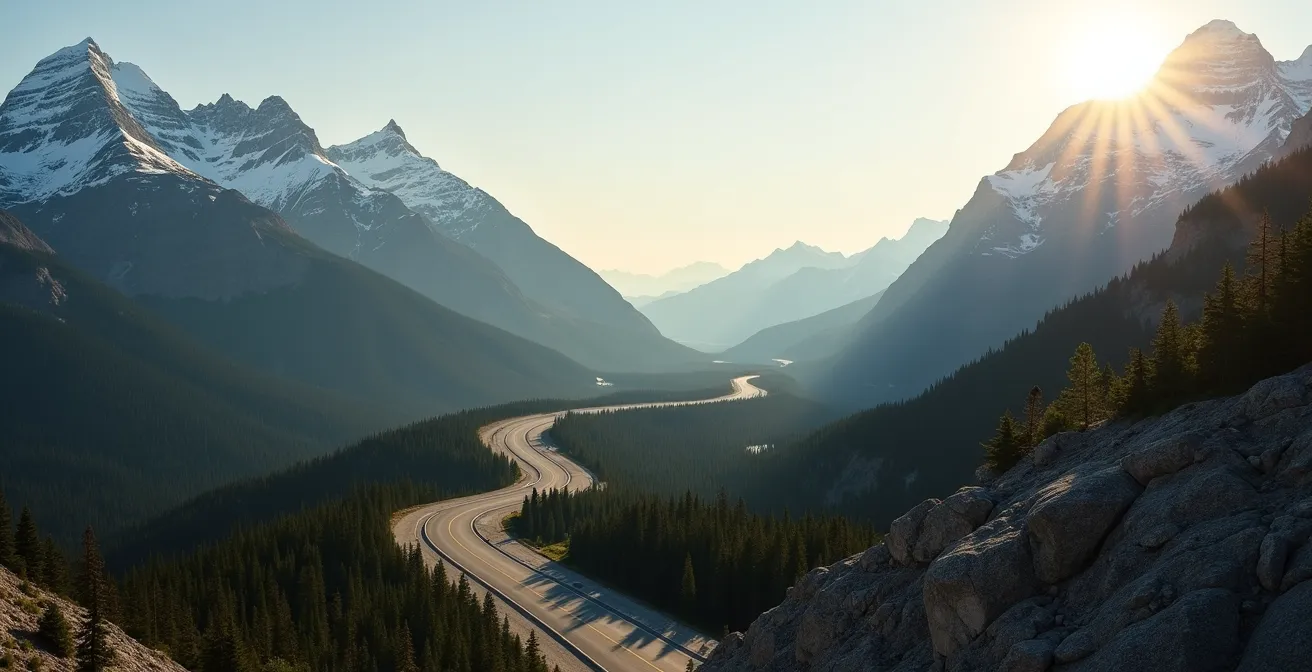
Strategically integrating smaller parks is also vital. Yoho National Park can be effectively explored as a day trip from a base in Lake Louise, eliminating the need for an extra accommodation change. Similarly, Kootenay National Park offers a scenic alternative route back towards Calgary from the Trans-Canada Highway, with the bonus of a stop at Radium Hot Springs. Your Discovery Pass covers all these national parks, making it easy to hop between them once you’re in the region.
| Route Option | Total Distance | Rental Car Cost | Key Advantages | Best For |
|---|---|---|---|---|
| Calgary Loop | ~1,100 km | No one-way fee | Cost-effective, returns to same airport | Budget travelers, 10-14 days |
| Calgary-Vancouver | 1,200 km | +$500-1000 one-way fee | More scenic variety, ends at coast | One-way travelers, 14+ days |
| North-to-South Icefields | 230 km segment | N/A | Better morning light on peaks | Photographers |
How to secure a Parks Canada shuttle seat when they sell out in minutes?
Accessing iconic locations like Lake Louise and Moraine Lake has become a significant logistical challenge. Due to overwhelming demand and limited parking, personal vehicle access to Moraine Lake is no longer permitted, making the Parks Canada shuttle system mandatory. These shuttle seats are as competitive as Jasper campsites, often selling out within minutes. Success relies on understanding and exploiting the “system arbitrage” of the booking process.
Parks Canada releases shuttle seats in two distinct waves. A first block, representing 40% of the season’s seats, is released in the spring. The real opportunity for last-minute planners, however, lies in the second wave. As Parks Canada’s official reservation policy states, the remaining 60% of seats are released exactly 48 hours prior to the departure day, at 8:00 AM Mountain Time. This rolling release is your second chance.
To capitalize on this, you must be prepared. Set an alarm for 8:00 AM MT two days before you wish to visit. If the official shuttles are still sold out, pivot immediately to Plan B: the Roam Transit public bus service, which runs from the Banff townsite to Lake Louise. Another insider strategy is the “Lake Louise First” approach: book a shuttle to the more accessible Lake Louise, and then use the free Lake Connector shuttle to get to Moraine Lake. Finally, be flexible with your timing. Sunrise slots are the most popular; targeting a less-demanded 11:00 AM slot can significantly increase your chances of securing a seat while still providing a fantastic experience.
Your booking strategy for Lake Louise & Moraine Lake shuttles
- Attempt to book during the main spring release (40% of seats) as soon as the season’s schedule is announced.
- If you miss the first wave, set an alarm for exactly 48 hours before your desired date at 8:00 AM Mountain Time to try for the remaining 60% of seats.
- If official shuttles are sold out, immediately book the Roam Transit public bus from Banff as your reliable Plan B.
- Consider the ‘Lake Louise First’ strategy: book a shuttle to Lake Louise and then use the inter-lake connector to reach Moraine Lake.
- Target less popular time slots, like 11 AM, which sell out slower than sunrise times but still offer a great visit.
Key takeaways
- The Discovery Pass is only the first step; budget for stacked fees like backcountry permits and reservations.
- Success in the Rockies depends on logistical planning: master the reservation systems, shuttle bookings, and driving routes.
- Avoid major budget traps by planning a loop trip to negate car rental one-way fees and understanding inter-provincial park rules.
Why spending $500 on a helicopter drop offers better value than a crowded bus tour?
On a trip with limited time, the most valuable currency isn’t money, but quality experience. This shifts the focus from “total cost” to “value-per-hour.” While a $150 bus tour seems like a bargain compared to a $500 helicopter flight, a closer look at what you actually get for your money reveals a different story. A typical 10-hour bus tour along the Trans-Canada Highway might only include two hours of actual sightseeing at crowded, easily accessible viewpoints, shared with 50 other tourists. The cost per quality hour of sightseeing is therefore a steep $75.
In contrast, a heli-hiking drop-off, for instance to the remote and spectacular Mount Assiniboine area, offers an unparalleled return on investment. The experience provides exclusive access to a landscape often called the “Matterhorn of the Rockies,” a place that would otherwise require a grueling two-day hike to reach. This not only buys you near-total solitude but also an extra four days of vacation time that would have been spent on the trail.
The helicopter flight itself is a breathtaking panoramic tour. When you break down the cost versus the quality of the experience delivered, the helicopter becomes a strategic tool for time maximization. It’s an investment in exclusivity, efficiency, and creating a truly memorable highlight for your trip, far removed from the highway crowds. This re-framing of value is essential for getting the most out of a short trip.
| Experience Type | Total Cost | Quality Time | Cost Per Quality Hour | Exclusivity |
|---|---|---|---|---|
| 10-hour Bus Tour | $150 | 2 hours actual sightseeing | $75/hour | Shared with 50 people |
| 3-hour Heli-hiking | $500 | 2.5 hours alpine access | $200/hour | Group of 4-6 only |
| Photography Flight | $600 | 1 hour golden hour | $600/hour | Private or semi-private |
How to avoid the exorbitant “one-way fee” when renting a car in Canada?
The “one-way fee” is a major budget trap for road trippers. Rental car companies charge a premium, often between $500 and $1,000, for dropping a vehicle off at a different location from where it was picked up. For a trip starting in Calgary and ending in Vancouver, this fee can single-handedly derail your budget. Fortunately, with strategic planning, this exorbitant charge is almost always avoidable.
The most effective strategy is to design a Calgary Rockies Loop. By starting and ending at Calgary International Airport (YYC), you can cover Banff, Jasper, Yoho, and Kootenay in a comprehensive 10 to 14-day round trip without incurring any one-way fees. A well-planned loop itinerary, such as Calgary > Banff > Lake Louise > Jasper > and returning to Calgary, covers all the highlights efficiently over approximately 1,100km.
For those with more flexible schedules, other creative options exist. In the spring, RV companies offer incredible relocation deals, sometimes as low as $1 per day, as they need to move new inventory from eastern factories to western hubs like Calgary and Vancouver. Another option is to compare the one-way fee against the cost of a domestic flight. Dropping the car off in Vancouver and taking a budget airline like Flair or Lynx Air back to Calgary can sometimes be cheaper than the rental fee. Finally, always check local Canadian operators, as they may offer seasonal one-way specials not advertised by the major international chains.
By shifting your focus from the simple cost of the Discovery Pass to mastering the entire operational system of a Rockies road trip, you can unlock its true value. Your pass is the starting point, but strategic planning for fees, reservations, and logistics is the key to a successful and financially savvy adventure. Evaluate your itinerary with these principles in mind to build a trip that maximizes both your time and your budget.