
The true value of Canadian travel lies not in ticking off crowded landmarks, but in maximizing your ‘Return on Experience’ by choosing strategic depth over sprawling breadth.
- Prioritizing high-value, low-crowd activities (like a helicopter drop) offers more memorable solitude than a conventional bus tour.
- Planning your trip around natural phenomena or cultural immersion, rather than just hotel availability, unlocks authentic Canada.
Recommendation: Redefine your itinerary by focusing on a single geographic region per trip to transform a stressful sprint into a profound journey.
The classic Canadian bucket list is a predictable affair. A photo at Lake Louise, a boat tour at Niagara Falls, a stroll through Old Quebec. These are iconic images, broadcast globally, that promise the quintessential Canadian experience. Yet for the discerning traveller, the reality is often a battle with crowds, packed parking lots, and an experience so curated it feels disconnected from the vast, wild soul of the country. A recent Flight Centre survey found that about 71% of Canadian travellers are concerned about overtourism’s impact on local communities, a sentiment shared by international visitors seeking authenticity.
The common advice—”go in the off-season” or “visit a lesser-known park”—scratches the surface but misses the fundamental point. It’s a reactive strategy, not a philosophical shift in how we approach travel. What if the key wasn’t just avoiding the crowds, but actively seeking experiences with a higher ‘Return on Experience’ (ROE)? This means measuring a trip’s success not by the number of sights seen, but by the depth of connection, the quality of solitude, and the lasting personal impact.
This guide deconstructs the conventional Canadian bucket list and rebuilds it around the principle of ROE. We will explore why a higher-cost, exclusive activity can offer better value than a cheap, crowded one; why geography is your most important planning tool; and how to anchor your itinerary to the rhythms of nature, not the availability of hotels. It’s time to trade the postcard photo-op for a worldview-shifting journey.
To help you craft this more meaningful journey, this article breaks down the essential strategic shifts. Explore the sections below to understand how to apply the ‘Return on Experience’ principle to every aspect of your Canadian travel planning.
Summary: A New Framework for Your Canadian Bucket List
- Why spending $500 on a helicopter drop offers better value than a crowded bus tour?
- Why visiting the Rockies in November reveals a solitude you can’t find in July?
- Haida Gwaii or Torngat Mountains: which remote cultural site changes your worldview?
- The itinerary error of trying to see Vancouver and Halifax in one week
- Lake Louise or Peyto Lake: which offers a better experience with fewer crowds?
- How to enjoy the Montreal Jazz Festival without buying a single ticket?
- How to plan a trip around the caribou migration rather than hotel availability?
- Montreal, Toronto, or Vancouver: which city suits your travel style best?
Why spending $500 on a helicopter drop offers better value than a crowded bus tour?
The concept of “value” in travel is often wrongly tethered to the lowest possible price. A $60 bus tour to a popular viewpoint seems like a bargain until you’re jostling for a photo, your experience diluted by the sheer volume of people. This is the paradox of over-tourism hotspots. Parks Canada data shows that Banff National Park attracted 4.29 million visitors in 2023/24, a number that guarantees a shared, and often compromised, experience. The true cost of that “cheap” tour is the loss of intimacy, silence, and personal connection with the landscape.
Now, consider the alternative: a $500 helicopter drop or a guided backcountry expedition. The initial cost is significantly higher, but the Return on Experience (ROE) is exponentially greater. What you are buying is not just access, but exclusivity and solitude. It’s the difference between observing a landscape through a bus window and being fully immersed within it. This principle extends beyond dramatic excursions. It could mean hiring a private guide for a day, booking a stay at an authentic ranch where you learn to wrangle cattle, or chartering a small boat instead of joining a crowded whale-watching vessel.
The calculation shifts from “How much does this cost?” to “What quality of experience does my money buy?” Paying a premium for an activity that removes you from the masses isn’t an extravagance; it’s a strategic investment in memory. You are purchasing the silence, the unobstructed view, and the feeling of having a vast wilderness almost to yourself. This is the first and most crucial mindset shift in building a better bucket list: prioritize experience density over low-cost accessibility.
Why visiting the Rockies in November reveals a solitude you can’t find in July?
The most common travel advice to beat crowds is to visit in the “shoulder season.” But this is a vague recommendation. The real strategy is to understand and embrace what a specific off-season month offers. Take the Canadian Rockies: July is peak season, a time of lush greenery and undeniable beauty. It is also a time of overwhelming crowds, with one report noting 694,127 independent visitors in July alone in Banff. In contrast, November is often dismissed as a dead month—too late for fall colours, too early for prime skiing.
For the discerning traveller, however, November offers a unique and powerful ‘Solitude Premium’. The first heavy snows have blanketed the peaks, the glacial lakes are beginning their dramatic freeze, and the tourist infrastructure has quieted to a hum. This is when the Rockies reveal a stark, moody, and profoundly peaceful character. You can walk trails in near silence, witness the ethereal sight of methane bubbles trapped in newly formed ice, and feel the sheer scale of the mountains without the distraction of a thousand other visitors.
This illustrates a key principle: don’t just travel “off-season,” travel with off-season intent. Research what makes a specific, less popular time of year magical. It might be the stormy coastal drama of Tofino in winter, the quiet bloom of prairie wildflowers in early spring before the summer rush, or the stark beauty of the tundra in the autumn. The weather may be more “challenging,” but the reward is an experience that feels personal and untamed. It requires a change in mindset from seeking the “perfect” sunny day to embracing the unique atmosphere of a place in its quietest moments.
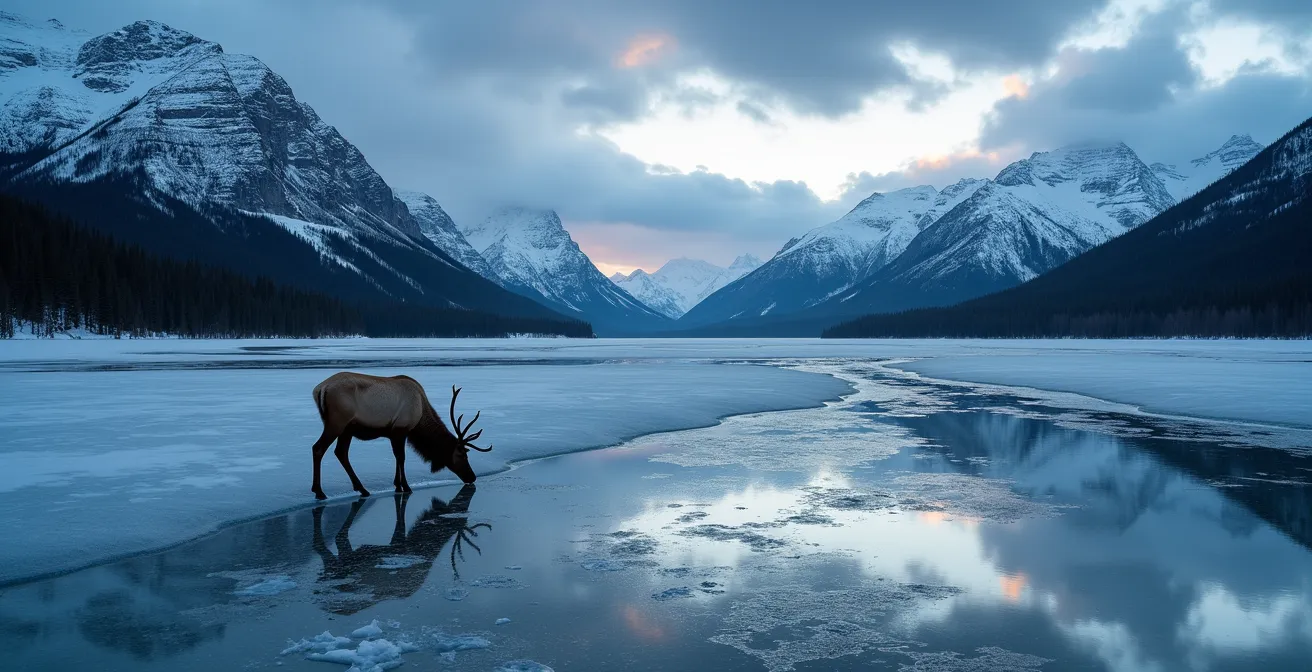
As you can see, the landscape’s character transforms entirely, offering a contemplative beauty that summer crowds obscure. Choosing a month like November isn’t a compromise; it’s a deliberate choice for a deeper, more intimate encounter with the wild.
Haida Gwaii or Torngat Mountains: which remote cultural site changes your worldview?
A truly transformative bucket list ventures beyond landscapes to engage with Canada’s deep cultural fabric, particularly its Indigenous heritage. But this requires moving past superficial mentions and embracing ethical, immersive experiences. The choice is not just where to go, but *how* to go. As Nate Mosher, a Travel Expert at Flight Centre Canada, notes, “Canadians are curious by nature, but they’re also conscientious. They want to see the world without overwhelming it, and that often means taking the road less travelled.” This sentiment is the gateway to profound cultural travel.
Consider two of Canada’s most powerful, yet remote, destinations: Haida Gwaii in British Columbia and the Torngat Mountains National Park in Nunatsiavut (Newfoundland and Labrador). Haida Gwaii, the ancestral home of the Haida Nation, is a lush archipelago steeped in art, history, and ancient forests. A visit here, especially to the Gwaii Haanas National Park Reserve, is an education in resilience and interconnectedness. The Torngat Mountains, co-managed by Inuit and Parks Canada, offer a starkly different, but equally powerful, experience. It’s a place of raw, spiritual power, where you can learn about Inuit culture from local guides against a backdrop of polar bears and dramatic fjords. Both offer what a crowded tourist site cannot: genuine cultural immersion led by the people whose land you are on.
Choosing such destinations requires a commitment. They are logistically complex and more expensive to reach. But their ROE is immeasurable. They challenge your perspective and provide a connection to a history that is thousands of years old. The least touristy provinces, like Saskatchewan or the territories (Nunavut, NWT, Yukon), offer similar opportunities for those willing to look. The key is to engage with 100% Indigenous-owned operators who ensure that your tourism dollars directly benefit the community and that your visit is respectful and sustainable.
Your Action Plan: Engaging Ethically with Indigenous Tourism
- Book Directly: Prioritize 100% Indigenous-owned tour operators like Haida Style Expeditions or the Torngat Mountains Base Camp to ensure benefits flow to the community.
- Prepare Culturally: Learn basic greetings and key cultural protocols in the local Indigenous language before your arrival to show respect.
- Adopt a Witness Mindset: Shift from a ‘tourist’ (consuming) to a ‘witness’ (observing, listening, learning) perspective during your visit.
- Understand Governance: Acknowledge the significance of co-managed lands between Parks Canada and Indigenous peoples, recognizing their sovereignty and stewardship.
- Budget for Value: Understand that remote Indigenous experiences have a higher cost due to specialized guides, logistics, and community-benefit models.
The itinerary error of trying to see Vancouver and Halifax in one week
The single greatest mistake travellers make when planning a trip to Canada is underestimating its sheer scale. The desire to see both the Pacific and Atlantic coasts in a short trip is a common but fatal flaw in itinerary design. This isn’t just about long flight times; it’s about the erosion of your most valuable travel resource: time for immersion. A cross-country trip is a logistical marathon that prioritizes transit over experience, a classic example of low ROE.
To truly grasp the folly of this approach, you must quantify the loss. A flight from Vancouver to Halifax involves nearly a full day of travel, a four-hour time zone shift, and subsequent jet lag. In a seven-day trip, you effectively sacrifice two to three days simply to transportation and recovery. This is where the concept of ‘Intentional Geography’ becomes paramount. Instead of a coast-to-coast sprint, a discerning traveller focuses on deep exploration of a single region. Spend your week exploring the intricate coastline and islands of British Columbia, or dedicate it to the diverse cultures and landscapes of the Maritimes.
The table below, based on data from sources like Statistics Canada on tourism trends, starkly illustrates the trade-off. Choosing a regional alternative over a cross-country itinerary saves time, money, and energy, all of which can be reinvested into more meaningful activities.
| Travel Factor | Vancouver to Halifax | Regional Alternative |
|---|---|---|
| Flight Time | 6-7 hours direct | 0-2 hours within region |
| Time Zone Changes | 4 hours difference | 0-1 hour difference |
| Average Flight Cost | $600-800+ CAD | $200-400 CAD |
| Lost Days to Travel | 2 full days minimum | Few hours maximum |
| Jet Lag Recovery | 2-3 days | None |
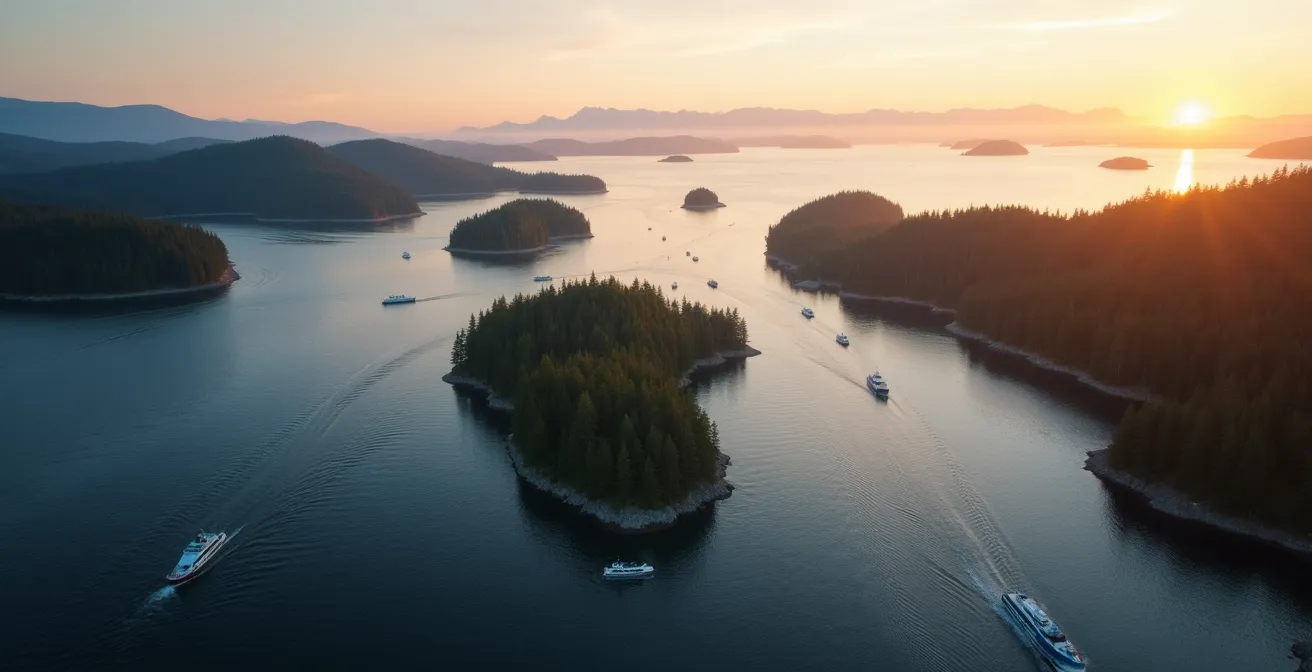
By embracing ‘Intentional Geography,’ you trade the stress of a continental checklist for the rich, layered experience of becoming familiar with one part of the country. This is how you discover hidden gems and create a journey with genuine depth.
Lake Louise or Peyto Lake: which offers a better experience with fewer crowds?
Even within a single region like the Rockies, the principle of ‘Return on Experience’ applies at a micro level. The choice between two famous lakes, Lake Louise and Peyto Lake, is a perfect case study. Lake Louise is arguably Canada’s most famous postcard image, complete with a grand hotel and paved, accessible walkways. This accessibility is also its downfall. The experience is often defined by crowds, full parking lots, and a sense of being in a natural theme park. The crisis at nearby Moraine Lake, where parking was at capacity 24/7 for an entire week before personal vehicles were banned, is a clear warning of what happens when an icon becomes over-loved.
Peyto Lake, while also popular, offers a different dynamic. The main viewpoint is often crowded, but a short, slightly more strenuous hike rewards visitors with stunning perspectives and significantly fewer people. This introduces the concept of effort-based rewards. Often, a small amount of physical effort is the most effective filter against crowds. The willingness to walk an extra 15 minutes, choose a trail with a slight incline, or wake up for sunrise can completely transform an experience from a shared spectacle to a personal moment.
This strategic thinking can be expanded further by looking just beyond the national park’s borders.
Case Study: Kananaskis Country as the Savvy Alternative
For those seeking the grandeur of the Rockies without the Banff crowds, Kananaskis Country is the answer. Bordering both Calgary and Banff National Park, “K-Country” is a vast region of provincial parks beloved by locals but often overlooked by international tourists. It offers breathtaking panoramic mountain views, world-class hiking, and abundant wildlife. By staying in Canmore or a lodge within Kananaskis, travellers gain access to both the icons of Banff and the relative solitude of K-Country’s trails, creating a best-of-both-worlds itinerary with a much higher ROE.
The lesson is clear: don’t just follow the signs to the main attraction. Look for the adjacent trail, the nearby park, or the slightly more challenging viewpoint. Your bucket list should include not just places, but the small efforts required to see them in a more authentic light.
How to enjoy the Montreal Jazz Festival without buying a single ticket?
The quest for authentic experiences isn’t limited to remote wilderness. It applies just as strongly to urban environments and cultural events. The Montreal International Jazz Festival, one of the world’s largest, is a perfect example. The default tourist approach is to buy tickets for the big-name headliners in concert halls. While enjoyable, this approach often misses the true spirit of the festival, which spills out onto the streets and into the city’s vibrant neighbourhoods.
A high-ROE approach means experiencing the festival like a local. This involves leveraging the vast array of free outdoor performances and unofficial events that animate the city. The real value lies in the atmosphere, the spontaneous discoveries, and the feeling of being part of a city-wide celebration rather than a ticketed spectator. It’s about knowing where to be and when, turning the entire city into your venue. A discerning traveller can curate a world-class musical experience without spending a dime on concert tickets, reinvesting that money into local food, drinks, and experiences.
Here’s how to tap into the festival’s authentic energy for free:
- Map the Free Stages: Use the official festival app to navigate the numerous free outdoor stages in the Quartier des Spectacles, creating your own personalized concert crawl.
- Strategic Timing: Visit Place des Arts for the main free headliner, then escape the crowds to explore the normally busy Old Montreal while it’s relatively empty.
- Embrace Local Traditions: Participate in the ‘cinq à sept’ (happy hour) on a terrasse along Boulevard Saint-Laurent, soaking in the pre-show buzz.
- Explore Unofficial Venues: Grab a BIXI bike and cycle to Le Plateau-Mont-Royal or the Verdun neighbourhood, where local bars host unofficial jam sessions with talented local musicians late into the night.
- Picnic Legally: Buy wine or beer from a local ‘dépanneur’ and enjoy it in a designated park area while listening to the music—a classic Montreal summer activity.
This strategy demonstrates that a rich bucket list experience is about insider knowledge, not just purchasing power. By shifting your focus from official, ticketed events to the vibrant ecosystem around them, you achieve a more genuine and memorable urban adventure.
Key Takeaways
- Redefine “value” in travel by prioritizing the quality of your experience (Return on Experience) over the lowest cost.
- Embrace ‘Intentional Geography’ by focusing on deep exploration of a single region per trip to avoid logistical burnout.
- Plan your travels around specific natural or cultural phenomena for a unique and time-sensitive journey.
How to plan a trip around the caribou migration rather than hotel availability?
The conventional way to plan a trip is to choose dates, book flights, and then find hotels. This logic subordinates the experience to logistics. A high-ROE approach inverts this entirely: it’s called Phenomenon-Based Travel. This means you anchor your entire trip to a specific, often fleeting, natural or cultural event. The “when” and “where” are dictated by the event itself, not by your vacation schedule or hotel booking engines.
This requires flexibility and proactive planning, but it transforms a generic vacation into a once-in-a-lifetime quest. Instead of simply “visiting Newfoundland,” you plan a trip to witness the majestic migration of icebergs down ‘Iceberg Alley’ in late spring. Instead of just “going to the Yukon,” you time your journey to coincide with the peak of the Northern Lights season or the awe-inspiring migration of the Porcupine Caribou herd. This approach forces you to connect with the natural rhythms of the country in a profound way.
Planning this way involves different research. You’ll be following migration trackers, communicating with local lodges for real-time updates, and booking flexible accommodations. It’s an active, engaged form of travel planning. Below is a calendar of Canadian phenomena to inspire your next bucket list entry:
- April-May: Iceberg Season in Newfoundland’s ‘Iceberg Alley’. Book flexible accommodations in towns like Twillingate and monitor iceberg finder websites.
- June-July: Porcupine Caribou Migration in Yukon/NWT. This requires booking with specialized operators like Arctic Haven Wilderness Lodge who track the herd’s movement.
- September-October: “Larch March” in the Rocky Mountains. The needles of larch trees turn a brilliant gold for a few short weeks. Target trails like Larch Valley near Moraine Lake or the Valley of the Ten Peaks.
- October-March: Northern Lights Peak Season in NWT/Yukon. Yellowknife’s Aurora Village offers dedicated viewing packages with optimal chances.
- September: Great Lakes Salmon Run in Ontario. Book local guides along rivers like the Credit or Ganaraska to witness thousands of salmon returning to spawn.
By letting a natural event be the star of your itinerary, you guarantee an experience that is both unique and deeply rooted in the Canadian landscape. It is the ultimate expression of being in the right place at the right time, by design.
Montreal, Toronto, or Vancouver: which city suits your travel style best?
Choosing the right urban gateway is the foundation of a successful regional trip. Montreal, Toronto, and Vancouver are Canada’s three largest and most dynamic cities, but they offer vastly different experiences. Aligning your choice with your personal travel style is the final piece of the ‘Intentional Geography’ puzzle. Rather than trying to see them all, select one as a base camp for deeper exploration, ensuring your urban experience complements your wider travel goals.
Each city caters to a distinct traveller archetype. Your choice will set the tone for your entire journey, from the food you eat to the day trips you take. It’s a strategic decision that maximizes your ROE before you even pack your bags. A food-driven traveller seeking vibrant nightlife will find their paradise in Montreal, while an urban adventurer who wants mountains and ocean at their doorstep should head straight for Vancouver. Toronto serves as the ultimate hub for those who crave a global-village feel with world-class museums and diverse cultural enclaves.
This table helps you match your travel personality to the ideal Canadian city, ensuring your starting point is as rewarding as the journey itself.
| Traveler Type | Best City Match | Key Attractions | Gateway Potential |
|---|---|---|---|
| Food-Driven Night Owl | Montreal | Jean-Talon Market, Mile End restaurants, 3am last call | Eastern Townships vineyards, Charlevoix region |
| Global Arts & Culture Connector | Toronto | ROM, AGO, diverse neighborhoods like Kensington Market | Niagara wine region, Muskoka cottage country |
| Urban Adventurer | Vancouver | Stanley Park, Grouse Mountain, Kitsilano Beach | Gulf Islands, Sunshine Coast, Sea-to-Sky corridor |
By making a deliberate choice, you anchor your trip in a city that resonates with your interests, transforming it from a simple point of entry into a core part of your bucket list experience. This is the final step in building a journey that is intentional from start to finish.
Now that you have the framework to build a more meaningful Canadian bucket list, the next step is to apply these principles. Start by re-evaluating your own travel desires and choose one region and one experience to plan with intention.