
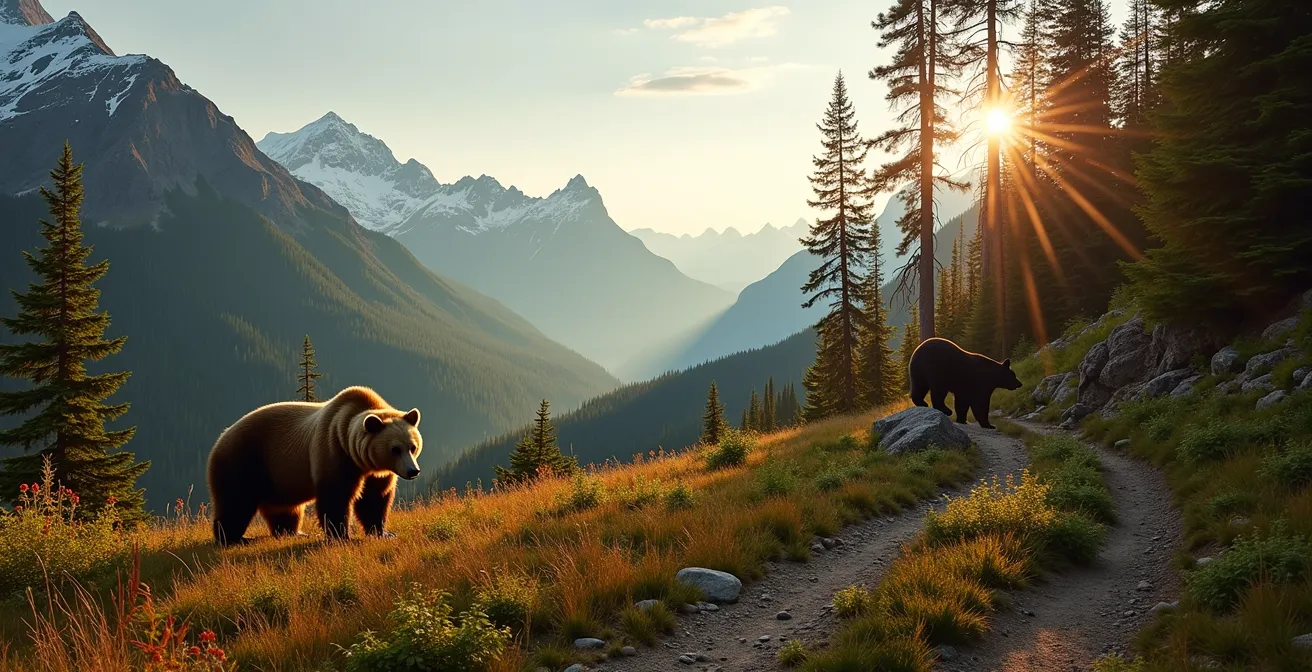
The critical mistake hikers make is focusing only on telling a grizzly from a black bear. True safety in the Canadian wilderness comes from learning to read a bear’s behaviour and understanding our impact on its world.
- A bear’s actions—whether it’s stressed and defensive or calm and predatory—are far more important than its species for determining your response.
- Proactive prevention, such as maintaining a bear-proof campsite, is the most effective way to avoid a negative encounter altogether.
Recommendation: Shift your focus from simple identification to developing “behavioural literacy” to navigate bear country with calm preparedness, not fear.
The thought of rounding a bend on a trail in British Columbia or Alberta and coming face-to-face with a bear is a primal fear for many hikers and campers. It’s a scenario that can feel overwhelming, reducing a beautiful wilderness experience to one of constant anxiety. Much of the common advice centres on a crucial, yet often oversimplified, question: is it a grizzly or a black bear? We’re taught to look for a shoulder hump, a dished face, or long claws, as if we’re completing a field guide checklist under immense pressure. This advice suggests that identifying the species is the only key to knowing whether to play dead or fight back.
But what if this focus is misplaced? What if the true key to safety lies not in a panicked physical assessment, but in something more nuanced and empowering? The reality is, in the heat of the moment, distinguishing a large, brown-coloured black bear from a smaller grizzly can be nearly impossible. True preparedness goes deeper. It involves shifting our perspective from one of reactive fear to one of proactive coexistence. This means learning to read a bear’s body language, understanding the context of its actions, and recognizing how our presence—from the food in our coolers to our behaviour on the trail—shapes the encounter long before it happens.
This guide, written from the perspective of a wildlife safety educator, will equip you with that deeper knowledge. We will move beyond simple identification to explore the critical differences between defensive and predatory behaviour. We will cover the practical skills of deploying bear spray effectively, the ethics of wildlife viewing, and the crucial steps for preparing for any trip into the vast, wild spaces of Northern Canada. The goal is to replace fear with calm, factual preparedness, allowing you to travel through bear country with respect and confidence.
For those who prefer a visual format, the following video from Banff National Park provides a practical demonstration of how to properly use bear spray, a critical skill we will discuss in detail.
To help you navigate this essential information, this article is structured to answer the most pressing questions that hikers and campers have. From understanding a bear’s intentions to preparing your campsite and planning your trip, each section builds on the last to provide a comprehensive framework for safety.
Summary: A Practical Guide to Bear Safety and Coexistence
- Why does a defensive bear charge differ from a predatory approach?
- How to deploy bear spray in a high-stress wind situation?
- Khutzeymateen Sanctuary or roadside spotting: which is safer for the bear?
- The cooler error that attracts grizzlies to campgrounds miles away
- When are grizzlies most active near hiking trails in the fall?
- How to spot coastal wolves in the brush without disturbing them?
- How to plan a trip around the caribou migration rather than hotel availability?
- How to prepare for a remote wilderness trip in Northern Canada safely?
Why does a defensive bear charge differ from a predatory approach?
The single most important skill in a close encounter is not identifying the bear’s species, but understanding its intent. This is the core of behavioural literacy. A bear’s actions will tell you everything you need to know about how to respond. A defensive reaction is the most common scenario, typically occurring when a bear is surprised, protecting its cubs, or defending a food source like a carcass. The bear feels threatened and wants you to leave. Its body language will be stressed: it may huff, pop its jaws, lay its ears back, and keep its head down. Its charge is often a bluff, designed to scare you away.
A predatory approach, while extremely rare, is fundamentally different. The bear is not stressed; it is calm, silent, and intensely focused on you as a potential food source. It may stalk you, follow you persistently, and approach from downwind. This is not a bluff. In the case of Bear No. 122, famously known as ‘The Boss’ in Banff National Park, observations have shown how one animal can display both types of behaviour. He has been seen exhibiting classic defensive actions when surprised, but also documented in rare predatory events. This highlights that reading the immediate situation is far more critical than making assumptions based on species.
Your response must match the bear’s intent. If it’s a defensive charge, you should stand your ground, speak in a calm voice, and have your bear spray ready. Do not run. When the bear stops, you should back away slowly. If it’s a predatory approach, you must not play dead. Your goal is to show you are not easy prey: make yourself look large, use your bear spray, and be prepared to fight back aggressively with any object you can find.
How to deploy bear spray in a high-stress wind situation?
Knowing how to use bear spray is not enough; you must be able to deploy it effectively under pressure, especially in the challenging weather conditions of the Canadian Rockies or coastal forests. Bear spray has a proven track record; studies confirm bear spray has deterred attacks in over 90% of cases, making it the most effective single deterrent available. However, its effectiveness hinges on your ability to use it correctly, particularly when dealing with wind.
The key to overcoming the “freeze” response in a high-stress moment is practice. Purchase an inert training canister and practice drawing it from its holster and removing the safety clip until it becomes muscle memory. This simple action can save your life. When it comes to wind, the strategy must adapt to the environment. In gusty, open alpine conditions, aim lower than you normally would. This creates a rising “wall” of pepper cloud between you and the charging bear, compensating for the wind lifting the spray. Be prepared to sidestep immediately after spraying to avoid blowback if you are facing into a strong wind.
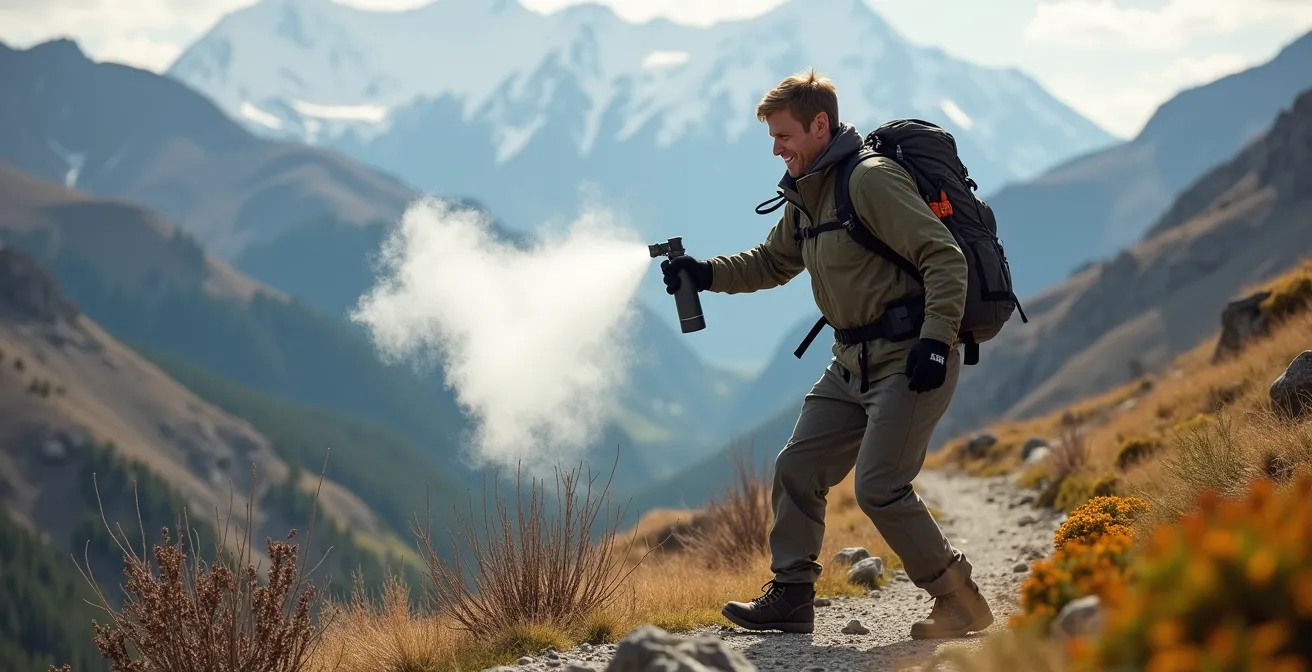
In the sheltered, denser forests of coastal BC, wind is less of a factor. Here, you can aim more directly at the bear’s face and chest area. Use short, one-to-two-second bursts, and only when the bear is within the effective range of your canister, typically less than 10 metres. Remember that in Canada, bear spray must be specifically labeled for use on animals and cannot be carried on commercial flights, even in checked luggage.
Khutzeymateen Sanctuary or roadside spotting: which is safer for the bear?
The desire to see a grizzly in the wild is powerful, but how we choose to view them has profound consequences for their survival. The difference between a structured, ethical viewing experience and a spontaneous roadside stop illustrates the concept of our zone of influence. When we create a “bear jam” on a highway like the Icefields Parkway, we disrupt their lives in critical ways. As Parks Canada experts emphasize, these stops can alter a bear’s travel path or even cause them to abandon important habitat. They state:
Your decision to drive on by gives bears the space they need to make a living in this challenging landscape. Bears need to forage undisturbed to gain enough fat to survive winter, and roadside stops can alter their path of travel or abandon an area, displacing them from important habitat.
– Parks Canada, Safe travel in bear country guidelines
This disruption is not harmless. It habituates bears to humans and cars, often leading them to associate vehicles with food. A habituated, food-conditioned bear is frequently a dead bear, as it must be relocated or euthanized for public safety. This is a direct consequence of unethical roadside viewing. In contrast, places like the Khutzeymateen/K’tzim-a-deen Grizzly Sanctuary in British Columbia, co-managed by the Gitga’at First Nation and the provincial government, offer a model for responsible tourism.
In a sanctuary setting, the entire economic model is built on keeping bears wild. Access is strictly controlled, viewing distances are respectfully maintained by trained guides, and encounters are managed to minimize any disturbance to the bears’ natural feeding and movement patterns. This approach supports a sustainable wildlife economy while ensuring the long-term welfare of the bear population.
This table clearly shows that for the bear’s safety and long-term survival, there is no comparison. Choosing a guided, ethical tour over a self-directed roadside stop is a crucial act of conservation.
| Aspect | Khutzeymateen Sanctuary | Roadside Viewing |
|---|---|---|
| Bear Welfare Impact | Minimal – controlled access prevents habituation | High risk – leads to food conditioning and habituation |
| Management | Co-managed by Gitga’at First Nation & BC Province | Uncontrolled public access |
| Viewing Distance | Maintained at safe distances by guides | Often too close (under 100m minimum) |
| Economic Model | Supports sustainable wildlife economy | No direct conservation benefit |
| Long-term Consequence | Bears remain wild and wary | Bears often relocated or euthanized |
| Disruption to Feeding | Minimal – viewing times controlled | Significant – critical feeding interrupted |
The cooler error that attracts grizzlies to campgrounds miles away
The most dangerous bear encounter is the one you create yourself. This is the essence of proactive coexistence. A grizzly bear’s sense of smell is legendary, estimated to be seven times stronger than a bloodhound’s. They are driven by an incredible need for calories, and their nose is their primary tool for finding them. An unsecured cooler or a greasy BBQ grill is not just a minor oversight; it’s a powerful beacon. Research from organizations like WildSafeBC confirms that bears have a sense of smell far greater than dogs and can locate food over one kilometre away. This means your campsite’s scent can draw a bear from the next valley over.
The “bare campsite” policy in Canada’s national and provincial parks is not a suggestion; it’s a critical safety rule enforced with significant fines. But it goes beyond just storing your food in a bear-proof locker or your vehicle’s trunk. Every single item with a scent must be secured. This includes toiletries like toothpaste and deodorant, sunscreen, bug spray, and even empty beer cans, whose residual sugars are highly attractive. A common mistake is forgetting about the clothes you cooked in; they absorb food odours and must be stored with your food, not in your tent.
Successfully managing your site means creating an odour-free zone that gives a passing bear no reason to investigate. It is the single most effective way to prevent a bear from ever entering your campsite, ensuring safety for both you and the animal. Following this checklist is not about compliance; it’s about actively preventing a dangerous situation before it can begin.
Your Action Plan: The Complete Bear-Proof Campsite Checklist
- Store ALL scented items in bear-proof lockers or a hard-sided vehicle (never in a tent). This includes food, toiletries, sunscreen, bug spray, and medications.
- Clean BBQ grills at high heat after each use and remove grease traps. Store the grill indoors or in a secure vehicle if possible.
- Secure all garbage, including empty cans and bottles. The residual sugars are a powerful attractant.
- Change out of the clothes you cooked in before going to sleep. Store these clothes with your food items.
- Never leave pet food or bowls outside. Store them securely in your vehicle or a bear locker.
When are grizzlies most active near hiking trails in the fall?
Understanding the ecological context of a bear’s life is key to anticipating where they will be and when. In the fall, a grizzly bear’s entire existence is dominated by a biological imperative called hyperphagia, or “extreme eating.” To survive winter denning, they must build up massive fat reserves. This requires an astonishing caloric intake; during this period, grizzly bears consume an incredible 30,000 calories a day, and sometimes more in fish-rich coastal areas. They may forage for up to 22 hours a day, driven by this intense need.
This single-minded focus on food dictates their location. In late August and early September in the Rocky Mountains, their primary food source becomes buffaloberries. Hikers on trails in Kananaskis, Banff, and Jasper will find bears intensely focused on these berry patches, which often grow along open, sunny slopes and trail edges. This is a peak period for human-bear encounters. A few weeks later, in the coastal rainforests of British Columbia, the focus shifts to the salmon streams as spawning season peaks. Bears will congregate along rivers, creating another predictable hotspot for activity.
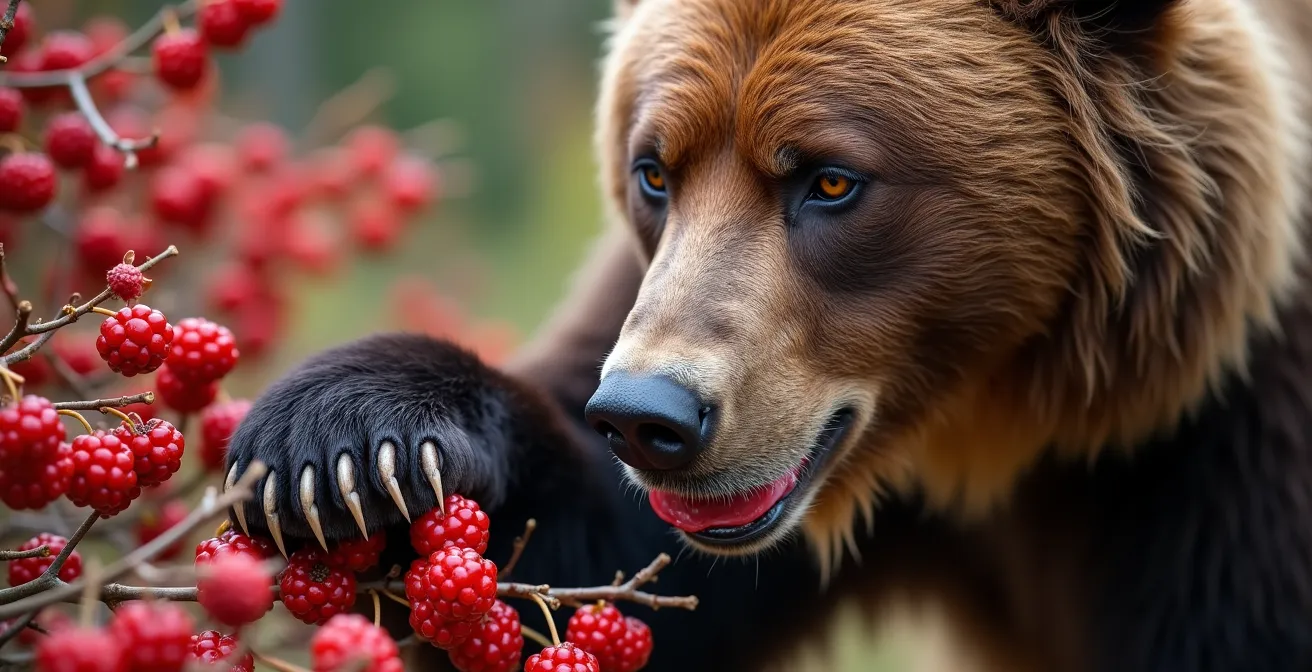
Knowing these seasonal patterns allows for proactive planning. If you’re hiking in the Rockies in late summer, be hyper-vigilant in and around buffaloberry patches. Make lots of noise, travel in groups, and keep your bear spray instantly accessible. If you plan to be near salmon streams on the coast in September or October, be aware that you are sharing that space with animals in the most critical feeding period of their year. This knowledge transforms you from a passive visitor into an informed and respectful one, capable of avoiding conflict by understanding the bear’s world.
How to spot coastal wolves in the brush without disturbing them?
While grizzlies are a primary concern, understanding the broader ecosystem includes recognizing its other apex predators, like the unique coastal wolves of British Columbia. These animals are genetically and behaviourally distinct from their inland cousins. Spotting them is a rare privilege, and doing so ethically requires a different skillset than bear-watching. The key is to look for their signs rather than the animals themselves. Listen for the calls of ravens, as they often congregate at a fresh wolf kill. At low tide, scan intertidal sand flats for their large, distinctive tracks.
Their diet is another clue. Unlike other wolves, research shows that coastal wolves derive up to 90% of their diet from marine sources, a fact confirmed by experts at the Great Bear Rainforest Research. Look for their scat, which will often contain visible fish bones and scales—a clear sign that these “sea wolves” are in the area. The best and most ethical way to see them is by joining a guided tour, particularly one led by local First Nations, who have an unparalleled understanding of their behaviour and territory.
If you are lucky enough to spot one on your own, the rules of engagement are strict: never pursue or follow them. Use binoculars or a telephoto lens and maintain a minimum distance of 300 metres. The best times for a chance sighting are often early in the morning or late in the evening, especially along salmon streams in the fall, where their world intersects with that of the grizzly bears. Considering any sighting a gift and giving them immense space is the only ethical approach.
How to plan a trip around the caribou migration rather than hotel availability?
Venturing into Northern Canada’s remote wilderness, especially along corridors like the Dempster Highway, means planning your trip around the rhythms of wildlife, not human convenience. The migration of the Porcupine Caribou Herd, a spectacular movement of tens of thousands of animals, is a prime example. This event is dictated by weather, snowmelt, and instinct, not by a fixed calendar. To witness it, flexibility is paramount.
Successful planning means abandoning rigid schedules. Instead of booking non-refundable hotels months in advance, you should monitor the real-time herd location updates provided by the Porcupine Caribou Management Board. Accommodations in towns like Eagle Plains or Inuvik should be booked with flexible cancellation policies. The migration can happen weeks earlier or later than anticipated, so being prepared with camping gear as a backup is essential, as services are extremely limited along the highway.
Understanding the phases of migration is also key. The post-calving aggregation in July offers one viewing opportunity, while the main fall migration through the Dempster corridor typically occurs from late August through September. When you do encounter the herd, the viewing protocols are strict: never stop a moving line of caribou, as this can break their momentum and expend precious energy. Always pull your vehicle completely off the highway to observe, and maintain significant distance, especially during the sensitive calving season. This approach respects the animals’ journey and is an integral part of safe and ethical travel in the North.
Key Takeaways
- True safety comes from understanding a bear’s behaviour (defensive vs. predatory), not just its species.
- Prevention is the best strategy: A meticulously clean, “bare” campsite is your number one defense against unwanted visits.
- Bear spray is a highly effective tool, but only if you practice using it under realistic conditions, including wind.
How to prepare for a remote wilderness trip in Northern Canada safely?
A trip into the remote wilderness of the Yukon, Northwest Territories, or Nunavut requires a level of self-sufficiency far beyond that of a typical backcountry excursion. In these vast landscapes, you are truly on your own. Help, if needed, can be days away, not hours. As the Government of the Northwest Territories rightly states, ” When you’re in the NWT, you’re in bear country.” This is a fundamental truth that must guide all your preparation.
Your equipment must be robust and redundant. A two-way satellite messenger, like a Garmin inReach or ZOLEO, is mandatory. A simple personal locator beacon (PLB) is insufficient, as it only works for life-or-death emergencies and provides no way to communicate logistics or less critical issues. Comprehensive wilderness first-aid training is not optional; it’s a prerequisite. You must be prepared to handle trauma from an animal attack, severe hypothermia, and know the protocols for a potential evacuation. Before you leave, a detailed trip plan must be filed with the local RCMP or a Parks office, including your route and your non-negotiable return date.
Assume total self-sufficiency. Pack a repair kit for every piece of critical gear, from your tent poles to your stove. Plan for extreme weather shifts, including temperature drops of 30°C in a single day and multi-day storms that can trap you in place. Bear spray should be carried on your body in a holster, not in your pack, for immediate access. This level of preparation isn’t about planning for what might go wrong; it’s about accepting that in the true wilderness, you are the only one responsible for your safety. This mindset of calm preparedness is your most vital piece of gear.
Your journey into the Canadian wilderness should be a source of awe, not anxiety. By shifting your mindset from fear to factual preparedness, you equip yourself with the tools to travel respectfully and confidently. The next step is to move from reading to doing: practice with an inert bear spray canister, meticulously plan your next trip’s food storage, and commit to being an ethical, informed visitor in the homes of these magnificent animals.