
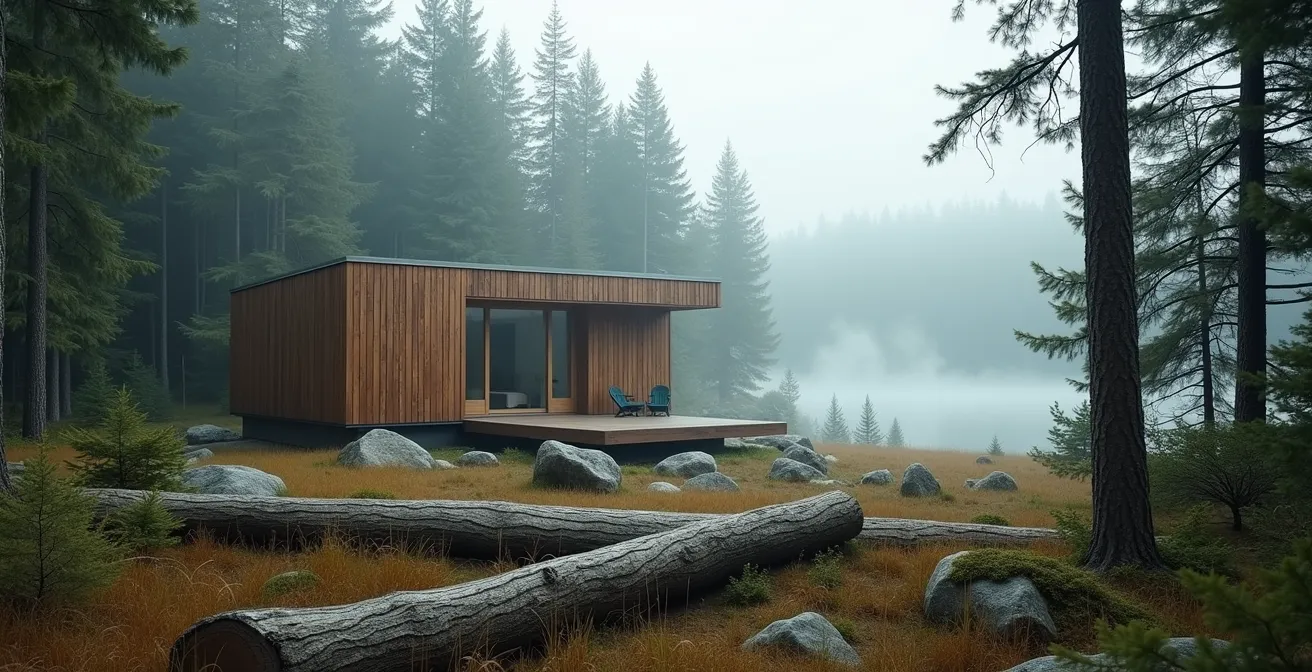
Most “eco-friendly” markers are surface-level greenwashing; true sustainability is hidden in a resort’s engineering and ecological design.
- Certifications like LEED are a starting point, not a guarantee for projects deep in the Canadian wilderness.
- A resort’s wastewater treatment and wildlife corridor integration are non-negotiable indicators of its real impact.
Recommendation: Demand to see the data: ask for water quality reports and details on building materials before you book.
As a conscious traveler, you face a frustrating dilemma. You’re willing to invest in a Canadian vacation that respects the pristine landscapes you’ve come to admire, but the term “eco-resort” has become a marketing buzzword. Every hotel with a towel-reuse program and a farm-to-table menu seems to claim the title, leaving you to wonder what’s genuine and what’s simply clever greenwashing. The common advice—look for local sourcing, check for recycling bins—barely scratches the surface and is easily faked. These are the platitudes of an industry that often prioritizes appearance over impact.
But what if the key to identifying a truly sustainable resort isn’t found in the guest-facing amenities, but in the parts they don’t advertise? The real story is told by the resort’s hidden infrastructure, its engineering choices, and its deep, functional integration with the surrounding ecosystem. This guide abandons the superficial checklist. Instead, it equips you with an auditor’s mindset, focusing on the critical, often invisible systems that separate authentic stewards of the land from the greenwashers. We will deconstruct the claims by examining the hard evidence, from wastewater forensics to the carbon footprint of the very walls around you.
This article will guide you through the essential questions an auditor would ask. We will dissect common certifications, scrutinize waste and energy systems, analyze construction impacts on wildlife, and understand how your own actions can support true off-grid sustainability. Prepare to look beyond the brochure and become an expert in verifying environmental integrity.
Table of Contents: How to Authenticate a Canadian Eco-Resort
- Why does a LEED certification matter for a resort in the forest?
- How does a remote resort handle sewage without polluting the pristine lake?
- Canvas walls or solid structure: which has a lower carbon footprint?
- The construction error that resorts make that drives local fauna away
- How to manage your energy consumption in a solar-powered resort?
- Why are the icefields shrinking faster than predicted in the last decade?
- Why are fallen trees essential for the regeneration of the rainforest?
- How to explore Cathedral Grove responsibly without damaging the ancient root systems?
Why does a LEED certification matter for a resort in the forest?
A LEED (Leadership in Energy and Environmental Design) certification is often the first thing a resort will brandish as proof of its green credentials. While valuable in an urban context, its relevance becomes more complex in the Canadian wilderness. An auditor’s first question isn’t *if* a resort is certified, but *how* that certification applies to a sensitive ecosystem. The standard LEED framework was not fundamentally designed for remote, off-grid locations surrounded by pristine biodiversity. Its focus remains on a specific set of criteria that can miss the most critical wilderness-specific impacts.
For example, LEED evaluates only 6 key areas: location, site development, water, energy, materials, and indoor quality, according to the Canada Green Building Council. This is a robust starting point, but it may not adequately penalize a project for disrupting a critical caribou migration corridor or for light pollution that harms nocturnal species. A truly eco-conscious project in Canada often goes further, integrating principles from programs like Built Green Canada, which places a heavier emphasis on sustainable wood construction, waste management, and building practices specifically tailored to residential-style buildings, which many resort cabins are. The certification is a clue, not a conclusion. Your audit must dig deeper into the unmeasured impacts.
Therefore, a discerning traveler must use the certification as a conversation starter, not a final verdict. Ask how the project’s Environmental Impact Assessment (EIA) specifically addressed local wildlife. Inquire if they hold supplemental certifications that are more relevant to their construction methods or region. A genuine eco-resort will welcome these questions and have detailed answers ready, demonstrating a commitment that goes far beyond a generic plaque on the wall.
How does a remote resort handle sewage without polluting the pristine lake?
This is the single most important, and least glamorous, question you can ask. A resort’s approach to wastewater is a non-negotiable indicator of its ecological integrity. In a remote Canadian setting, there are no municipal sewer lines. Every drop of water from showers, sinks, and toilets must be treated on-site. A failure here doesn’t just mean a bad smell; it means the irreversible pollution of the very lake or river the resort claims to cherish. Greenwashing resorts will be vague, mentioning a “septic system.” A genuine eco-resort will proudly detail its advanced wastewater treatment technology.
The gold standard for these environments is a Membrane Bioreactor (MBR) system. This is an advanced technology combining biological decomposition with micro-filtration, producing an effluent (treated water) that is often clean enough to drink. It’s a closed-loop philosophy in action. Furthermore, all operations must comply with Canada’s federal Wastewater Systems Effluent Regulations, which set strict, legally-binding limits on the quality of effluent that can be discharged near sensitive water bodies. A transparent resort should not only confirm they use such a system but also be willing to share their latest water quality monitoring data, proving their outflow is cleaner than the regulatory requirements. If a resort cannot or will not answer this question with technical specifics and data, it is a monumental red flag.
The visual of pristine water is what draws visitors, but the unseen process of keeping it that way is what defines true sustainability. The investment in a high-performance MBR or equivalent system is significant, and resorts that make this investment are demonstrating a deep, structural commitment to environmental protection, not just a surface-level marketing one. Your audit must prioritize this “wastewater forensic” analysis above all else.
Canvas walls or solid structure: which has a lower carbon footprint?
The “glamping” trend has popularized canvas tents and yurts, often marketed as a low-impact lodging option. From an auditor’s perspective, this claim requires careful deconstruction, especially in the context of a Canadian climate. The carbon footprint of a building is not a single number; it’s a tale of two metrics: embodied carbon and operational carbon. Embodied carbon is the total greenhouse gas emissions generated to produce and transport building materials. Operational carbon is the emissions from the building’s day-to-day energy use, primarily for heating and cooling.
A canvas structure might have low embodied carbon, particularly if made locally. However, its operational carbon in a Canadian winter is astronomically high. Its poor insulation requires massive amounts of energy (often from propane or a diesel generator) to keep it habitable. A well-built solid wood structure, using Passive House principles and locally sourced, FSC-certified timber, has a much higher initial embodied carbon but boasts an incredibly low operational carbon footprint over its 50+ year lifespan. This is where the long-term view of sustainability becomes crucial. The BC Passive House Factory in Pemberton, for example, is a testament to this, having reduced its emissions by 971 tonnes compared to using concrete, with high-performing wood windows providing most of the building’s heat. The table below breaks down this crucial trade-off:
| Factor | Canvas Structure | Solid Wood Structure |
|---|---|---|
| Embodied Carbon | Low if manufactured locally, high if imported | Low with FSC-certified Canadian timber |
| Operational Carbon (Canadian winter) | Very high due to heating requirements | Low with Passive House insulation |
| Lifespan | 10-15 years | 50+ years |
| End-of-life | Potential landfill waste | Biodegradable or reusable lumber |
Ultimately, a structure that requires constant, high-energy input to be comfortable is not sustainable, regardless of its rustic appeal. As confirmed by an analysis of sustainable Canadian buildings, a solid, well-insulated structure often represents a far more responsible long-term investment in a cold climate. The most sustainable choice isn’t always the one that looks most “natural” at first glance; it’s the one grounded in the physics of energy conservation.
The construction error that resorts make that drives local fauna away
A resort can have the most advanced solar panels and water treatment systems in the world, but if its physical layout destroys the ecological integrity of the site, it has failed. The most common and devastating construction error is ignoring or severing existing wildlife corridors. These are the natural pathways that animals—from bears and elk to smaller mammals and amphibians—use to migrate, feed, and find mates. A resort that is built directly across one of these corridors acts as a concrete dam, fragmenting the habitat and slowly but surely driving local fauna away. A truly eco-conscious design works *with* the land, not against it.
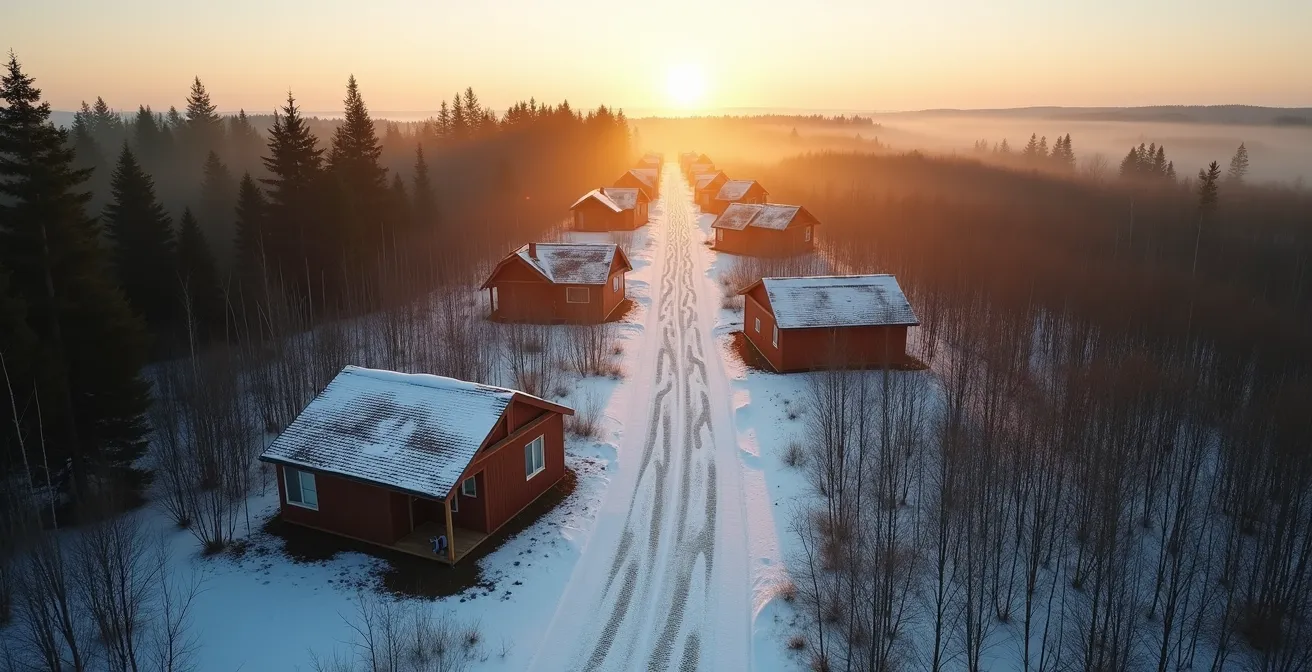
A responsible resort conducts extensive ecological surveys *before* a single shovel hits the ground, identifying these corridors and designing the entire site layout around them. Buildings are clustered in less sensitive areas, leaving the migratory paths completely untouched. This commitment to co-existence extends beyond just building placement. It includes using dark-sky compliant lighting (warm-hued, downward-facing fixtures) to prevent light pollution that disorients nocturnal animals. It means preserving native undergrowth instead of planting manicured, ecologically useless lawns. It also involves active noise mitigation for any mechanical systems, ensuring the human footprint is auditory as well as physical. An authentic eco-resort doesn’t just occupy a piece of nature; it becomes a quiet, respectful guest within it.
Your Field Audit Checklist: Verifying Ecological Integration
- Building Placement: Check if buildings are positioned around, not across, clear natural clearings or animal migration paths.
- Lighting Design: Look for dark-sky compliant lighting with warm color temperatures at night, avoiding harsh, blue-toned LEDs.
- Landscaping: Verify the presence of native undergrowth, fallen logs, and indigenous plants instead of manicured, non-native lawns.
- Noise Pollution: Ask about noise mitigation measures for generators and other mechanical systems, especially their operational hours.
- Rewilding Efforts: Look for evidence of active rewilding programs, such as the planting of indigenous species to restore disturbed areas.
When you visit, look for these signs. Is the forest floor intact? Do the buildings feel nestled within the environment rather than imposed upon it? The answers reveal a deeper respect for the local fauna than any marketing slogan ever could.
How to manage your energy consumption in a solar-powered resort?
Staying at an off-grid, solar-powered resort is an exercise in mindful energy use. Unlike at home, where the grid provides a seemingly infinite supply of electricity, a remote resort operates on a finite daily energy budget. The “Energy Sovereignty” of the resort is determined by the size of its solar array, the capacity of its battery bank, and, crucially, the behavior of its guests. Greenwashing resorts may install a few token solar panels while relying heavily on a noisy, polluting diesel generator. A genuine solar-powered resort is transparent about its limitations and educates guests on how to become active participants in energy conservation.
The key is to align your consumption with the sun’s rhythm. The peak energy generation period is typically between 11 am and 3 pm. This is the ideal time to charge all your devices—phones, cameras, laptops. Using high-wattage appliances like hair dryers is often discouraged or even prohibited, as a single such device can drain a significant portion of the stored battery power needed to get through the night and overcast days. A truly transparent resort might even equip rooms with a small energy consumption monitor, giving you real-time feedback on your usage. This isn’t about restriction; it’s about fostering a conscious connection to the resources you are using.
Before booking, ask about the resort’s energy mix. What percentage of their power is generated by solar versus a backup generator? What is their battery bank’s capacity in kilowatt-hours? Their willingness to answer these technical questions speaks volumes. By adapting your habits—charging devices midday, using natural daylight instead of artificial lights, and forgoing power-hungry gadgets—you move from being a simple consumer to a steward of the resort’s delicate energy ecosystem. It transforms your stay from a passive vacation into an active lesson in sustainable living.
Why are the icefields shrinking faster than predicted in the last decade?
The tragic irony of glacier tourism is a phenomenon auditors call the “last-chance tourism” paradox. Visitors, alarmed by reports of shrinking icefields in the Canadian Rockies, rush to see them before they disappear. This very rush—powered by international flights, bus tours, and increased resort activity—accelerates the melting process. The systemic impact of tourism is a critical piece of the sustainability puzzle that many resorts conveniently ignore. A truly ethical eco-resort must acknowledge and actively work to mitigate this paradox, connecting its micro-operations to the macro-level climate crisis.
The numbers are stark. As the United Nations noted, tourism is a significant contributor to global emissions. In an article discussing greenwashing, Popular Science highlighted a UN report stating that transport-related emissions from tourism accounted for 5 percent of all man-made emissions in 2016, a figure projected to grow. When you stand on the Athabasca Glacier, you are witnessing the direct result of this accumulated global impact. The accelerated retreat of these ancient rivers of ice is driven by a warming climate, fueled in part by the very industry that brings you to their edge.
Transport-related emissions from tourism accounted for 5 percent of all man made emissions in 2016, and is expected to rise to 5.3 percent by 2030.
– United Nations, UN Tourism Report
A genuine eco-resort confronts this uncomfortable truth head-on. It moves beyond simply asking guests to reuse towels and implements meaningful, systemic actions. This includes investing in mandatory carbon offset programs for guest travel, using a portion of their profits to fund local glaciology research, and educating visitors about the broader climatic forces at play. They transform a passive sightseeing trip into an active educational experience, empowering guests to understand their role within the larger climate story. If a resort near a glacier isn’t talking about the glacier’s health and their role in preserving it, they are part of the problem.
Why are fallen trees essential for the regeneration of the rainforest?
In the lush temperate rainforests of Canada’s Pacific coast, a tidy, manicured forest is a sick forest. The practice of removing fallen trees to create a park-like appearance is a profound ecological error. From an auditor’s viewpoint, a resort’s treatment of deadwood is a key indicator of its ecological literacy. These fallen giants, known as “nurse logs,” are the cradles of the next generation. As they slowly decay over centuries, they become vibrant ecosystems, providing essential nutrients, moisture, and a disease-free platform for new saplings to take root.

A massive fallen Western redcedar or Sitka spruce is not debris; it is a life-support system. Its decaying wood acts like a sponge, retaining water through the dry summer months. It hosts a complex web of mosses, fungi, insects, and salamanders, all of which contribute to the overall health of the forest floor. Hemlock and spruce seedlings, in particular, often germinate on these nurse logs, their roots slowly wrapping around the log until they reach the soil below. Walking through an old-growth forest, you can often see rows of mature trees, their roots elevated in an arch, marking the exact spot where their nursery log has long since decomposed into the forest floor. A resort that understands this will leave fallen trees in place, integrating them into the landscape and educating guests on their vital role.
This respect for natural processes is a hallmark of deep sustainability. It shows a management philosophy that values ecological function over simplistic aesthetics. When you visit, look for these magnificent structures of decay and rebirth. A resort that celebrates its nurse logs is a resort that understands it is a custodian of the forest’s future, not just a temporary user of its beauty.
Key Takeaways
- True sustainability is proven by infrastructure (wastewater, energy systems), not just policies (towel reuse).
- The lowest carbon footprint option considers both embodied carbon (materials) and operational carbon (heating/cooling).
- An authentic eco-resort’s design must preserve, not obstruct, existing wildlife corridors and ecological processes like nurse logs.
How to explore Cathedral Grove responsibly without damaging the ancient root systems?
Visiting a place of ancient giants like Cathedral Grove in British Columbia is a privilege that comes with profound responsibility. The 800-year-old Douglas firs are sustained by a shallow, incredibly sensitive root system intertwined with a vast underground mycelial network. The primary threat to this delicate ecosystem is not malice, but ignorance. Soil compaction from footsteps straying off the designated path is the single most damaging action. Each step crushes the tiny air pockets in the soil, suffocating the roots and the fungal networks that the trees depend on for nutrients and water. Responsible exploration is therefore an act of deliberate restraint.
The first and most absolute rule is to stay strictly on the designated boardwalks and paths. They are designed to distribute weight and keep human impact contained. Visiting during off-peak times, such as early on a weekday morning or in the shoulder seasons (spring and fall), not only provides a more serene experience but also reduces the concentrated pressure on the park’s infrastructure. It’s also vital to acknowledge whose land you are on; this area is the traditional territory of the K’ómoks and Tseshaht First Nations. A responsible visit includes learning about and respecting their deep, multi-generational connection to this land. True stewardship often follows the lead of Indigenous knowledge, as exemplified by properties like Wya Point Resort. Owned and operated by the Ucluelet First Nation, the resort is a model of integrating hospitality with a deep-seated commitment to preserving the pristine environment for future generations.
Your role extends beyond your physical footprint. Consider donating to organizations like the BC Parks Foundation, which works to preserve these unique ecosystems. Before you go, take a moment to learn about the “wood wide web”—the mycelial networks connecting the trees. Understanding that you are walking above a complex, living, and communicative underground city will fundamentally change how you perceive every step you take. This is the essence of responsible tourism: shifting from a mindset of consumption to one of reverence and active preservation.
Now that you are equipped with an auditor’s critical eye, the next step is to apply this framework. Before booking your next Canadian escape, use these questions to interrogate resort websites, send pointed emails to their management, and analyze their responses. Choose the resort that doesn’t just give you the right answers, but celebrates your desire to ask the hard questions.