
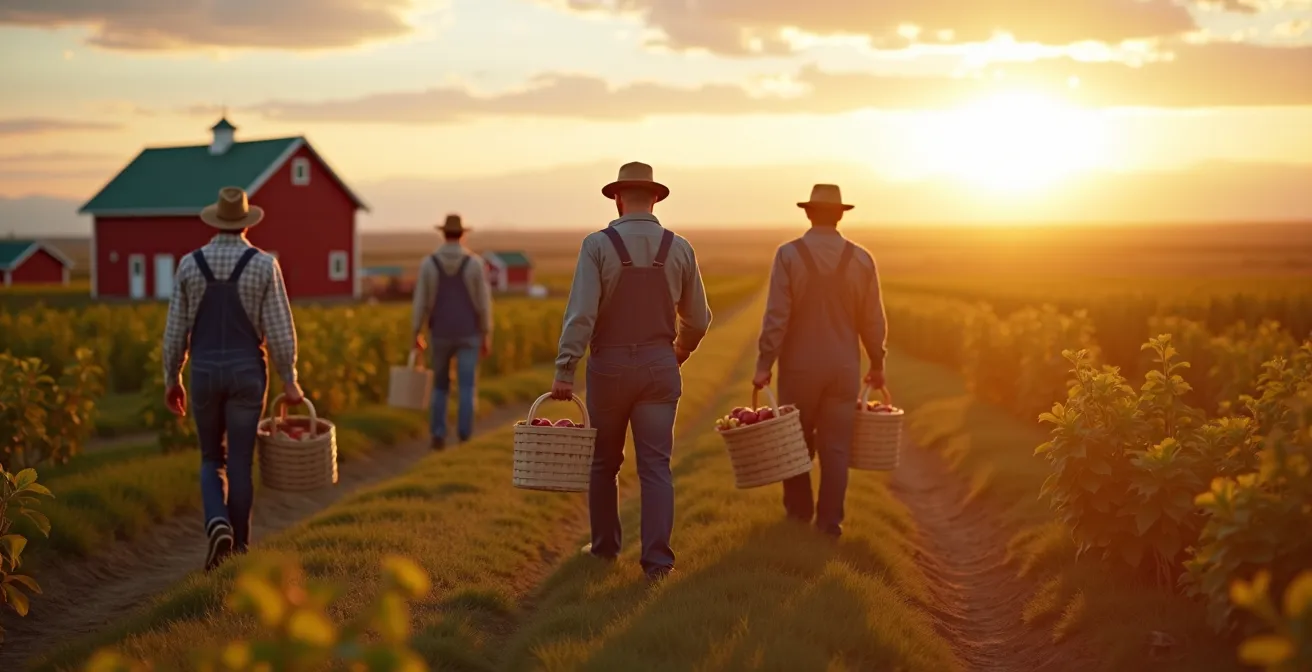
Choosing a hands-on farm stay is about finding your family’s perfect balance between relaxation and real participation.
- Your stay directly supports the vitality and economic health of small Canadian communities.
- The most rewarding experiences require intentional preparation, from planning meals to embracing a “digital detox.”
Recommendation: Define your “rural vibe”—from light, optional chores to dedicated farm work—before you book to ensure a memorable family adventure.
For families in Quebec and Ontario, the call of the countryside is a powerful one. It’s a chance to trade city noise for the sounds of nature and give children a tangible connection to where their food comes from. Many seek an agritourism vacation, imagining idyllic scenes of collecting fresh eggs and petting friendly goats. While these moments are certainly part of the appeal, the typical online search often leads to experiences that are more of a “farm-themed” hotel than an authentic immersion into rural life.
The common advice to “pack boots” and “be ready for anything” barely scratches the surface. An unforgettable farm stay isn’t just about showing up; it’s about making a conscious choice. It requires understanding the difference between being a passive guest and an active participant in a living, breathing agricultural ecosystem. The true magic of agritourism lies beyond the postcard picture, in the hands-on involvement and the genuine connections you forge with the land, the food, and the people who cultivate it.
But what if the key wasn’t just finding a farm, but finding the *right kind* of farm for your family? This guide is built on that very idea. We’ll move beyond simple listings to explore a spectrum of participation, from luxury relaxation with a taste of the farm to a full hands-on working experience. We will explore how to prepare, what to expect, and how to find those truly authentic moments that turn a simple vacation into a cherished family memory.
This article will guide you through the essential questions to ask before you book your next rural getaway. From understanding the economic role you play in small communities to discovering regional culinary treasures far beyond poutine, you’ll gain the tools to plan an agritourism adventure that perfectly fits your family’s spirit of discovery.
Summary: Your Complete Guide to Active Agritourism Adventures
- Why does staying in rural inns keep small Canadian villages alive?
- How to prepare for rural stays where restaurants close at 7 PM?
- Hands-on chores or luxury relaxation: which rural vibe fits your stress level?
- The “digital nomad” error of assuming high-speed Wi-Fi in the countryside
- When to book an orchard stay to participate in apple or grape harvesting?
- Where to stop for authentic pierogies in Manitoba’s small communities?
- Industrial prowess or artisanal tradition: which region offers better tasting tours?
- How to find authentic regional foods beyond poutine and maple syrup?
Why does staying in rural inns keep small Canadian villages alive?
Choosing an agritourism stay over a conventional hotel is more than a preference; it’s an investment in the fabric of rural Canada. When you book a room at a family-run farm or a village inn, your spending creates a powerful ripple effect that sustains the local way of life. This isn’t just about the money you pay for your room; it’s about the entire ecosystem your visit supports. You’re helping the farmer maintain their land, enabling the general store to stay open, and giving the local café a reason to brew coffee each morning.
This concept, known as economic symbiosis, is the heartbeat of resilient rural communities. Unlike spending at a large hotel chain where profits are often centralized elsewhere, money spent locally tends to stay local. In fact, recent studies show that for every $100 spent at local farms, an impressive $62 remains within the community, supporting other businesses and services. Your vacation becomes a direct contribution to preserving a heritage that is uniquely Canadian.
Case Study: The “Anchor Business” Effect of Myra Canyon Ranch
Myra Canyon Ranch in British Columbia perfectly illustrates this principle. Located just outside Kelowna, it combines a farm stay with an adventure park and equestrian activities. This diversified model doesn’t just attract visitors; it creates year-round employment, supports a network of local food and service suppliers, and encourages guests to spend money at other nearby businesses. The ranch acts as an economic anchor, ensuring the entire rural ecosystem around it can thrive, demonstrating how one successful agritourism venture can lift a whole community.
By choosing to stay, eat, and shop in these small towns, your family becomes a temporary part of the community, actively participating in its survival and vitality. It transforms a simple holiday into a meaningful exchange, where you receive an authentic experience and leave behind a legacy of support.
How to prepare for rural stays where restaurants close at 7 PM?
One of the most charming—and challenging—aspects of a true rural getaway is the shift in pace and accessibility. In many small Canadian communities, the local diner or single restaurant often closes its doors by 7 PM. For families used to late-night urban options, this requires a wonderful shift in mindset: from consumer to creator. This is where the concept of intentional preparation transforms a potential inconvenience into one of the most rewarding parts of the trip.
Instead of worrying about what’s closed, the focus turns to what’s available right at your fingertips. This is your family’s chance to engage in a “farm gate to your plate” adventure. It begins before you even arrive, by coordinating with your hosts. Many are delighted to sell you fresh eggs, just-picked produce, or farm-raised meat directly. This simple transaction is a beautiful moment of connection and ensures you have the freshest ingredients for your evening meal.
This paragraph introduces the concept of preparing your own meals. To help you visualize this wholesome experience, the image below captures the essence of a rustic farmhouse kitchen, ready for creation.
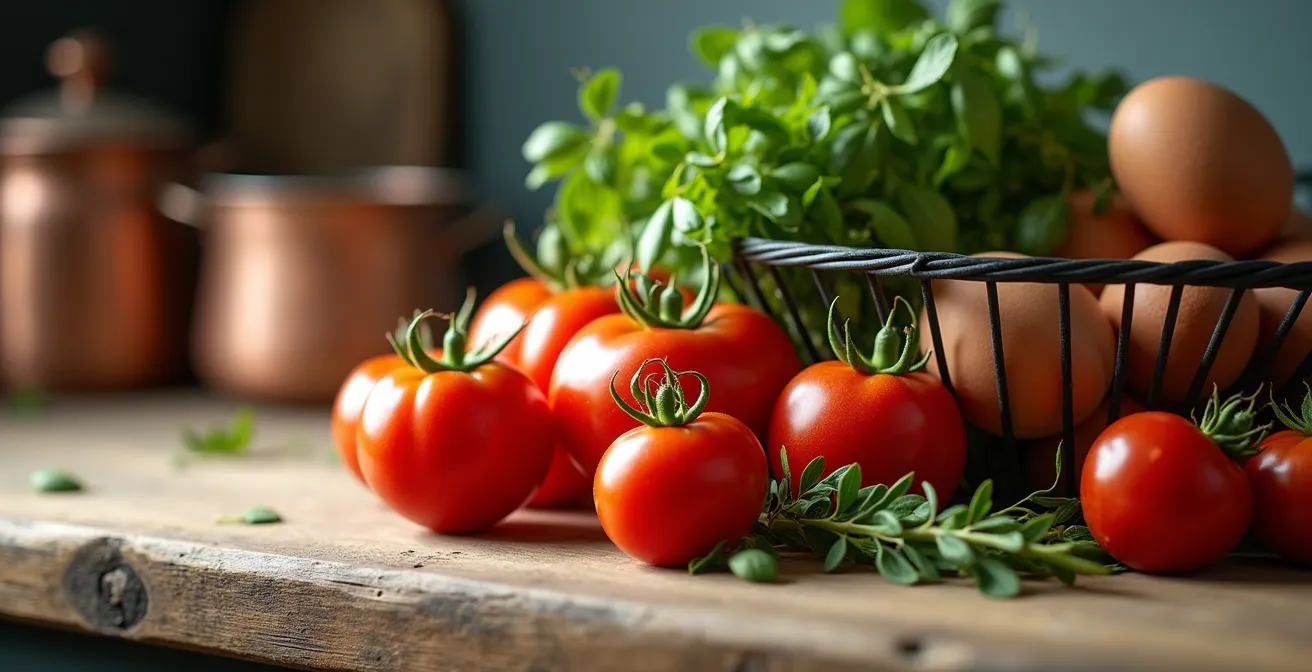
As you can see, the beauty lies in simplicity and freshness. Planning your meals becomes an activity in itself. Stocking up at a local general store before it closes or visiting a bustling farmers’ market like St. Jacobs in Ontario becomes a key part of the day’s adventure. You can even bring a cooler to transport regional delicacies you discover along the way. By embracing this self-sufficient approach, you’re not just solving a logistical problem; you’re creating a deeper, more memorable connection to the food you eat and the place you’re visiting.
Hands-on chores or luxury relaxation: which rural vibe fits your stress level?
Not all farm stays are created equal, and this is their greatest strength. The world of agritourism exists on a “connection spectrum,” ranging from luxurious, hands-off relaxation to immersive, roll-up-your-sleeves work. The most important step in planning your family’s trip is honestly assessing what “vibe” you’re looking for. Do you need to de-stress with gentle farm-themed activities, or are you craving the satisfaction of a day’s physical labour?
On one end of the spectrum is the luxury guest farm stay. Here, the focus is on comfort and curated experiences. Your “participation” might involve a guided tour, a photo opportunity collecting a few eggs, or a casual apple-picking excursion. These stays offer the ambiance of farm life without the obligations, making them perfect for families with very young children or those seeking pure rest and relaxation. The cost is higher, but it buys you convenience and peace of mind.
On the other end is the working farm experience, often found through platforms like Workaway. Here, the arrangement is a trade: you provide a set number of hours of genuine farm labour in exchange for free accommodation. This is where you’ll find the most authentic, hands-on involvement—mucking out stalls, repairing fences, or participating in the full intensity of harvest season. It requires a good level of physical fitness and a genuine desire to contribute. As one Alberta ranch host puts it, this is an unfiltered dive into the realities of farm life.
The following table breaks down the key differences to help you decide which experience is the right fit for your family.
| Aspect | Luxury Guest Farm Stay | Working Farm Experience |
|---|---|---|
| Daily Time Commitment | 0-1 hour optional activities | 4-6 hours required work |
| Typical Activities | Egg collecting (photo op), farm tours | Mucking stalls, fence repair, harvesting |
| Physical Demand | Light to none | Moderate to strenuous |
| Cost | $150-400 CAD per night | Free accommodation in exchange for work |
| Best Season Example | Fall apple picking tours | Spring lambing season (24/7 care) |
Ultimately, there is no “better” option—only the one that aligns with your family’s goals. Being clear about your expectations is the key to ensuring your rural escape is revitalizing, not stressful.
The “digital nomad” error of assuming high-speed Wi-Fi in the countryside
In our hyper-connected world, reliable Wi-Fi is often taken for granted. However, assuming you’ll have a strong, stable internet connection during a rural Canadian farm stay is a common mistake that can lead to significant frustration. The reality is that connectivity in Canada’s vast countryside can be spotty, slow, or entirely non-existent. For families, especially those with teenagers, preparing for this is crucial for a harmonious trip.
This isn’t a flaw of the farm stay; it’s an inherent characteristic of the rural landscape. In fact, a staggering over 60% of rural Canadian farms have limited or no high-speed internet access. Instead of viewing this as a problem, we can reframe it as a feature: a digital detox by default. It’s a rare opportunity to disconnect from screens and reconnect with each other and the natural world around you. Planning for this “unplugged” time is part of the adventure.
Being prepared doesn’t mean going completely off-grid unless you want to. It means being strategic with your digital provisioning before you leave home. This ensures that the lack of Wi-Fi becomes a peaceful retreat rather than a source of stress. The following checklist provides a practical roadmap for a smooth, low-connectivity vacation.
Your Pre-Trip Digital Provisioning Checklist
- Download offline Google Maps for the entire region, including the nearest towns and points of interest.
- Pre-load all entertainment content: download movies and shows from streaming services, podcasts, and ebooks.
- Set up an email auto-responder notifying contacts of your limited availability.
- Identify the nearest public library or a coffee shop like Tim Hortons for emergency Wi-Fi access.
- Consider purchasing a local SIM card with a data plan as a backup for essential communications.
By taking these simple steps, you empower your family to fully embrace the experience. The evenings can be filled with board games, reading, or stargazing instead of scrolling. This intentional act of preparation turns a potential challenge into one of the most memorable and bonding aspects of your rural Canadian escape.
When to book an orchard stay to participate in apple or grape harvesting?
A huge part of the appeal of a hands-on farm stay is participating in the harvest, a timeless rhythm that connects you directly to the season and the land. Timing is everything. Showing up at a Quebec orchard in July expecting to pick apples will lead to disappointment, just as visiting an Okanagan vineyard in May for the grape harvest is futile. To truly get your hands dirty, you need to align your visit with the specific peak harvest season for the crop and region you’re interested in.
Canada’s diverse geography and climate create a rich and varied harvest calendar. The experience of tapping maple trees in a snowy Quebec forest in March is profoundly different from raking wild blueberries under the August sun in the Maritimes. For families in Ontario and Quebec, the most accessible and popular hands-on harvests are often apple picking in September and October or participating in the bustling activity of a winery during the grape harvest.
Some harvests, like picking Saskatoon berries on the Prairies, are light and leisurely family activities. Others, such as the famous cranberry harvest in British Columbia where fields are flooded, or the intensive grape harvest in the Okanagan Valley, require more significant physical effort and are a truly immersive working experience. Knowing what to expect in terms of activity level is just as important as knowing when to go.
To help you plan your future farm adventures, here is a guide to some of Canada’s key harvest seasons, allowing you to match your vacation time with the experience you’re dreaming of.
| Region | Harvest Type | Peak Season | Activity Level |
|---|---|---|---|
| Quebec | Maple Tapping | February-April | Moderate |
| Okanagan Valley, BC | Wine Grape Harvest | September-October | Intensive |
| Maritimes | Wild Blueberry Raking | August | Moderate |
| Prairies | Saskatoon Berry | July | Light |
| Ontario | Apple Harvest | September-October | Light-Moderate |
| British Columbia | Cranberry Harvest | September-October | Intensive |
By planning your stay around these key dates, you move from being a spectator to an essential part of the farm’s most important time of year. It’s an unforgettable way to teach children about seasonality and the effort that goes into producing the food we enjoy.
Where to stop for authentic pierogies in Manitoba’s small communities?
Exploring authentic regional food is about venturing off the beaten path, and nowhere is this truer than on the Canadian Prairies. While Manitoba might be known for its vast skies, it’s also home to a deep-rooted Ukrainian heritage, and the ultimate expression of this culture is the humble pierogi. Finding the best, most authentic pierogies is a culinary treasure hunt that takes you away from commercial restaurants and into the heart of small communities.
The real secret to an authentic pierogi experience lies in the community halls and church basements of the Interlake and Parkland regions. This is where you’ll find the heart of culinary sovereignty—food made by the community, for the community. Towns like Gimli, Beausejour, and Steinbach are hotspots for this unique culinary road trip. Here, local Ukrainian Catholic churches hold seasonal pierogi sales, often as fundraisers, where you can buy dozens of handmade dumplings that are worlds apart from any frozen grocery store version.
The Manitoba Pierogi Trail Experience
Finding these sales is part of the adventure. They are rarely advertised on mainstream tourism sites. Success requires checking local town Facebook groups, looking at community notice boards in post offices, or simply asking a local where to find the next church pierogi sale. It’s an experience that rewards curiosity and a willingness to engage with the community on its own terms. The prize is not just delicious food but a genuine connection to the cultural heritage of the region.
When you do find them, you’ll discover a world of flavour. While potato and cheddar are standard, you might find unique regional fillings like cottage cheese or even sweet Saskatoon berries. And be sure to order them like a local: topped not just with sour cream, but with a generous helping of fried onions and crispy bacon bits. It’s a taste of tradition, community, and place, all wrapped in a delicate dough.
Industrial prowess or artisanal tradition: which region offers better tasting tours?
For food-loving families, a tasting tour is a highlight of any trip. In Canada, particularly in Ontario and Quebec, you’re presented with a fascinating choice: do you explore the large-scale, historic producers or seek out the small, independent artisans? There’s no right answer, as each offers a distinct and valuable experience, reflecting two different philosophies of food production.
This contrast is beautifully illustrated by comparing the cheese trails of Quebec and Ontario. The two regions offer a delicious lesson in artisanal versus industrial scale. A tour through Ontario’s Oxford County Cheese Trail will introduce you to a rich British-style cheddar heritage, with a mix of large-scale, world-renowned factories and new boutique producers. The tours are often highly professional, offering a glimpse into efficient, modern production alongside opportunities for tasting.
In contrast, Quebec’s Route des Fromages is a celebration of French-inspired artisanal tradition. With over 200 small fromageries, the focus is often on raw-milk cheeses, complex blues, and delicate chèvres. The experience is typically more intimate, with owner-led tastings where you can hear the personal story behind each cheese. The following table highlights the different characters of these two iconic trails.
| Aspect | Quebec’s Route des Fromages | Ontario’s Oxford County Trail |
|---|---|---|
| Tradition | French-inspired, raw-milk artisanal | British-style cheddar heritage |
| Scale | Small artisan producers (200+ fromageries) | Mix of large-scale and new artisans |
| Signature Products | Camembert, blue cheese, chèvre | Aged cheddar, new experimental varieties |
| Tour Experience | Intimate, owner-led tastings | Factory tours plus boutique experiences |
This same dynamic applies to other industries, like distilleries. A tour of Hiram Walker’s historic whisky empire in Ontario is a lesson in heritage and scale, while visiting a craft micro-distillery in rural British Columbia or PEI offers a chance to meet the maker and taste experimental spirits made from local grains. Choosing between them is simply a matter of deciding what kind of story you want to be a part of: one of established industrial prowess or one of intimate artisanal tradition.
Key Takeaways
- Choosing an agritourism stay is a direct investment in the economic vitality of Canada’s small rural communities.
- The best experiences are found by matching your family’s desire for participation—from luxury relaxation to hands-on work—with the right type of farm.
- Embracing practical preparation for meals and limited connectivity transforms potential challenges into the most memorable parts of the adventure.
How to find authentic regional foods beyond poutine and maple syrup?
While poutine and maple syrup are delicious symbols of Canadian cuisine, the country’s true culinary identity is a rich tapestry woven from immigration history and deep Indigenous roots. To find these authentic foods, you must look beyond the tourist menus and connect with the stories of the people and the land. This is the deepest form of culinary sovereignty, where food is an expression of culture, heritage, and place.
A powerful way to experience this is by exploring Indigenous culinary tourism. This is an opportunity to learn about food traditions that have sustained people on this land for millennia. It offers a connection that is both profound and delicious. Your family can embark on experiences that are immersive, respectful, and educational.
- Visit Haida Gwaii in British Columbia for a traditional seafood feast featuring salmon, halibut, and shellfish harvested from the pristine waters.
- Book a foraging tour with an Anishinaabe guide in Ontario to learn about wild rice (manoomin), medicinal plants, and the ethics of harvesting from the wild.
- Experience the Squamish Lil’wat Cultural Centre in Whistler, BC, to taste traditional bannock and learn about the role of game meats in local foodways.
- Attend an Indigenous food sovereignty event or farmers’ market, which are becoming more common across the provinces, offering a chance to buy directly from producers.
Beyond Indigenous cuisine, Canada’s regional specialties are a direct reflection of its settlement history. This connection between immigration and local food is a key to understanding the country’s diverse palate. As the Canadian Culinary Tourism Alliance notes in its research, the nation’s diet is a map of its history.
Canada’s regional cuisine is a direct result of its immigration history – from Halifax donair’s Lebanese roots to Prairie pierogies’ Ukrainian heritage
– Canadian Culinary Tourism Alliance, Regional Food Heritage Study 2024
Seeking out a Halifax donair, sampling Doukhobor borscht in the Kootenays, or enjoying Portuguese chicken in Montreal are all ways of tasting this living history. It transforms eating from a simple act into a delicious exploration of the diverse cultures that make up the Canadian mosaic.
Frequently asked questions about Finding an Authentic Farm Stay
What’s the difference between varenyky and pierogi?
Varenyky is the traditional Ukrainian name for the dumplings commonly known as pierogies in Canada. You’ll often see this name used in authentic Ukrainian establishments, particularly in Manitoba, signalling a deep connection to the food’s cultural roots.
What are the essential toppings for authentic Manitoba pierogies?
While sour cream is a standard and delicious topping, the true local experience in Manitoba calls for generous portions of fried onions and crispy bacon bits. This combination adds a savoury depth and texture that is considered essential by those in the know.
Which unique fillings are specific to Manitoba?
Beyond the classic potato and cheddar, Manitoba offers unique regional pierogi fillings that are a must-try. Look for savoury cottage cheese fillings for a tangy flavour, or sweet Saskatoon berry fillings for a delightful dessert pierogi you’re unlikely to find elsewhere.