
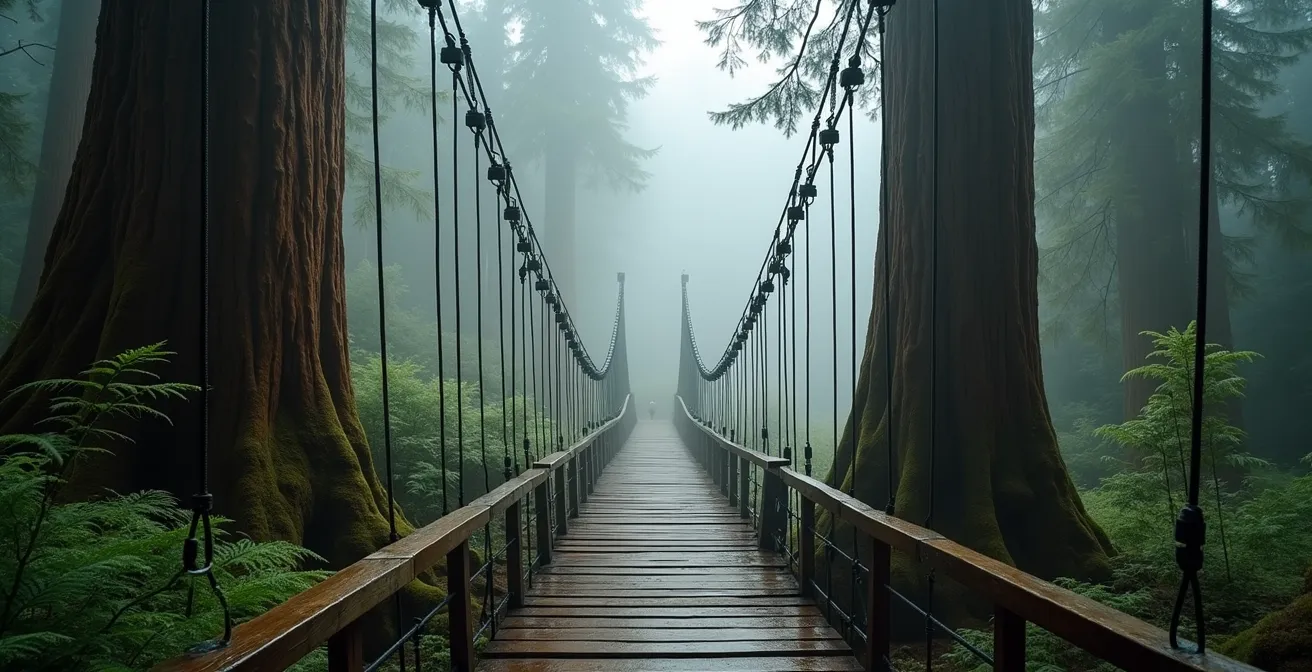
Beyond the ticket price, the real choice between Capilano and Lynn Canyon lies in the physics of the experience: a controlled, stable spectacle versus a free, bouncy, and wilder immersion.
- Capilano offers more attractions, wider and more stable walkways, and managed conditions, making it a curated, theme-park-like experience.
- Lynn Canyon is a free, authentic municipal park with a narrower, bouncier bridge that offers a more direct and challenging connection with the untamed rainforest.
Recommendation: Choose Capilano if you’re with family, have a fear of heights needing more stability, or want multiple attractions. Choose Lynn Canyon for a more rugged hike, a tighter budget, and an authentic taste of a BC rainforest park.
For any visitor to Vancouver, the question inevitably arises: do you shell out for the world-famous Capilano Suspension Bridge, or do you head to the local favourite, the free Lynn Canyon Suspension Bridge? On the surface, it’s a simple budget calculation. One is a significant expense, while the other costs nothing more than your bus fare. But as anyone who’s stood in the middle of a swaying bridge, 50 meters above a roaring canyon will tell you, the decision is about far more than money.
Most guides will give you the standard breakdown: Capilano is bigger and has more to do, while Lynn Canyon is more “natural.” This is true, but it misses the core of the choice. It doesn’t capture the fundamental difference in the *feeling* of the experience. The real distinction lies in what you’re seeking: a beautifully curated, controlled rainforest spectacle, or an untamed, authentic immersion into the wildness of British Columbia’s coast. It’s a choice between the physics of a gentle sway versus a trampoline-like bounce, and your personal threshold for adventure.
This guide goes beyond the price tag. We’ll delve into the distinct ecosystems thriving high in the canopy, the practical strategies for crossing if you’re nervous about heights, and the surprising engineering that keeps you safe. We’ll cover the critical gear choices for our perpetually damp forests and even the cultural significance of the creatures that call this unique environment home. This is the local’s take, designed to help you choose the rainforest adventure that truly resonates with you.
To help you navigate this decision, this article breaks down the key differences and unique aspects of each park. You can jump to the section that interests you most or read through for a complete picture.
Summary: Choosing Your Vancouver Rainforest Bridge Adventure
- Why do Douglas Firs grow distinct ecosystems in their upper branches?
- How to cross a swaying bridge if you have a fear of heights?
- How is the cantilevered walkway anchored into the granite cliff face?
- The footwear mistake that leads to falls on wet wooden paths
- When to visit Canyon Lights to see the forest illuminated without the 2-hour lineup?
- Why is the Spirit Bear only found in this specific coastal region?
- What causes the intense pain when blood returns to cold hands?
- How to explore Cathedral Grove responsibly without damaging the ancient root systems?
Why do Douglas Firs grow distinct ecosystems in their upper branches?
Whether you’re at Capilano or Lynn Canyon, you’re standing amidst an ancient temperate rainforest dominated by colossal Douglas firs. What you might not realize is that the forest floor is only half the story. High above, a completely separate world exists. Over centuries, the broad, sturdy branches of these old-growth trees accumulate a thick mat of falling needles, cones, and organic debris. This debris decomposes into a rich “canopy soil,” creating a unique habitat hundreds of feet in the air.
This aerial ecosystem is a world unto itself. Ferns, mosses, and even small shrubs can take root in this soil, completely disconnected from the ground below. In fact, research shows that canopy ecosystems can form at heights of 110 feet (33 meters) or more. Lynn Canyon’s Ecology Centre offers fantastic displays on this phenomenon, explaining how specialized invertebrates and even some species of salamander can complete their entire lifecycle in the Douglas fir canopy without ever touching the ground. These are not just trees; they are vertical, multi-layered worlds.
The existence of these “hanging gardens” is a testament to the sheer age and stability of the forest. It takes hundreds of years for enough soil to accumulate to support this level of biodiversity. So as you walk the bridges, remember to look up. You are not just crossing a canyon; you are moving through the middle layer of a complex, vertical ecosystem that is as rich and alive as the forest floor itself. The canopy soil and the epiphytes (plants that grow on other plants) are the foundation of this hidden world.
This perspective transforms a simple walk into an appreciation for the incredible complexity and resilience of BC’s coastal rainforests.
How to cross a swaying bridge if you have a fear of heights?
The idea of a swaying bridge can be daunting, but the experience is vastly different at each location, and there are proven techniques to manage acrophobia. The key is understanding the “experiential physics” of each bridge. Capilano’s bridge is wide, with high railings and a very controlled, almost gentle side-to-side tilt. In contrast, the narrower Lynn Canyon bridge has a more pronounced up-and-down trampoline-like bounce, especially when multiple people are crossing.

This difference in movement dictates your strategy. At Lynn Canyon, you can often hold onto both railings at once, creating a stable three-point contact with the bridge. At the much wider Capilano bridge, this isn’t possible. The best technique for either bridge is to focus your gaze on the wooden planks a few feet ahead of you, not on the canyon below or the end of the bridge. Take short, deliberate steps to minimize your contribution to the motion. If you have a significant fear, Capilano is the more reassuring option, as it has bridge attendants who manage capacity and prevent people from deliberately swaying the structure.
Michelle is afraid of heights, and even then she thoroughly enjoyed the park. The bridges are VERY safe and stable – and no one will make you feel bad or silly for going over them slowly.
– Michelle, The Awkward Traveller
Ultimately, a slow and steady pace is your best friend. The bridges are engineered to be incredibly safe, so the challenge is purely psychological. Acknowledge the fear, but don’t let it rob you of the incredible view from the middle.
By choosing the bridge whose movement best suits your comfort level and using these simple techniques, you can transform a moment of anxiety into an exhilarating accomplishment.
How is the cantilevered walkway anchored into the granite cliff face?
While the main suspension bridge gets most of the attention, Capilano Park’s Cliffwalk attraction is arguably a more intense experience for those wary of heights. This remarkable structure is a narrow, semi-circular walkway that juts out from the granite cliff face, suspending you directly over the canyon. Unlike the suspension bridge, which is supported from above, the Cliffwalk is a cantilevered design, meaning it’s supported by anchors drilled directly into the rock.
The engineering behind it is both simple in concept and massive in execution. According to its specifications, the entire structure is held in place by just 16 anchor points drilled deep into the cliff. These anchors bear the entire weight of the walkway and its visitors. The “labyrinth-like series of narrow cantilevered bridges, stairs and platforms” gives you an unparalleled, intimate view of the river and the granite precipice. It’s an engineering marvel that allows you to walk through rainforest vegetation that would otherwise be completely inaccessible.
A key part of the experience is the flooring. The walkway uses open-grated steel, which allows you to see straight down to the canyon floor below. This design choice is intentional: it maximizes the feeling of exposure and height while also preventing rain and snow from accumulating on the surface. For some, this transparency is a terrifying feature; for others, it’s the ultimate thrill. It is a powerful demonstration of how modern engineering can provide access to extreme environments with minimalist, yet incredibly strong, design principles.
Understanding the immense strength of these few anchor points provides a mental counterbalance to the visceral feeling of being suspended in mid-air.
The footwear mistake that leads to falls on wet wooden paths
In a Vancouver rainforest, the ground is almost perpetually damp. The wooden boardwalks and bridges at both Capilano and Lynn Canyon develop a thin, nearly invisible layer of moss and biofilm that can be incredibly slippery, especially after a fresh rain. The most common mistake visitors make is wearing the wrong shoes, turning a beautiful walk into a hazardous slip-and-slide.
Standard running shoes, especially those with smooth or foam-based soles, offer almost no grip on this surface. The key is footwear with a soft rubber compound and a deep, aggressive tread pattern (lugs of 4-5mm). This allows the shoe to “bite” through the slippery layer and make contact with the wood. Trail runners or light hiking boots are ideal choices. Some local Vancouver-based brands like Vessi are popular because they combine this necessary grip with waterproof materials, essential for our climate. The surface at Lynn Canyon requires extra caution; its bridge features raised, “ladder-like” wooden slats that provide some traction but can also be a tripping hazard if you’re not placing your feet deliberately.
Before committing to the main bridge or a long stretch of boardwalk, test your grip on the first few wooden steps. Get a feel for how your shoes respond to the surface. Walking with shorter, more deliberate steps and using handrails where available will dramatically increase your stability. In our rainforests, proper footwear isn’t just about comfort; it’s the single most important piece of safety equipment you can choose.
Choosing the right shoes ensures your focus remains on the breathtaking scenery around you, not on trying to stay upright.
When to visit Canyon Lights to see the forest illuminated without the 2-hour lineup?
Capilano’s annual Canyon Lights festival is a truly magical winter experience, transforming the entire park into a glittering spectacle. However, its popularity means it often comes with notoriously long lineups, sometimes stretching for two hours or more. As a local, the secret isn’t avoiding it, but timing your visit strategically to get all the magic without the misery of the wait.
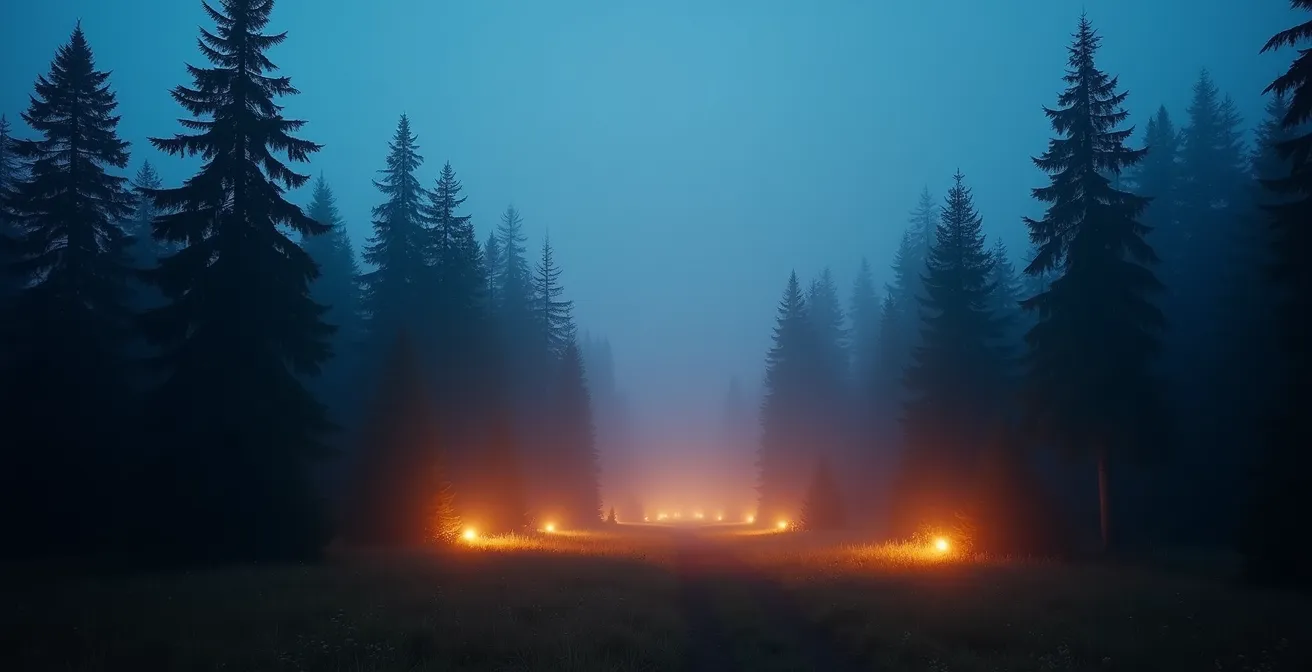
First, timing is everything. The current Canyon Lights season runs from November 2025 to January 18, 2026, but not all dates are equal. The busiest times are weekends in December and the week between Christmas and New Year’s. To beat the crowds, plan your visit on a weekday evening (Monday-Thursday) during the first two weeks of December, before local schools let out for the holidays. Another pro tip: arrive about 45 minutes before closing time. The entry lines have usually vanished by then, and the park begins to empty out, offering a much more peaceful experience of the lights.
The absolute best hack for locals is the BC Residents Annual Pass. For the price of a single day’s admission, you get unlimited entry for a full year, including Canyon Lights. However, be aware that you must now make an online reservation in advance, even with an annual pass, as capacity is limited. Finally, embrace the Vancouver weather. A night with light rain is your best friend—it keeps the biggest crowds at home, creates a beautiful misty atmosphere that enhances the lights, and you’ll have much of the park to yourself.
With a little bit of planning, you can enjoy one of Vancouver’s most enchanting holiday traditions like a seasoned local.
Why is the Spirit Bear only found in this specific coastal region?
While you won’t see one at Capilano or Lynn Canyon, the temperate rainforest ecosystem they inhabit is the exclusive home of one of the world’s rarest animals: the Spirit Bear, or Kermode bear. This is not an albino or a polar bear, but a subspecies of black bear where about one in ten cubs is born with a creamy white coat due to a unique recessive gene.
The Spirit Bear’s existence is a direct result of thousands of years of geographic isolation. The populations of black bears in British Columbia’s Great Bear Rainforest, a vast area of coastal islands and mainland inlets north of Vancouver Island, were separated from inland populations. This isolation allowed the recessive gene for the white coat to become concentrated within this specific group. The unique environment of the temperate rainforest also played a role. Scientists have discovered that the white-coated bears have a selective advantage during the day; their lighter color is less visible to salmon in the rivers, making them about 30% more effective at fishing than their black-coated counterparts.
The connection between the Spirit Bear and the Indigenous peoples of the Great Bear Rainforest spans millennia, with the Kitasoo/Xai’xais and Tsimshian Nations maintaining oral traditions that explain the bear’s sacred white coat as a reminder of the ice age, when glaciers covered the land
– BC Parks Indigenous Heritage Program, First Nations Cultural Heritage Documentation
The Spirit Bear is a powerful symbol of BC’s wild coast. Its survival is intrinsically linked to the health of the ancient rainforests and the salmon runs that sustain them. It serves as a sacred reminder of the delicate, isolated, and irreplaceable nature of this specific coastal ecosystem.
It highlights why protecting these vast tracts of old-growth forest is not just about preserving trees, but about safeguarding unique genetic legacies and cultural cornerstones.
What causes the intense pain when blood returns to cold hands?
A visit to a Vancouver rainforest canyon, especially outside of the summer months, often comes with a distinct physical sensation: painfully cold hands. Gripping a cool, damp railing or a camera in the shaded, moist air can quickly chill your fingers. The real discomfort, however, often comes later. The intense, burning pain you feel as your hands warm up is a phenomenon known as reactive hyperemia, or more colloquially, the “hot aches.”
When your hands get cold, the blood vessels in your extremities (vasoconstriction) narrow to conserve core body heat. This reduces blood flow, causing numbness and the classic pale appearance. The pain begins when you start to warm up and those vessels rapidly open up again (vasodilation). The sudden rush of blood back into the tissues over-stimulates nerve endings, causing an intense burning or throbbing pain. This process is a normal physiological response, but it can be surprisingly intense. According to some studies, painful reactive hyperemia typically occurs when hands are exposed to temperatures of 7-10 degrees Celsius, a common range in our shaded canyons.
Preventing this is far better than treating it. Wearing the right hand protection is crucial in the Canadian outdoors, even on days that don’t feel frigid.
Your Action Plan: Preventing Painful ‘Hot Aches’ in Cold Weather
- Choose mittens over gloves to allow your fingers to share warmth and reduce the surface area exposed to the cold.
- For photographers, use a layered system: thin liner gloves for dexterity, covered by insulated mittens that can be easily removed.
- Pre-warm your hands before you even go outside by running warm (not hot) water over your wrists for 30 seconds.
- If your hands get cold, re-warm them gradually. Place them against your torso or under your armpits inside your jacket.
- Avoid rapid re-warming with direct heat sources like a car heater or hot water, as this will trigger the most intense pain.
By managing your body’s response to the cold, you ensure your memories are of the beautiful scenery, not of throbbing fingers.
Key takeaways
- The choice between Capilano and Lynn Canyon is more than cost; it’s about choosing a curated spectacle (Capilano) versus a wild, authentic immersion (Lynn).
- The bridges have different “experiential physics”: Capilano features a stable, side-to-side tilt, while Lynn Canyon has a more pronounced, trampoline-like bounce.
- Preparation is essential for either park: proper footwear with deep lugs for wet wood and strategic timing to avoid crowds (especially for Canyon Lights) will define your experience.
How to explore Cathedral Grove responsibly without damaging the ancient root systems?
Whether you pay for a ticket at Capilano or walk the free trails at Lynn Canyon, you are a guest in an ancient and surprisingly fragile ecosystem. While the towering Douglas firs and Western Red Cedars seem invincible, their life-support system lies just beneath your feet. These giants have vast but very shallow root systems, spreading out like a wide plate rather than a deep taproot. The soil compaction caused by even a single person stepping off the trail can damage these delicate feeder roots, stressing the tree and disrupting the essential fungal networks that connect the entire forest.
Parks like Lynn Canyon provide a masterclass in responsible forest access. They have invested in infrastructure like elevated boardwalks and clearly defined, gravel-paved trails. This design is purposeful: it lifts foot traffic off the sensitive forest floor, allowing visitors to get incredibly close to 100-year-old trees without causing any harm to their shallow root networks. The rule is simple and absolute: stay on the marked path. Every single time.
This responsibility extends beyond just your footsteps. Never climb on nurse logs (fallen trees), as they are critical nurseries for new seedlings and host delicate ecosystems. Pack out every single piece of trash, including organic waste like fruit peels, which can alter the specific soil chemistry the native plants rely on. Keep a close watch on children to ensure they don’t wander off the trail into sensitive zones. If you’re seeking a more rugged, less-structured hike, the North Shore offers many alternatives, like the Powerline Trails or Quarry Rock in Deep Cove, which are designed to handle more adventurous exploration.
Ultimately, the most profound way to experience these magnificent forests is with a sense of reverence and care. By choosing to leave no trace, you help ensure that whether it’s the curated spectacle of Capilano or the untamed beauty of Lynn Canyon, these cathedrals of nature will continue to inspire awe for generations to come.