
Few travel experiences reveal a country’s character as intimately as a well-planned road trip. In Canada, where vast distances and dramatic landscapes define the national identity, the journey between destinations often matters more than the destinations themselves. Yet the difference between a transformative adventure and an exhausting ordeal lies entirely in the preparation: understanding how to structure routes, prepare vehicles for remote conditions, recognize safety hazards unique to Canadian highways, and pace yourself for the psychological demands of long-distance driving.
This comprehensive resource explores the foundational principles of planning and executing road trips across Canadian terrain. From choosing between loop and linear itineraries to preparing for wildlife encounters on isolated highways, these insights will help you design journeys that balance ambition with realism, freedom with safety, and efficiency with the spontaneous discoveries that make road travel unforgettable.
The fundamental architectural decision in any road trip is whether to follow a loop itinerary or a linear route. Each approach creates distinctly different travel experiences, and understanding their trade-offs helps match your route design to your priorities and constraints.
Loop routes return you to your starting point, offering immediate practical advantages for travelers flying into a single airport or those who prefer to begin and end at home. This design eliminates costly one-way rental car fees—often several hundred dollars for interprovincial returns—and allows you to leave gear or supplies at your starting accommodation. Psychologically, loops provide a satisfying sense of completion and often allow you to revisit a favorite discovery on your return leg.
The challenge lies in avoiding redundancy. Well-designed loops require careful mapping to ensure the return route offers fresh scenery or experiences. In regions like the Maritimes, where ferry connections enable circular routing through Nova Scotia, Prince Edward Island, and New Brunswick, loops feel naturally varied. In the Prairies, where highway networks run on grid patterns, creating a genuinely distinctive loop demands more creative planning.
Linear routes—traveling from point A to point B without retracing—maximize landscape diversity and suit travelers prioritizing breadth of experience over logistical simplicity. The Trans-Canada Highway from Vancouver to St. John’s represents the ultimate linear journey: each day presents entirely new terrain, from coastal rainforests to mountain passes to prairie horizons to maritime fishing villages.
The trade-off is logistical complexity. Linear routes typically require either one-way vehicle rentals (expensive), pre-positioned vehicles (impractical for most), or flights at both ends (adding cost and reducing flexibility). They also demand more decisive planning—there’s no opportunity to revisit a location you passed too quickly.
In coastal regions, ferry schedules become critical route constraints. British Columbia’s Inside Passage, Newfoundland’s coastal services, and the connections between Nova Scotia and Newfoundland operate on fixed schedules that may run only once or twice daily, or even less frequently in shoulder seasons. Missing a ferry can add an entire day to your itinerary, while booking reservations too rigidly eliminates flexibility if you want to extend a stay. The solution is building buffer days before critical ferry crossings and booking refundable reservations when possible.
Canada’s highway system includes stretches where services are separated by 200 kilometers or more. Vehicle reliability isn’t merely convenient—it’s a safety essential that deserves the same attention as route planning itself.
Before departing on extended highway travel, particularly on routes like the Trans-Canada through Northern Ontario or the Alaska Highway, address these critical systems:
Carry basic emergency supplies: jumper cables, a working flashlight, basic tools, duct tape, and a first aid kit. In remote regions, a physical map provides backup if cellular service disappears.
Many travelers from temperate regions underestimate the transformative impact of winter tires on snow and ice. All-season tires harden in temperatures below 7°C, dramatically reducing traction. In Quebec, winter tires are legally required from December through March; in other provinces, they’re simply the difference between confident control and white-knuckle anxiety on mountain passes or prairie highways during sudden weather changes.
If traveling between October and April through mountainous regions or northern routes, winter tires aren’t optional—they’re fundamental safety equipment that changes how your vehicle responds in the conditions you’ll inevitably encounter.
When renting vehicles for road trips, several strategic choices minimize costs while maximizing freedom. Book directly with major rental companies rather than third-party aggregators to ensure clear accountability. Verify unlimited kilometer policies—essential for Canadian distances. Understand the insurance coverage already provided by your credit card or personal auto policy before purchasing redundant coverage, but recognize that liability insurance is often mandatory and worth having in unfamiliar vehicles.
Request confirmation that you can take the vehicle across provincial boundaries and, if relevant, into the United States. Some rental agreements restrict remote highway travel; clarify this before signing.
Inexperienced road trippers consistently overestimate how much distance they can cover comfortably in a day. The consequences range from exhausting rushes through beautiful landscapes to dangerous fatigue-related driving.
A realistic daily maximum for enjoyable travel is 400-500 kilometers on highways with services and scenery worth experiencing. This allows for meal stops, photo opportunities, unexpected detours to viewpoints, and arrival at accommodations before dark with energy remaining to explore. On the Prairies, where highways are straight and towns predictable, you might comfortably extend to 600 kilometers. In mountains or along scenic coastal routes like the Cabot Trail, 300 kilometers can represent a full, rewarding day.
The calculation shifts dramatically when crossing regions with limited services. Northern Ontario’s Lake Superior shore, for instance, demands attention to fuel range—service stations can be separated by 100 kilometers or more, and closing times can be early in small communities.
Mountain highways introduce elevation changes, weather variability, and seasonal closures that flat-terrain drivers rarely consider. The Rogers Pass on the Trans-Canada through British Columbia, the Kicking Horse Pass on the Alberta-BC border, and the Coquihalla Highway all experience sudden weather changes that can close passes or create hazardous conditions even in summer months.
Plan to cross major mountain passes during midday hours when visibility is best and temperatures are warmest. Check current highway conditions through DriveBC or 511 services before departure each morning. Allow extra time—what appears as a short distance on a map becomes slow, attentive driving on steep grades with heavy truck traffic.
The hypnotic monotony of Prairie highways or the sustained concentration required in mountain driving both lead to fatigue more quickly than urban driving. Early signs include difficulty maintaining speed, wandering within your lane, delayed reaction to traffic changes, and “highway hypnosis” where you can’t recall the last several kilometers.
Counter fatigue through scheduled breaks every 90-120 minutes, regardless of how alert you feel. In remote stretches, small prairie towns offer ideal stopping points—even a 10-minute walk through a quiet main street resets attention more effectively than a gas station coffee consumed in the driver’s seat.
Canadian highways traverse wilderness areas where wildlife encounters, weather extremes, and isolation create hazards absent from urban or suburban driving. Understanding these risks transforms them from threats into manageable elements of backcountry travel.
Collisions with large animals—moose, deer, elk, and bears—cause serious injuries and fatalities annually on Canadian highways. Moose present particular danger: their long legs position their massive bodies at windshield height upon impact. Most collisions occur during dawn and dusk hours when wildlife is most active and visibility is reduced.
Reduce risk through heightened vigilance during these periods, particularly in wilderness corridors. Scan roadsides continuously, reduce speed in areas with wildlife warning signs, and understand that if you see one animal, others likely follow. If a collision becomes unavoidable, brake firmly but avoid swerving—leaving the roadway often causes worse outcomes than the collision itself.
Many highways through Northern Ontario, the Prairies, and Northern BC have minimal lighting beyond your headlights. Wildlife becomes nearly invisible until suddenly illuminated meters ahead. Combined with potential fatigue after a long driving day, night travel on remote highways multiplies risk substantially.
The simple solution: plan itineraries that have you arrive before sunset. The hour gained by stopping early rewards you with safer driving, energy to explore your destination, and the underrated pleasure of watching landscapes transition through evening light rather than rushing past them in darkness.
The mechanics of route planning, vehicle preparation, and safety protocols serve a larger purpose: creating the conditions for road travel to become genuinely transformative rather than merely exhausting.
Extended time alone or with select companions in the contained space of a vehicle creates distinctive psychological conditions. The gentle sensory deprivation of highway travel—limited visual variety, steady white noise, restricted movement—can produce a meditative state where thoughts clarify and creative insights emerge unexpectedly. Many travelers report that solutions to problems or important decisions crystallize during long highway stretches.
This requires surrendering the productivity mindset that views driving time as “lost.” When you accept driving as valuable experience rather than mere transit, the journey reshapes from obligation to opportunity.
The vanishing grain elevators, Art Deco movie theatres, and weathered main streets of prairie communities represent an essential Canadian narrative often invisible to travelers rushing between major cities. Towns like Maple Creek, Saskatchewan, or Vulcan, Alberta, offer unexpected museums, local cafes with genuine regional character, and conversations with residents who provide context for the landscapes you’re traversing.
These stops transform monotonous highway stretches into anthropological experiences. The hour spent exploring a town of 800 people often becomes more memorable than the hurried visit to a famous attraction.
First-time visitors to the Canadian Prairies often expect boredom—endless flat horizons, visual monotony, tedious driving. Those who learn to see discover something entirely different: the “Living Skies” phenomenon where unobstructed horizons create weather theatre spanning 360 degrees; the subtle but dramatic transitions between canola, wheat, and flax fields that paint the landscape in yellows, golds, and blues; the way late afternoon light turns grasslands golden; the sudden drama of a storm front advancing across 50 kilometers of visible distance.
This appreciation requires slowing down, both literally and perceptually. When you stop treating the Prairies as emptiness to cross quickly and instead engage with the aesthetic experience they offer, one of Canada’s most dismissed regions reveals unexpected beauty.
Road trip planning ultimately serves a paradoxical purpose: creating enough structure to ensure safety and feasibility while preserving sufficient flexibility for spontaneity, discovery, and the unexpected encounters that transform itineraries into stories. The routes you design, the vehicles you prepare, and the pace you maintain all either enable or obstruct those transformative moments that justify the journey.
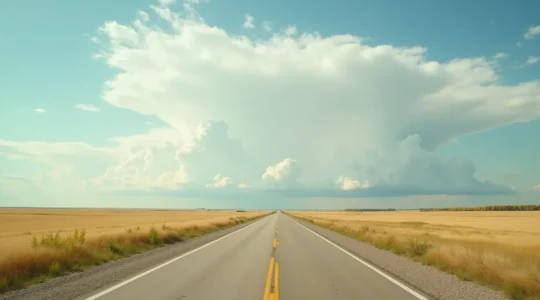
Most travellers see the prairie drive as a flat, boring void to be endured. The truth is, it’s a subtle, living landscape waiting to be read. Instead of just surviving the drive, this guide teaches you how to decode the…
Read more
The secret to avoiding the $300-$500+ one-way rental fee in Canada is to stop thinking in a straight line and treat it as a logistical penalty, not a tax. Instead of a one-way trip (e.g., Vancouver to Calgary), plan a…
Read more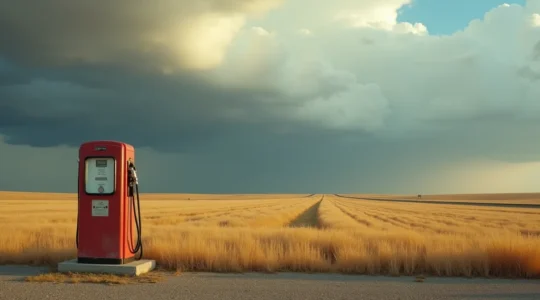
Crossing Canada isn’t a simple road trip; it’s a logistical operation that punishes the unprepared. The romantic notion of the open road quickly evaporates in Northern Ontario or the Prairies where fuel can be 200km apart and your GPS is…
Read more