
Canada’s urban centers offer a distinctive blend of cultural experiences that reflect the country’s vast geography and multicultural identity. From the French-speaking streets of Quebec City to the Indigenous food revival in Vancouver, each metropolis presents unique opportunities for cultural immersion during holiday visits. Understanding these urban landscapes transforms a simple city break into a meaningful encounter with Canada’s diverse heritage.
Navigating Canadian urban life successfully requires more than knowing which attractions to visit. It demands insight into the practical realities of public transit systems, the logistics of attending world-class festivals, and the cultural nuances that distinguish one city from another. This knowledge empowers travelers to make informed choices about where to visit, when to go, and how to engage authentically with local communities.
Selecting the right Canadian city for your holiday depends on aligning your lifestyle preferences with what each metropolis offers throughout different seasons. Toronto’s energy differs fundamentally from Montreal’s European charm, while Vancouver’s outdoor accessibility contrasts with Calgary’s prairie-meets-mountain character.
Each major Canadian city cultivates a unique atmosphere shaped by its history, immigrant communities, and geographic setting. Toronto functions as the country’s economic powerhouse with corresponding cosmopolitan diversity, hosting neighborhoods where over 180 languages are spoken. Montreal balances its francophone foundation with artistic bohemianism, particularly evident in neighborhoods like Mile End and Plateau Mont-Royal. Vancouver attracts those seeking urban amenities within reach of ocean and mountains, creating a lifestyle-focused culture that prioritizes outdoor recreation even during the workweek.
Climate significantly impacts urban experiences across Canada’s regions. Winter transforms cities like Montreal and Quebec City into snow-covered wonderlands where outdoor festivals thrive, but the same season brings temperatures dropping to -30°C with wind chill. Maritime cities like Halifax experience milder but wetter winters, while Vancouver rarely sees snow but endures months of persistent rain. Summer visitors face the inverse challenge: Toronto’s humidity can make July uncomfortable for extensive walking tours, whereas Calgary’s dry continental climate remains pleasant despite warm temperatures.
Budget considerations vary dramatically between Canadian cities. Toronto and Vancouver consistently rank among the country’s most expensive destinations, with accommodation costs particularly elevated during peak summer months and major festivals. Mid-sized cities like Ottawa and Winnipeg offer 20-30% lower accommodation costs while still providing substantial cultural programming. Food expenses follow similar patterns, though strategic choices—opting for ethnic restaurants over downtown tourist zones, visiting public markets—can reduce daily spending significantly regardless of location.
Canadian urban centers have developed transit networks that reflect their specific geographic and population characteristics. Understanding these systems transforms holiday mobility from a frustration into an efficient, cost-effective advantage.
Toronto’s TTC network offers extensive subway, streetcar, and bus coverage with single-fare transfers allowing movement across the system for hours. Montreal’s Metro, modeled on Paris’s system, features rubber-tired trains and interconnected stations that provide underground refuge during winter. Vancouver’s SkyTrain combines automated technology with strategic placement, though the system’s limited geographic reach means coastal and mountain-adjacent neighborhoods require bus connections. Smaller cities like Ottawa and Edmonton have invested in light rail systems that connect key destinations but require bus integration for comprehensive coverage.
Festival periods place extraordinary demands on public transit, making advance research essential. During events like Toronto’s Pride or Montreal’s International Jazz Festival, normal travel times can double. Transit authorities often extend service hours and add special routes, but capacity remains constrained. Purchasing multi-day passes typically provides better value during festival visits, with the added benefit of eliminating repeated ticket decisions.
Canadian cities serve as showcases for the country’s multicultural reality and its ongoing relationship with Indigenous peoples and French heritage. These cultural dimensions offer holiday experiences that extend far beyond conventional tourism.
Urban centers have become important sites for experiencing contemporary Indigenous culture, challenging outdated “reservation life” stereotypes. Vancouver’s Salmon n’ Bannock and Edmonton’s Kū-kŭm Kitchen demonstrate how traditional foods evolve within modern culinary contexts—the “bannock taco” represents this fusion perfectly, combining Indigenous flatbread with contemporary taco formats. These establishments prioritize ingredient sourcing that respects traditional territories and seasonal availability.
Indigenous art presents both opportunities and pitfalls for holiday visitors. Authentic pieces carry cultural significance expressed through specific symbols and techniques passed through generations. Validating an artist’s background—looking for band affiliation, artist statements, and gallery credentials—helps distinguish genuine work from “Native-inspired” imitations mass-produced overseas. The difference between original carvings and prints significantly affects both price and cultural value, with original works representing substantial investment but genuine artistic expression. Transporting fragile art requires specialized packaging; reputable galleries provide guidance on safe shipping for international visitors.
Timing visits to coincide with National Indigenous Peoples Day in June offers concentrated access to cultural programming, though urban Indigenous cultural centers provide year-round education and authentic art access.
Quebec’s urban centers offer immersion in North America’s distinct French culture, shaped by centuries of geographic separation from France. Quebec French carries unique vocabulary, pronunciation, and expressions that differ noticeably from European French—visitors with Parisian French may initially struggle with comprehension, particularly regarding informal speech and local terminology.
Dining etiquette in francophone regions reflects both French formality and North American casualness. Restaurant staff in Montreal increasingly operate bilingually, switching languages mid-conversation based on customer comfort. However, attempting basic French greetings demonstrates respect and typically receives warm reception. Quebec City maintains stronger francophone identity with less automatic English accommodation—assuming English availability everywhere represents a common error that can create uncomfortable situations.
The cultural distinction between Montreal and Quebec City merits consideration when choosing destinations. Montreal projects cosmopolitan bilingualism with international influences, while Quebec City preserves smaller-city charm with deeper francophone traditions. The St-Jean-Baptiste celebration on June 23rd showcases Quebec culture at its most exuberant, though visitors should expect crowds and advance booking requirements.
Quebec City stands as North America’s only walled city north of Mexico, its fortifications representing centuries of military strategy and colonial conflict. Moving beyond postcard photography reveals layers of historical significance and ongoing military presence.
Cap Diamant’s strategic importance derived from its commanding position over the St. Lawrence River narrows, making Quebec City the gateway to New France’s interior. The Citadelle remains an active military installation housing Royal 22nd Regiment personnel, which affects visitor access—certain areas remain restricted, and photography faces limitations near operational facilities. Guided tours provide the primary access method, with timing coordinated around military schedules.
Walking the ramparts offers different perspectives than the Governor’s Promenade, each providing unique vantage points over the Old City and river. The St. Louis and St. John Gates have survived through careful preservation efforts, their current form representing both original architecture and sensitive restoration work. The Changing of the Guard ceremony operates seasonally, typically running during summer months when tourism peaks and weather permits outdoor formations.
Canadian urban centers host festivals of extraordinary scale and diversity, transforming cities for days or weeks and presenting both opportunities and logistical challenges for holiday visitors.
Events like Toronto’s International Film Festival (TIFF) and Montreal’s Just for Laughs create accommodation crunches that require booking months in advance. Hotels within walking distance of festival venues command premium rates and sell out early. Alternative accommodation in residential neighborhoods becomes viable when understanding public transit connections and service extensions during festival periods.
Festival programming typically divides between free public events and paid ticketed performances. Free events provide authentic cultural exposure without financial commitment but involve crowds and limited amenities. Strategic festival attendance involves balancing both types—enjoying free outdoor programming while selectively purchasing tickets for marquee events that justify the expense through unique access or exceptional quality.
The “pancake breakfast” strategy represents a uniquely Canadian festival phenomenon, particularly at events like Calgary Stampede, where free or low-cost breakfast events provide community interaction and substantial morning fuel before festival activities begin.
Beyond mainstream festivals, Canadian cities host cultural celebrations reflecting specific communities. Winterlude in Ottawa celebrates cold-weather culture through ice sculptures, skating on the Rideau Canal, and winter sports demonstrations—the cultural roots extend beyond simple winter activities to embrace Canadian identity formation around harsh climate adaptation.
Pride celebrations in Toronto and Vancouver represent major civic events drawing international attendance. Each presents distinct character—Toronto Pride’s size creates almost overwhelming scale, while Vancouver Pride maintains slightly more intimate atmosphere. Summer parade attendance requires preparation for heat-related challenges: dehydration risk increases in crowds, making water access essential. Timing arrival for parade routes involves trade-offs between securing good viewing positions and avoiding excessive pre-parade sun exposure.
Crowd safety and ear protection deserve consideration at large festivals where sound levels can damage hearing and crowd density creates physical pressure, particularly when events funnel through narrow urban streets.
Events like Nuit Blanche in Toronto transform cities into overnight art installations, presenting unique logistical challenges. The concept of “public art interaction” invites direct engagement with installations, though understanding boundaries between encouraged participation and damaging interference requires attention to posted guidelines and artist intentions.
Navigating major cities at 4 AM during these events reveals urban environments in unfamiliar states—public transit may operate on reduced schedules, safety considerations shift, and fatigue affects decision-making. The “zone” strategy involves selecting specific geographic areas to explore rather than attempting city-wide coverage, preventing exhaustion while ensuring meaningful engagement with installations.
Gallery institutions like the Art Gallery of Ontario (AGO) and The Power Plant often participate in these overnight events, opening collections for free nocturnal viewing. Optimizing caffeine intake becomes essential—consuming too much too early leads to crashes before events end, while inadequate caffeine leaves participants unable to appreciate late-night programming fully.
Canadian cities offer holiday experiences that reward preparation and cultural awareness. From understanding transit peculiarities to recognizing authentic Indigenous art, from navigating francophone social expectations to strategizing festival attendance, urban Canada demands engagement beyond surface tourism. These cities reveal their depth to visitors willing to move past conventional attractions into the practical realities and cultural nuances that define contemporary Canadian urban life.
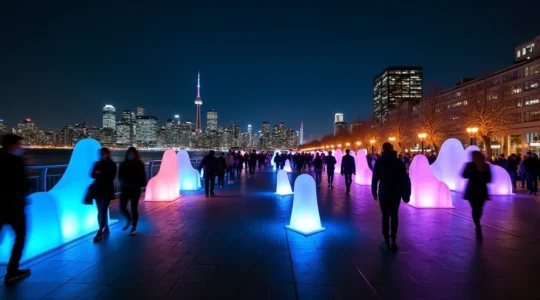
In summary: Treat Nuit Blanche as an endurance event, not a completist’s checklist; quality of experience trumps quantity of sights. Commit to one or two adjacent art zones. Crossing the city is the most common and draining strategic error. Plan…
Read more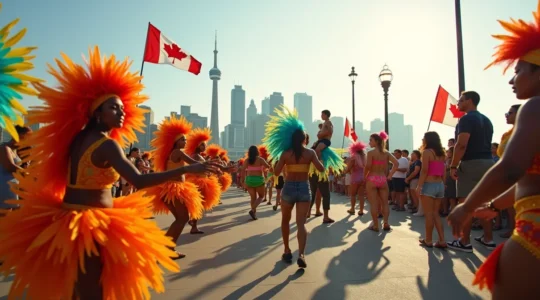
In summary: Prioritize sensory safety by choosing quieter viewing spots and using child-safe hearing protection. Create a “festival ecosystem” plan that includes pre-parade food stops in local Caribbean neighbourhoods to save money and experience authentic culture. Apply a “one-zone” strategy,…
Read more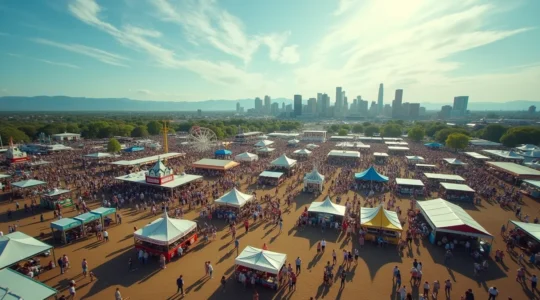
Facing the chaos of a massive Canadian festival like the Calgary Stampede feels overwhelming, but the key isn’t just to endure it—it’s to outsmart it. This guide reframes the challenge from one of cost and crowds to one of strategy….
Read more
Exploring modern Indigenous food in Canada is about more than just a meal; it’s an active engagement with urban cultural reclamation and culinary sovereignty. Innovative dishes like bannock burgers and smoked salmon are transforming ancestral ingredients into contemporary culinary art….
Read more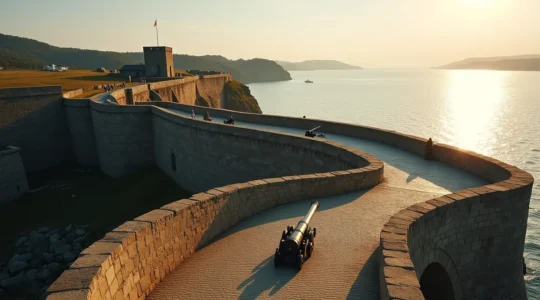
To truly understand Quebec’s fortifications, you must read them as a military doctrine written in stone, not just walk them as a tourist path. The city’s location was a geostrategic imperative, dictated by the cannon’s range over the St. Lawrence…
Read more
Feeling anxious about visiting rural Quebec without speaking French? The solution isn’t just to memorize phrases, but to shift your perspective. This guide shows you how to see the language barrier not as an obstacle, but as a doorway to…
Read more
The Igloo Tag is a vital mark of authenticity for Inuit art, but it’s only the starting point of responsible collecting. True authentication involves understanding the cultural vocabulary of the art and researching the artist’s specific community affiliation. An artwork’s…
Read more
Choosing between Montreal, Toronto, and Vancouver is less about landmarks and more about matching the city’s daily rhythm to your own. Montreal offers a European pace with a vibrant, late-night culture fueled by a lower cost of living. Toronto delivers…
Read more