
Canada’s vast wilderness stretches from temperate rainforests on the Pacific coast to the frozen peaks of the Rockies, offering an unparalleled playground for adventure seekers. Whether you’re drawn to the adrenaline rush of whitewater rapids, the quiet majesty of observing grizzlies in their natural habitat, or the technical challenge of ascending a frozen waterfall, this country delivers experiences that test both body and spirit while connecting you deeply with nature.
Understanding the breadth of adventure options available across Canada’s diverse ecosystems is the first step toward planning a trip that matches your comfort level and aspirations. This comprehensive overview introduces the major categories of thrilling activities available throughout the country, from wildlife encounters that require careful ethical consideration to extreme sports demanding specialized insurance coverage. Each section connects fundamental concepts with practical considerations, giving you the foundation to explore specific activities with confidence and respect for both the environment and your own safety.
Few experiences rival the profound impact of witnessing wildlife in their natural environment. Canada’s biodiversity creates opportunities for encounters with species found nowhere else on the continent, but these experiences demand a balance between accessibility and ethical responsibility.
Western Canada, particularly British Columbia and the Yukon, offers some of North America’s most reliable opportunities to observe grizzly bears in the wild. The key distinction lies between guided viewing experiences and accidental encounters while hiking or camping. Professional viewing operations position observers at safe distances during peak feeding times—often when salmon runs bring bears to rivers—while maintaining strict protocols that prevent habituation.
Understanding bear behavior patterns transforms these encounters from purely visual spectacles into educational experiences. Bears exhibit predictable seasonal rhythms: emerging from dens in spring to forage on vegetation, concentrating at salmon streams in late summer and fall, then hyperphagia (intensive feeding) before winter dormancy. Reading body language—ear position, vocalizations, movement patterns—helps observers recognize stress signals that indicate when human presence is intrusive.
For those venturing into bear country independently, carrying bear spray and knowing how to deploy it effectively is non-negotiable. The canister must be immediately accessible—not buried in a backpack—and users should practice with inert training versions to build muscle memory. Equally critical are food storage practices: even seemingly minor mistakes like leaving scented items in a tent or cooking near sleeping areas can attract bears and create dangerous situations.
Canada’s extensive coastlines on both the Pacific and Atlantic oceans provide distinct whale watching experiences. The Pacific coast, particularly around Vancouver Island and the Gulf Islands, is renowned for resident and transient orca populations, along with migrating humpback and gray whales. The Atlantic side, especially Newfoundland and the Bay of Fundy, offers encounters with humpbacks, minke whales, and the endangered North Atlantic right whale.
Migration patterns differ significantly between species and regions. Humpback whales follow predictable seasonal movements between feeding grounds in northern waters and breeding areas in warmer latitudes, while some orca pods remain in specific territories year-round. Understanding these patterns helps visitors time trips for optimal viewing and photography opportunities.
The open ocean environment presents challenges absent from land-based wildlife viewing. Motion sickness affects many passengers, particularly in the swells common on the Pacific coast. Preparing with medication, choosing larger vessels with stabilizers, and focusing on the horizon can mitigate discomfort. The risk of encountering unethical operators who approach whales too closely or disrupt natural behaviors underscores the importance of selecting companies certified by responsible whale watching programs that adhere to strict distance regulations.
Hiking remains one of the most accessible entry points into Canadian wilderness, ranging from half-day interpretive walks to multi-week backpacking expeditions through remote mountain ranges. The diversity of terrain—coastal temperate rainforests, prairie grasslands, boreal forests, and alpine tundra—creates dramatically different hiking experiences within the same country.
Canadian trail ratings typically follow a system designating routes as easy, moderate, difficult, or strenuous, based on factors including elevation gain, distance, terrain roughness, and technical obstacles. However, these ratings lack standardization across provinces and parks. A “moderate” trail in flat Ontario might involve well-maintained paths with minimal elevation change, while a “moderate” designation in the Rockies could include significant altitude gain and exposure to weather changes.
Researching specific trail reports and recent conditions provides more reliable preparation than ratings alone. Understanding your own fitness baseline—how you respond to elevation, your comfortable hiking pace with a loaded pack, your experience with route-finding—allows realistic self-assessment when evaluating trail descriptions.
Footwear decisions significantly impact hiking comfort and safety. The traditional dichotomy between heavy leather boots and lightweight trail runners has expanded into a spectrum of options tailored to specific terrain and trip duration. Day hikes on maintained trails often require only supportive trail runners or lightweight hiking shoes, while multi-day treks with heavy packs over rocky terrain benefit from mid-weight boots providing ankle support and durability.
One critical yet often overlooked error involves hydration management on exposed trails. The combination of altitude, sun exposure, and physical exertion accelerates fluid loss, yet many hikers carry insufficient water or fail to recognize early dehydration symptoms. Routes above the treeline or in dry environments require carrying more water than intuition suggests, along with electrolyte replacement for extended efforts.
Canadian winters transform the landscape into a specialized adventure playground requiring different skills, equipment, and mindsets than summer activities. Rather than viewing cold as an obstacle, winter enthusiasts recognize it as enabling unique experiences impossible in other seasons.
Nordic skiing—encompassing both classic and skate techniques—offers exceptional cardiovascular benefits while accessing snow-covered terrain with minimal environmental impact. Classic skiing follows set tracks and uses a forward-back gliding motion accessible to beginners, while skate skiing employs a side-to-side push similar to ice skating, demanding greater balance and fitness but enabling higher speeds.
Canadian destinations like Silver Star in British Columbia and Mont-Sainte-Anne in Quebec provide world-class Nordic trail networks ranging from gentle forest loops to challenging terrain with significant elevation. The health benefits extend beyond cardiovascular conditioning to include improved balance, core strength, and mental well-being from outdoor winter exercise.
A common layering mistake causes discomfort for Nordic skiers: overdressing for the start of a ski leads to excessive sweating, which then creates dangerous chilling when you stop or reduce intensity. The principle of dressing so you feel slightly cool at the trailhead, allowing body heat from exercise to bring comfort, prevents the sweat accumulation that compromises insulation.
Ice climbing represents a niche winter sport with a steep learning curve but devoted following. Locations like Johnston Canyon and Grotto Canyon near Canmore, Alberta, feature frozen waterfalls and seeps creating seasonal ice formations that climbers ascend using specialized equipment including crampons and ice tools.
Understanding the mechanics of crampon placement—achieving secure contact between front points and the ice through proper ankle flexion and weight distribution—forms the technical foundation of the sport. The phenomenon climbers call “screaming barfies”—the intensely painful sensation when blood returns to extremely cold hands—is virtually inevitable when learning, caused by constricted blood vessels suddenly dilating as hands warm.
Ice stability varies throughout the winter based on temperature fluctuations. The most stable conditions typically occur during sustained cold periods in mid-winter, while freeze-thaw cycles in early or late season create unstable structures prone to collapse. Timing climbing attempts requires monitoring both current conditions and weather forecasts.
Canada’s extensive waterways—from mountain-fed whitewater rivers to island-studded ocean passages—create diverse paddling and rafting opportunities requiring different skill sets and risk tolerances.
The International Scale of River Difficulty classifies rapids from Class I (moving water with minimal waves) to Class VI (extreme danger, considered un-runnable). Understanding the physics behind river features, particularly hydraulic holes where water recirculates behind obstacles, helps paddlers recognize hazards and navigate safely.
Canadian classics like the Ottawa River in Ontario and the Kicking Horse River in British Columbia offer different character: the Ottawa provides high-volume, powerful waves in a relatively warm environment suitable for longer commercial trips, while the Kicking Horse delivers intense, technical rapids in stunning mountain scenery with glacier-fed water temperatures demanding protective gear.
The choice between paddle rafting—where all participants actively paddle under a guide’s commands—and motor rafting affects both engagement level and capability. Paddle rafts require teamwork and physical effort but create deeper participant involvement, while motor rigs handle larger rapids more safely with less guest experience required. Understanding the “swimmer protocol”—what to do if ejected from the raft—is essential before entering significant whitewater, with spring runoff timing creating both optimal water levels and increased hazards.
Paddlers comfortable on calm lakes often underestimate the challenges of transitioning to ocean or whitewater kayaking. Tidal currents in coastal environments can reach speeds impossible to paddle against, requiring knowledge of tide tables and current patterns to avoid dangerous situations. The fog common on both Atlantic and Pacific coasts creates disorientation risks, making navigation skills and safety equipment like marine radios and GPS essential.
The distinction between sit-on-top kayaks and sea kayaks reflects their intended environments: sit-on-tops offer easier entry and self-draining cockpits suitable for warm, protected waters, while sea kayaks provide superior tracking, speed, and storage for extended coastal trips but require mastering the wet exit—escaping an overturned kayak underwater—and ideally rescue and re-entry techniques.
Route optimization must account for prevailing wind direction, as paddling into persistent headwinds exhausts even experienced kayakers and can prevent safe return to launch points. Coastal paddling plans should always include bailout options and never rely on conditions remaining favorable.
British Columbia’s temperate rainforests provide unique opportunities to experience old-growth ecosystems from the canopy layer, where the majority of biological activity occurs but ground-based visitors rarely observe. Suspension bridges and elevated walkways create access to this vertical world while presenting manageable challenges for those without technical climbing skills.
The ecology of the upper canopy reveals a distinct environment from the forest floor, with specialized species, different moisture levels, and greater light penetration. Educational interpretation at facilities helps visitors understand these complex ecosystems beyond simple visual appreciation.
Managing vertigo on suspension bridges requires understanding that the psychological response to height and movement is normal and typically diminishes with exposure. The engineering marvel of attractions like the Cliffwalk—a cantilevered walkway jutting from granite cliffs—demonstrates how modern construction enables thrilling perspectives with exceptional safety margins, though visitors must remain alert to genuine hazards like slippery boardwalks after rain.
The increasing accessibility of adventure tourism sometimes obscures the genuine risks involved in activities ranging from wildlife encounters to extreme sports. Proper preparation extends beyond physical fitness and technical skills to include insurance coverage, legal understanding, and honest self-assessment.
Standard travel and health insurance policies typically exclude coverage for activities insurers classify as high-risk, a category that may include ice climbing, whitewater rafting above certain class ratings, and backcountry skiing. Reading policy exclusions carefully prevents the false assumption that normal coverage applies to adventure activities.
Understanding waivers and liability in Canada requires recognizing that signing a release doesn’t eliminate operator responsibility for negligence, but does affect legal options. Medical evacuation costs from remote locations can exceed tens of thousands of dollars, with helicopter rescue in mountain environments particularly expensive. The pre-existing condition loophole means insurers may deny claims if they can connect an injury to any previous health issue, making full medical disclosure and specialized policy riders critical.
Optimizing coverage often requires purchasing specialized add-ons or adventure-specific policies from providers familiar with outdoor recreation risks. The cost difference between standard and comprehensive adventure coverage is marginal compared to potential out-of-pocket expenses from a serious incident.
The distinction between guided and self-guided adventures affects both safety margins and experiential depth. Guided experiences provide expert knowledge, equipment, and decision-making that reduces participant risk while potentially limiting autonomy. The reality of “unsupported” expeditions—truly independent trips without guide support or evacuation backup—demands technical expertise, wilderness medicine knowledge, and psychological resilience that many aspiring adventurers overestimate in themselves.
The mental challenge of isolation in remote Canadian environments affects people differently than physical hardships. Extended periods without human contact, navigation responsibility, and the knowledge that rescue may be days away creates psychological pressure distinct from supervised activities. Honest self-assessment should include past responses to stress, comfort with uncertainty, and experience making consequential decisions without expert input.
Timing adventures to avoid peak bug seasons and optimize weather windows significantly impacts enjoyment and safety. Black fly and mosquito seasons in northern regions can transform pleasant hiking into miserable ordeals, while weather windows for technical climbing or remote paddling may be measured in days or weeks annually.
Canadian adventure tourism offers extraordinary opportunities to test yourself against natural elements while experiencing landscapes of remarkable beauty and power. Success requires matching activities to your current abilities while maintaining respect for genuine hazards, whether they come from wildlife, extreme environments, or the limits of your own preparation. The most rewarding adventures combine appropriate challenge with thorough preparation, creating experiences that expand capabilities while managing risks intelligently.
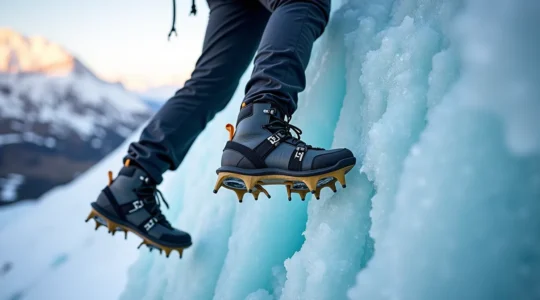
The biggest misconception about beginner ice climbing is that it requires massive upper body strength; in reality, it’s primarily a test of lower body endurance and balance. Efficient technique, taught on beginner courses, relies on your legs to drive movement,…
Read more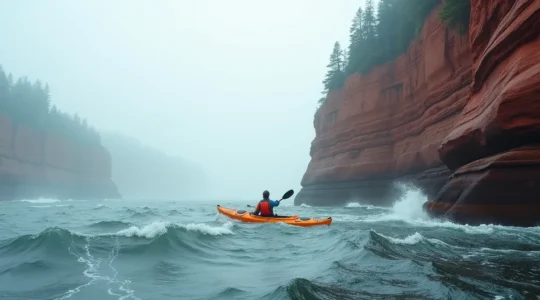
Contrary to what many intermediate paddlers believe, lake kayaking experience is not just insufficient for the Bay of Fundy—it’s a liability. Legal minimums do not equal safety here. The Bay of Fundy’s currents can exceed 10 knots, easily overpowering even…
Read more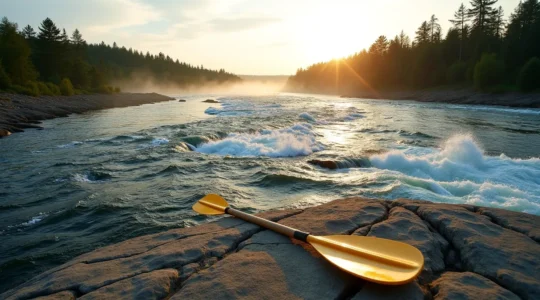
Contrary to popular belief, a beginner can safely experience Class IV rapids on the Ottawa River, but the key is understanding how it’s made safe, not just focusing on the thrill. Class IV rapids involve powerful hydraulics like “keepers,” but…
Read more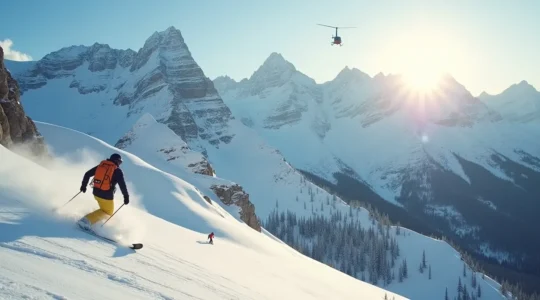
Your standard travel policy or credit card insurance almost certainly provides zero financial protection for heli-skiing or high-risk rafting in Canada. Policy exclusions for backcountry and high-risk activities are based on a quantifiable lack of professional oversight and infrastructure, not…
Read more
Beyond the ticket price, the real choice between Capilano and Lynn Canyon lies in the physics of the experience: a controlled, stable spectacle versus a free, bouncy, and wilder immersion. Capilano offers more attractions, wider and more stable walkways, and…
Read more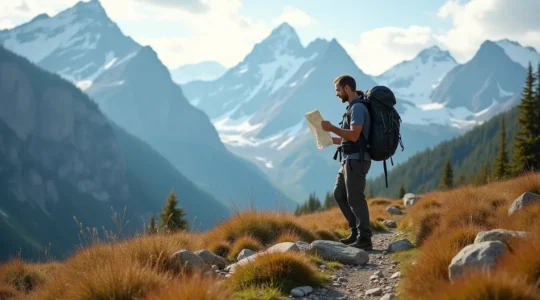
True Canadian wilderness readiness isn’t about cardio; it’s a stark calculation of your ability to handle specific, non-negotiable environmental and financial risks. The physical demand goes beyond simple hiking, involving carrying heavy loads for days and preparing for severe, sustained…
Read more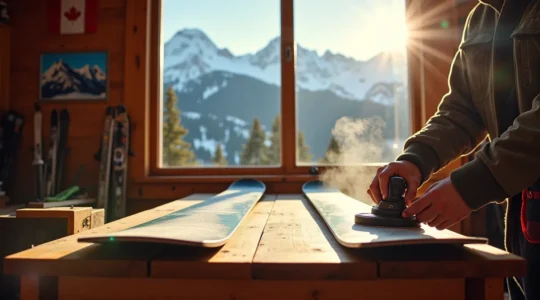
In summary: Cross-country skiing is a high-output sport burning 500-900 calories/hour, requiring a different approach to clothing than downhill skiing. Mastering the “sweat and freeze” cycle is about managing your body’s microclimate with a three-layer system, not wearing a heavy…
Read more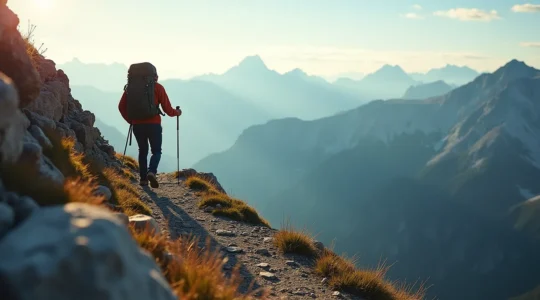
Training for Canada’s epic trails like the West Coast Trail isn’t about generic gym fitness, but about building resilience to specific mountain stresses. True mountain fitness means preparing for altitude, sustained steep grades, and technical terrain—challenges flatland training ignores. Your…
Read more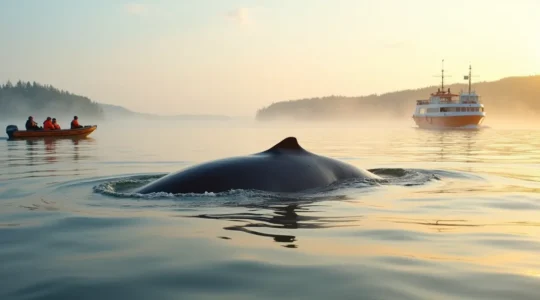
The key to a successful family whale watching adventure isn’t just choosing a boat; it’s understanding the ‘why’ behind expert advice to ensure safety, comfort, and a truly magical experience. Dressing properly is a science; the right layers prevent dangerous…
Read more
The critical mistake hikers make is focusing only on telling a grizzly from a black bear. True safety in the Canadian wilderness comes from learning to read a bear’s behaviour and understanding our impact on its world. A bear’s actions—whether…
Read more